


 Francais
 Deutsch
 Italiano

Refine Your Search
Goodenough Island New Guinea 1943 stock footage and images
- Showing 7675 to 7680 of 13663 results more
 Hide
Color Sound

Celebrations in new state of Manchukuo showing Japanese troops and a band along the streets.
A film justifying Japanese fight in mainland China during the Second Sino-Japanese War. Japanese soldier looks through binoculars. Soldiers on horsebacks advance. Army jeeps move along a field. The Great Wall of China. Japanese troops fire artillery. Aircraft in flight. Japanese soldiers in prone positions. The troops fire from a trench. They load artillery gun with shells on a field. A map of China highlights puppet state of Manchukuo in Manchuria established by Japan in 1932. Celebrations in Manchukuo showing Japanese troops and a band along the streets. Children march holding flags.

Native people enter and leave the new City Hall building in Panama City, Republic of Panama.
Various buildings in Panama City, Republic of Panama. Children, with one of them naked, stand in a barred window. View of a seawall and battlements. People enter and leave the Palacio Municipal de Panamá or Panama City Hall (C. 7a Oeste, Panamá, Provincia de Panamá, Panama). Men enter a lobby. The silhouette of the statue of Bacchante in the foreground. View of a plaza from a balcony.

Vehicles on the new highway constructed across the Austrian Alps, Austria.
Construction of a highway across the Austrian Alps, Austria. The highway connects Munich and Venice. Mountains in the foreground. Vehicles on the highway.

Keel laid for new ship in World War I. Prefabricated steel bulkheads positioned using crane, at shipyard in the United States
World War 1 war production: U.S. Navy warship building activities at shipyard in the United States. Ship building workers gather around for ceremony as an official initiates keel laying, by riveting on steel plate. Large crowd of shipyard workers gather at docks. Prefabricated steel bulkheads are raised and placed at position using crane. Man directs the crane operator. A hole is cut in steel plate with torch. Workers do riveting and welding work on the steel bulkheads.
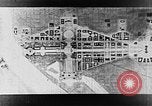
Demolition of old buildings in Federal Triangle of Washington DC and construction of new federal buildings in early 1930s
From film dealing with sesquicentennial in Washington DC, released 1950. Review of development of Washington, DC. Model of the Memorial Bridge and the Constitution Avenue in the year 1930. A model of the Jefferson Memorial. The Agriculture Building and building for the members of the House of Representatives. Elevated view of 15 blocks of old slum and run down home and office buildings in the Federal Triangle area that had been marked for destruction. Narrator characterizes them as "unsightly and useless sections of the city." Men work in demolition of slum area. They push over a building wall during clearing of the area. Crane with wrecking ball demolishes building in the Federal Triangle area. View of Department of Commerce under construction circa 1931. Construction of the Post Office Department building is seen underway in the same period.

Woman engineering worker argues with boss and urges that employees make use of a new information center.
Early information retrieval practices in a corporate engineering office in the United States during the 1960s. Dramatization depicts a woman in the work force in the 1960s: Female worker with vintage 1960s beehive hair style appears to be performing work as a secretary, but, it turns out she is engineer Julie Stone. Julie takes printouts from a printer in information center. She opens a drawer and takes out document files. She leaves her office. She arrives at office of her Chief named George A Price. Chief scolds an engineer called Harry for committing mistakes in his designs. Chief asks Harry to be responsible in his work. Another engineer named Pete Newton draws designs. View of the cabins. Harry meets Newton and discuss about his conversation with Chief. Julie on telephone calls Harry. They go to a restaurant for lunch. They talk about the sources of information and Julie encourages Harry to use the information center that she runs, rather than relying on antiquated and incomplete methods of obtaining information. Julie gets up and leaves the restaurant. Harry and Pete talk in the office. Pete asks him about his meeting with Julie. Harry takes his seat and opens a drawer. He looks over the documents and publications, including a Playboy magazine, to get information about transistors. Julie meets with Chief and complains about Pete and other engineers failure to use the information center and to lookup answers to questions in a more comprehensive way. Chief attends a telephone call. Pete enters Chief's office. Depicts woman worker arguing with boss. Clip also shows examples of common work place interpretation of women worker roles in the 1960s, including opening introduction of clip that objectifies the woman worker as a sexual object (before broad awareness of sexual harassment in the workplace), and a restaurant scene that opens with the man assuming that the woman has asked him out to lunch as a love interest rather than for work purposes.
CRITICALPAST.COM: About Us | Contact Us | FAQs - How to Order | License Agreement | My Account | My Lightboxes | Shopping Cart | Advanced Search | Featured Collections | Website Terms & Conditions | Privacy Policy ©2026 CriticalPast LLC.
License Agreement |
Terms & Conditions |
Privacy Policy
©2026 CriticalPast LLC.