


 Francais
 Deutsch
 Italiano

Refine Your Search
Goodenough Island New Guinea 1943 stock footage and images
- Showing 7975 to 7980 of 13663 results more
 Hide
Color Sound
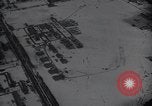
Training Japanese Ground Self Defense Forces.Hokkaido.Honshu.Japanese 2nd Division, Engineers, Armor,Artillery,Aviation
Aerial views of snow-covered Camp Ashigawa Hokkaido, Japan, home of the 2nd Division, Japanese Ground Defense Forces Northern Corps. Japanese self defense force engineers assemble a Bailey Bridge. Defense Force personnel cross the new bridge in a half-track armed with antiaircraft guns Officers of 2nd signal unit, surrounded by snow banks, work on map reading exercise. Members of 2nd artillery regiment do practical exercises in setting up and operating a 155mm howitzer, in the snow. Members of the Aviation section practice emergency receiving and sending messages from ground to air. A light airplane (PA-18?) snags a message capsule suspended between two poles. The Japanese flag. A new unit of Japanese self defense forces in Northern Honshu. Local townspeople visit the camp in motorcade of jeeps. Japanese Defense force units parade in a ceremony. High ranking Japanese Officers, along with United States Generals Orlando Troxel and Herbert J. Vander, seated during ceremony. Officer, on Japanese Defense Force Sherman tank, salutes. Squadron of L-5 Sentinal Airplanes in flight.
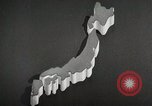
Views of China and Japan in the period leading up to the 2nd Sino-Japanese war
Film opens with outline map of Japan shown in contrast to 20 times larger China and figures representing China's 6 times greater population. Map of China is shown in pieces representing its numerous internal fiefdoms. In contrast, Japanese soldiers are shown marching in review before their singular leader, Emperor Hirohito and other national military leaders. Film shows contrasting 20th century characteristics of China and Japan. Sun Yat-sen, who figured prominently in post-Imperial China, and is considered the founding father of the Republic of China, is shown speaking to crowds. Narrator states that in 1911, this man fathered a peoples' revolution which brought to an end, China's ancient Imperial government. View of Chinese people marching and carrying flags and banners. Books are shown comparing China's Sun Yat-sen to America's George Washingon. Sun Yat-sen's political statement, shown in Chinese, contains words similar those in Abraham Lincoln's Gettysburg address. View of schools and colleges built in the new Republic of China. Chinese students shown in libraries. A couple dining in a Chinese hotel restaurant, overlooking other buildings. A tall clock tower looms at the same height outside their window. Steel being erected for a tall building. Architects at work. Scientist looking through a microscope. Technicians at work in a chemistry laboratory. Medical staff and patients in a modern hospital. Children in school under compulsory education program. Chinese people exercising their freedoms of expression and religion. The funeral of Sun Yat-sen, in 1925, attended by his successor, Chiang Kai-shek, and other Chinese leaders in military uniforms. Chinese people attending an outdoor ceremony. Examples of areas needing modernization. Chinese workers using manually operated machinery to process fabrics. Commercial vessel plying a river using wind and sail only. Views of steam locomotives and trains being introduced to link parts of China. Trucks moving goods over roads (still unpaved). Miners working in open air mines, digging coal and iron. Industrialization scene with molten tin being poured from a crucible. Machines performing complex tasks in a Chinese fabric mill and women and children workers tending spinning and knitting machines. Young Chinese school children engaged in collective outdoor games and exercise drills. Scene shifts to Japan, where Emperor Hirohito, on a white horse, leads military leaders in reviewing Japanese forces. A formation of Japanese Model 97 medium tanks passing in review, with tank commanders saluting from their turrets. Glimpse of Japanese steel mill. Headline in World-Telegram newspaper of 14 february, 1934, reads: "Tokyo House Passes Huge Arms Budget." A Los Angeles newspaper of 23 November, 1934, expands on the same story. New Orleans Times-Picayune, Sunday, 5, May, 1936, reports that Japan is strained by its huge arms costs.
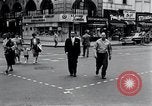
Japanese Books and Antiques in Washington, DC
Japanese man walks on a busy market street in Washington, DC. Japanese man window shops at a bookstore. English translation of Japanese Books 'Artistry in Ink' written by Seiroku Noma and 'Snow Country' or 'Yukiguni', in Japanese, by Yasunari Kawabata are on display for sale. Japanese paintings with writing and prints and . Japanese man walks into 'S Kriger Anique shop' and is greeted by shop proprietor. Japanese antique statuettes, china plates, bowls and box are on display for sale in antique shop. Japanese man holds a Newsweek magazine titled 'The New Surge The New America'. Japanese man talks. Scenes from World trade fair. Japanese stall in group five displaying Skis by R K Mizuno of japan. 1964-65.
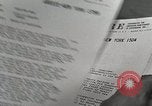
CARE Report from Japan
CARE report from Chief of Mission,Japan to New York office. Japanese boy is checked for symptoms by a Japanese doctor. Mother and Father of Japanese boy sit beside him. Japanese boy checked by doctor in a hospital in Japan. Doctors and nurses in hospital. People in CARE office do their work. Woman in CARE office in New York reads a report. Packets of CARE supplies off loaded from a ship. CARE supply packets delivered to people.1950.
American men and women at work and on holidays in 1950s
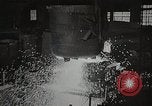
Images of life and typical lifestyle in America in the 1950s, including work, leisure and recreation activities. American workers work in a steel plant. Worker with protective goggles near blast furnace at work. Men and women workers in factory assembly lines including a canning factory and a light bulb factory. Woman packaging completed light bulbs at manufacturing plant. Various machines performing heavy industrial labor in the United States. Station wagon assembled on a car assembly line in an American automobile factory. John Deere farm tractors rolling off assembly line. American men and women, white and African American, assembling electrical components. Workers exit their factory after work shift. Labor representatives and corporate managers of a American company in a collective bargaining meeting. Aerial view of a post-war residential suburban neighborhood. Street view in suburb as station wagon drives into driveway of home. Children and wife greet American man coming home after work. Vintage suburban scene with period-typical housewife and family image. Man reads to children in living room while woman sews. 1950s cars on an expressway highway as people go to see a baseball game on holidays. American people watch baseball and football games in stadium during holidays. Baseball scene is in Yankee Stadium in the Bronx, New York City. New York Yankee player with jersey number 8, Yogi Berra, is at bat. Yogi Berra gets a hit down deep down the 3rd base line. Next scene shows a football stadium with an American football game in progress. Scene changes to an American man fishing on a holiday. People working in their home gardens and seated on porches of their homes. American family on a picnic in public park, seated at a picnic table. A young child sleeps, napping during the picnic. Arts and culture: Men and women reading and studying at the Library of Congress. Views of various magazines and books read by Americans. Patrons view contemporary American paintings displayed in a art gallery or art museum. Young American sculpture artists working in an art studio, including an African American male sculptor. Symphony Orchestra performs on stage as audience listens in a concert hall.

Progress of women in Japan
Busy streets in Tokyo, Japan. Japanese people shop, cross streets, and ride bicycles. Aerial view of Tokyo after World War 2. View of the Japanese National Diet Building (Nagatachō 1-chome 7–1, Chiyoda, Tokyo) in Chiyoda district. Japanese Prime Minister of Japan Yoshida Shigeru addresses the parliament. Japanese men, women and ministers attend the National Diet. A new bill is passed. Hand flips through the pages of the new bill written in Japanese. Contrasts the progress of women with that of men in Japan. A Japanese man and woman. Japanese children playing in playground. A woman holds her child. A salaryman father laughs with wife and two children at home. Japanese man wipes sweat off his head with a napkin. An old farmer working. People crossing a street. Japanese men and women crowd a busy street. View of Japanese women work as traffic police officer, as telephone operators, as caretaker of family,voting and as an architect.
CRITICALPAST.COM: About Us | Contact Us | FAQs - How to Order | License Agreement | My Account | My Lightboxes | Shopping Cart | Advanced Search | Featured Collections | Website Terms & Conditions | Privacy Policy ©2026 CriticalPast LLC.
License Agreement |
Terms & Conditions |
Privacy Policy
©2026 CriticalPast LLC.