


 Francais
 Deutsch
 Italiano
Refine Your Search
Goodenough Island New Guinea 1943 stock footage and images
- Showing 8719 to 8724 of 13637 results more
more Hide
Hide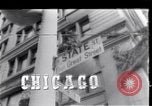
Deserted streets, closed stores and Merchandize Mart in Chicago after the assassination of President Kennedy.
A national television report on public reaction to U.S. President John Fitzgerald Kennedy's assassination in the United States. Chicago: The deserted Main Street during and after the funeral of John F Kennedy. Cars and pedestrians on the street. Closed stores. The Chicago Shopping and Commercial District. A notice in a store window reads 'Day of mourning for President John F Kennedy'. A woman with her baby stops by a store window to look at a picture of President Kennedy with an 'In Memoriam' message. A crowd around a television set watches the news about Kennedy's funeral. The Kennedy family-owned Merchandise Mart (222 Merchandise Mart Plaza Chicago, Illinois) in The Loop. Soldiers lower the United States flag to half-mast. A large crowd outside St. Peter's Catholic Church (110 W Madison St, Chicago, IL 60602, United States) in the Loop wait in long lines for the Mass while others inside pray. A school classroom inside a closed school. African American students put on their own close circuit television to pay tribute to Kennedy. A teacher and students speak about the late President and his life. An advertisement billboard sign reads the date of President Kennedy's assassination as a sign of respect and tribute.
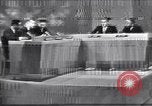
Correspondents question and talk to Dr. Martin Luther King about Kennedy's assassination and its effects on American politics.
A Press Conference with civil rights leader Dr Martin Luther King, Jr. in the United States. Correspondents include UN correspondent for the Ghana News Agency George Enninful, Mr Parshuram of the Indian Express and William Workman. They question and talk to African American clergyman and activist Dr. Martin Luther King, Jr. They discuss American politics, the Radicals and Democrats, the late President John F Kennedy, the American constitution and legislation.
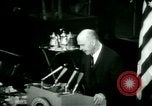
The shooting of President John Kennedy in Dallas, Texas is announced to a gathering at the Dallas Trade Mart.
A man stands at a lectern bearing the Presidential seal and announces the news of the John F. Kennedy shooting at the Dallas Trade Mart gathering, saying "The motorcade has been shot." He says "we will tell you as much as we know, as soon as we know anything." Another man comes to the microphone to lead a prayer. All present stand up and pray. People depart after the prayer. (President Kennedy had been scheduled to speak at a luncheon at the Trade Mart at 12:15pm that day. He was en route to the Trade Mart when he was assassinated.)
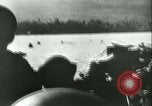
Signal Corps weekly film reports sent to Photographic Center and used in training films for U.S. troops during World War II.
The role and contribution of the U.S. Army Signal Corps in combat and war. Amphibious landings of the first wave of Allied troops including Signal Corps Units in Normandy, France on D Day during World War 2. The Joint Assault Signal Companies (a Signal Corps Unit that accompanies the soldiers on every beach landing) go ashore in Normandy. Soldiers in landing crafts approach the beach. Landing crafts anchored along the shore line. A U.S. flag on the beach. Crafts approach the beach. U.S. Army Signal Corps combat photographers using motion picture cameras to film the battle that ensues on the beach and in the fields. Gun fire and explosions in the battlefield, filmed by combat cameraman. Allied aircraft in flight. Airmen load weekly film reports of the war in all Theaters made by Signal Corps officers from a van into an aircraft. The films are sent to the Photographic Center in New York. A soldier assembles the films. Technicians organize and arrange the films. They place the film reels onto racks. The film content is used to make training and orientation films for the U.S. troops. Troops watch the films in order to cut down the training period, and stay informed about the order of event in other Theaters of Operation. The films include 'Why We Fight' and 'The Fighting Men' series. Clips and recordings from these films.
The invasion of Poland, Dunkirk evacuation, Second Armistice, and London Blitz during World War II.
'50 Years of Cinematography' depicts the role of military and news cameramen during World War II. Germany starts the War. Invasion of Poland in 1939: German Nazi Luftwaffe bombers in flight over Warsaw. Explosions due to the bombardment. Burning and damaged buildings in the war torn city. Civilians amidst rubble and ruins. Soldiers and civilians look at corpses on a sidewalk. A woman with her child cries. A man walks on a street. Dunkirk Evacuation in 1940: Allied troops evacuated from the Dunkirk coast. Allied troops on ships. Smoke rises from a ship under German attack. Soldiers wade through the water towards waiting ships. Burning ships. The Second Armistice at Compiegne after the German victory in the Battle of France, 1940: German troops stand at attention. German Fuhrer Adolf Hitler, President of the Reichstag Hermann Goering, German Field Marshal Wilhelm Keitel and other German officers arrive at the venue. The leaders and officers walk past the soldiers at attention. Hitler gives the Nazi salute. The Blitz, London in 1940-1941: Bomb damaged buildings. Cars and pedestrians amidst ruins and rubble on the streets. A train over a collapsed wall. Civilians in a horse cart. A wrecked bus in a damaged building. Rescue workers among the rubble. Clouds over the city.
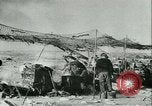
British troops fight Italians in Libya; Germany opens Eastern Front Campaign during World War II.
Images taken by military and news cameramen during World War II. The North African Campaign, 1940: Convoy of British tanks, trucks, and infantry advance over the Libyan Desert. British soldiers fire artillery. Masses of Italian prisoners marched by British soldiers. Next shown is campaign on the Eastern Front, 1941, as Germany attacks Russia: Nazi tanks advance under Luftwaffe air cover into the Soviet Union. Aerial view of German Junker Ju 87 aircraft in flight. German tanks and armored vehicles rolling. Wide view of many German tanks rolling east. German soldiers leaping down from a hill with smoke all around as they battle in a Russian town. Russian Pe-2 bomber aircraft in flight. Interior view of pilot and crew in Soviet Pe-2 bomber while in flight. Soviet soldiers on tanks during a battle. Burning tanks. Soviet soldiers run toward battle front and pass a dead German soldier on the battlefield.
CRITICALPAST.COM: About Us | Contact Us | FAQs - How to Order | License Agreement | My Account | My Lightboxes | Shopping Cart | Advanced Search | Featured Collections | Website Terms & Conditions | Privacy Policy ©2026 CriticalPast LLC.
License Agreement |
Terms & Conditions |
Privacy Policy
©2026 CriticalPast LLC.