


 Francais
 Deutsch
 Italiano
Refine Your Search
Goodenough Island New Guinea 1943 stock footage and images
- Showing 997 to 1002 of 13636 results more
more Hide
Hide
Astronaut Scott Carpenter is debriefed at Grand Turk Island in Turks and Caicos Islands.
Astronaut Scott Carpenter with other astronauts during a debriefing about Mercury-Atlas 7 mission, at Grand Turk Island. Lt Commander Glenn, Captain Grissom and other Mercury Project personnel are seated around table. Map on wall.
Scott Carpenter and other Mercury Project personnel, in debriefing at Grand Turk Island in Turks and Caicos Islands.
Astronaut Scott Carpenter with other astronauts, at Grand Turk Island, during a debriefing of the Mercury-Atlas 7 mission. Map on wall. Astronaut Scott Carpenter, Lt Commander Glenn, Captain Grissom and other Mercury Project personnel are seated around table.
Mercury Project personnel converse during a debriefing at Grand Turk Island in Turks and Caicos Islands.
Astronaut Scott Carpenter with other astronauts, seated around table during a debriefing of the Mercury-Atlas 7 mission, at Grand Turk Island. Astronaut Scott Carpenter gestures as he speaks . Many things like pencils, papers, mike and glasses lie on table. Map on wall. Astronaut Scott Carpenter, Lt Commander Glenn, Captain Grissom and other Mercury Project personnel converse.
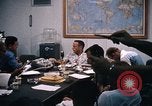
All astronauts listen to Scott Carpenter during a debriefing at Grand Turk Island in Turks and Caicos Islands.
All Astronauts, seated around table at Grand Turk Island. They listen to astronaut Scott Carpenter during a debriefing following his return from the Mercury-Atlas 7 orbital mission. Various objects like pencils, papers, mike and glasses lie on table. Map on wall. An astronaut picks a journal from table and puts it down again.

U.S. Nuclear test "Cherokee" in Operation Redwing, off Namu Island, Bikini Atoll, Marshall Islands.
First air drop test of a thermonuclear weapon. The Hydrogen bomb nuclear weapon was dropped from a USAF B-52 bomber (not seen) that flew from Fred Island, Eniwetak (sometimes spelled Enewetak or Eniewetok), on May 21, 1956. View appears to be from an aircraft flying above altocumulus clouds, below higher stratiform layers. The film begins with a complete whiteout from the initial fireball. As that subsides, local stratiform clouds take on a rosy hue and the center fireball is seen rising above them. As the fireball rises, it takes on a somewhat hemispherical shape, flat on the bottom, from which a straight stem-like column extends toward the ground. The light of the explosion slowly fades and complete darkness ensues. Official accounts state that the intended ground zero was directly over Namu Island, but the flight crew mistook an observation facility on a different island for their targeting beacon with the result that the weapon delivery was grossly in error. The bomb detonated some 4 miles off target over the ocean northeast of Namu. As a result essentially all of the weapons effects data was lost. ( Note: According to ancillary reports, the delivery error resulted in blast overpressures and thermal effects on the 6 structural response targets between Iroij and Namu Islands, greatly exceeding specifications for any use in scientific military modeling of high yield aerial detonations. Plans for graded damages analysis failed when all the structures collapsed. Effects cameras also failed from the intense fireball heat.)
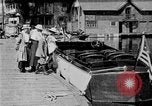
Tourists board sightseeing launch, and views of island and Chateau in St. Lawrence Island.
Tourist visit St. Lawrence Island. Tourists board the sightseeing launch. Views of island from the launch. Buildings on the island. Trees and greenery on the island. Large Chateau of some wealthy owner with yacht.
CRITICALPAST.COM: About Us | Contact Us | FAQs - How to Order | License Agreement | My Account | My Lightboxes | Shopping Cart | Advanced Search | Featured Collections | Website Terms & Conditions | Privacy Policy ©2026 CriticalPast LLC.
License Agreement |
Terms & Conditions |
Privacy Policy
©2026 CriticalPast LLC.