


 Francais
 Deutsch
 Italiano
Refine Your Search
Goodenough Island New Guinea 1943 stock footage and images
- Showing 12751 to 12756 of 13657 results more
more Hide
Hide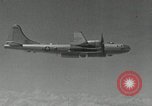
U.S. run Kadena Airbase in Okinawa
Kadena Airbase in Okinawa, Japan. B-29 'Superfortress' bomb North Korean targets during the Korean War. United States Air Force crew carrying bombs in Okinawa. Aerial view of Kadena Airbase. Sign on building reads 'Headquarters Marine Amphibious Force and 3D Marine Division' and 'United States Marine Corps Camp Courtney'. View of harbor at Okinawa. Sign reads 'Fleet Activities,Ryukyus U.S. Naval Air Facility'. U.S. airplanes at Kadena Airbase. C-5 Galaxy U.S. transport airplane parked at Kadena. Airplane maintenance by U.S. Airmen. Housing, club and supermarket at Kadena. A doctor treats a child as mother stands nearby. Women shopping at the commissary and exchange in Kadena Airbase. Children playing on the playground of a school inside Kadena Airbase. A sign reads “The friendlist people on Okinawa Welcome You To Koza City”. View of Koza City, Okinawa. An American woman with his son, shop in a departmental store in Koza City.
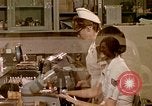
Responsibilities and duties of U.S. military personnel towards United States Kadena air base and Japan
Responsibilities and duties of U.S. military personnel towards United States Kadena Air Base and Japan. Okinawa-The Keystone of the Pacific. Two U.S. military enlisted technicians look through a microscope. A nurse talks to a technician. U.S. Airmen work in an airplane maintenance shop. A female U.S. military NCO works as a clerk. U.S. Airman works on a machine and spray paints a missile. U.S. Airman drives a truck in Air base. Pilot puts on mask in cockpit of his fighter plane. A U.S. transport airplane takes off from the air base. A U.S. fighter jet takes off from air base. View of sunset on Okinawa.
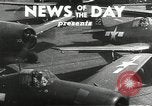
Japanese Kamikaze aircraft attacking U.S. Navy Task Force 58, off Okinawa
Japanese Kamikaze aircraft attacking U.S. Navy Task Force off Okinawa. They attack the Aircraft Carriers Yorktown, Saratoga, and Bunker Hill. View from deck of USS Yorktown (CV-10) as a kamikaze, hit and on fire, passes directly overhead and crashes into the ocean just past the deck of the ship. The Saratoga is hit by 4 Kamikaze planes. 315 U.S. sailors and airmen killed or wounded. Crew struggles to control fires and damage and care for casualties.The attacks continue and the USS Bunker Hill is struck by 2 Kamikaze planes and is on fire with heavy smoke rising as crew tries desperately to save her. The Cruiser Wilkes-Barre comes alongside spraying fire hoses in attempt to aid the stricken Bunker Hill. The Wilkes-Barre passes respirators to firefighters aboard the Bunker Hill. Rescue boats pick up crewmen who were blown off the deck into the sea. 373 killed and 264 injured on the Bunker Hill. (World War II period).
U.S. Fifth Fleet commanded by Vice Admiral Spruance, and U.S. 10th Army, commanded by Lieutenant General Buckner, at Okinawa.
Animation depicts Okinawa in relation to Japan,China,Formosa, and Iwo Jima. U.S. landing ships carry troops who make unopposed landings on Hagushi beach, U.S. troops seen pouring ashore. Okinawa. Lieutenant General Simon Bolivar Buckner and Vice Admiral Raymond A. Spruance seen looking through binoculars on the deck of the amphibious Flag Ship. U.S. troops move inland from the beachhead. Troops bringing bulldozers. U.S. Army infantry of the 24th Corps engage Japanese defenders. Japanese bunkers and fortifications seen. U.S. battleships and other ships of the line begin intense bombardment of the Japanese positions. U.S. army artillery fire large howitzers. U.S. tanks attack Japanese fortifications and suffer counter fire. Troop movements impeded by rain and mud. Ammunition ships seen having difficulty on congested beachhead. Animation shows how naval gunfire could successfully strike Japanese fortified positions because of flat trajectory. (World War II period).
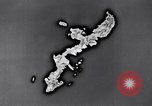
U.S. Battleships fire at Japanese defenses during the battle for Okinawa, Japan, in World War II.
U.S. Battleships fire at Okinawa, Japan. A map shows the area of operation of the land forces. 483 Japanese artillery pieces located in the area. U.S. tank destroyed by Japanese artillery fire. Japanese antiaircraft fire interferes with U.S. observation planes. U.S. naval gunfire from ships was able to destroy 120 Japanese artillery emplacements. An airplane in flight. Many views of U.S. naval gunfire. Views of destroyed Japanese heavy artillery.
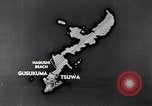
U.S. naval guns are directed against fortifications in Shuri and Naha, Okinawa
Main battery Battleship fire is directed against Japanese fortified towns of Shuri and Naha in Okinawa, Japan. They are pounded by 14 inch and 16 inch naval guns for two days. U.S. troops find a mass of rubble when they enter the city of Shuri. The city of Naha is pounded by U.S. naval heavy guns for 40 days and nights. Low level aerial views of destroyed buildings in Naha. U.S. assault on the Naha airfield includes fire from U.S. navy rocket and mortar craft, seen in operation. Views of U.S. ground forces maneuvering to capture the Naha airfield, using grenades, and flamethrowers. (World War II period).
CRITICALPAST.COM: About Us | Contact Us | FAQs - How to Order | License Agreement | My Account | My Lightboxes | Shopping Cart | Advanced Search | Featured Collections | Website Terms & Conditions | Privacy Policy ©2026 CriticalPast LLC.
License Agreement |
Terms & Conditions |
Privacy Policy
©2026 CriticalPast LLC.