


 Francais
 Deutsch
 Italiano
Refine Your Search
Goodenough Island New Guinea 1943 stock footage and images
- Showing 2389 to 2394 of 13657 results more
more Hide
Hide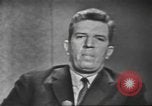
Kennedy and Nixon comment on the Indochina War, Quemoy and Matsu islands, and U-2 flights during their third debate.
Nixon and Kennedy debate questions regarding relations with Communists during the third Kennedy-Nixon Presidential Debate in the United States. Douglass Cater of Reporter magazine asks Republican candidate U.S. Vice President Richard M Nixon to comment whether there was a valid criticism of his statement of foreign policy. Nixon answers and states that the criticism is not valid. Regarding Indochina, he says that the U.S. would not have tolerated Indochina falling under Communist domination. And as a result of that the civil war there ended. He states that he supports the President's position and thinks that the President was correct in ordering the U-2 flights. Referring to Quemoy and Matsu he states that he objects to the constant reference to surrendering these islands. Democratic candidate Senator John F Kennedy disagrees with Nixon's statement on Indochina and states that reason Indochina was preserved was the Geneva Conference. On the question of the U-2 reconnaissance aircraft flights he states that he has never criticized them and never suggested stopping of espionage. On the question of keeping the Communists in doubt about the U.S. defending Quemoy and Matsu he states that the U.S. should meet its commitments to Formosa (Taiwan) and the Pescadores. He concludes by saying that he disagrees with Nixon as Nixon is extending the administration's commitment.
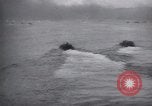
U.S. infantry fights Japanese troops and capture a Japanese air base on Noemfoor island in Indonesia during World War II.
U.S. infantry battles Japanese forces on Noemfoor island in Indonesia during World War II. U.S. infantry lands on narrow coral reefs. The infantry advances inland under fire. A Japanese air base comes under American possession. Reinforcements and supplies arrive by air. Paratroopers and parachute supplies are landed by U.S. Army Air Force transport aircraft.
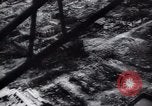
U.S. Marines battle Japanese forces on Agana, Guam, Mariana Islands after aerial bombardment during World War II.
Cleaning up operations by the U.S. Army in Agana, Guam, Mariana Islands during World War II. Aerial views of the town of Agana after U.S. Army Air Force bombardment. A Mass is conducted in a field as cleaning up operations continue. Smoke rises from shell explosions. U.S. Marines armed with guns advance cautiously. Wounded are carried behind the firing line by their comrades. Near the same United States Marine marker which stood during the Japanese attack two and a half years ago, the U.S. flag is raised over Guam.
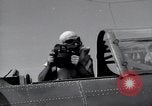
Signal officer signals to U.S. Navy TBF Avenger torpedo bombers taxiing on Pacific Island during World War II.
Carrier operations of USS Monterey (CVL-26) in the Pacific Ocean during World War II. Aerial photographer takes aerial photographs from U.S. Navy SBD Dauntless bomber. Signal officer signals to U.S. Navy TBF Avenger torpedo bombers taxiing on a Pacific Island.
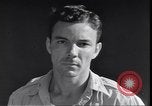
U.S. Army Air Forces B-29 bomber crew member on a South Pacific island gives his view on surrender of Japan.
Crew member of USAAF B-29 Superfortress bomber at a South Pacific island, gives his view on surrender of Japan soon after returning from a flight to Japan. The crew member speaks about B-29s bombing Japan in the final days of World War II and talks about his first peacetime landings.
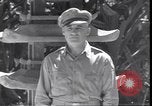
U.S. Army Air Forces officer on a South Pacific island gives his view on B-29 bombers and surrender of Japan.
Crew member of USAAF B-29 Superfortress bomber at a South Pacific island, gives his view on surrender of Japan in World War II soon after returning from a flight to Japan. A U.S. Air Force officer pays tribute to the production line of B-29 bombers, ground and air crews. The officer says it was only because of B-29s United States was able to defeat Japan in the final days of war.
CRITICALPAST.COM: About Us | Contact Us | FAQs - How to Order | License Agreement | My Account | My Lightboxes | Shopping Cart | Advanced Search | Featured Collections | Website Terms & Conditions | Privacy Policy ©2026 CriticalPast LLC.
License Agreement |
Terms & Conditions |
Privacy Policy
©2026 CriticalPast LLC.