


 Francais
 Deutsch
 Italiano
Refine Your Search
Goodenough Island New Guinea 1943 stock footage and images
- Showing 2659 to 2664 of 13658 results more
more Hide
Hide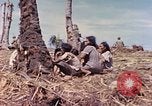
Group of natives and children in foxhole, sunken Japanese barges and corpse during a battle of Eniwetok in Eniwetok Atoll
Battle of Eniwetok during World War II. A group of natives and children in foxhole. Children and an old woman on island. Sunken Japanese barges and a dead body of a man on it. Burnt dead bodies of Japanese on island. Burned out medium U.S. tank. A soldier near a tank.
Activities on the Enewetak Atoll just before the Operation Sandstone atomic bomb tests.
Covers the events just before the atomic bomb tests (Operation Sandstone) on the Enewetak Atoll (sometimes spelled Eniwetok or Eniewetok) in the Marshall Islands. U.S. parachute troopers board a transport plane. Scenes of men working on communication systems. Tests and experiments are conducted in the laboratories and valuable data collected. Light aircraft is used to ferry scientists from one point to another. An air laboratory inside a plane to collect valuable information. Men prepare to leave Eniwetok. Scientists and technicians make a last minute inspection of all the necessary instruments before leaving the island. U.S. ships loaded with men move to safer water. Unmanned B-17 drone aircraft takes off to capture traces of the atomic cloud. Men prepare to trigger the atomic bomb on the Eniwetok atoll.

Aircraft carriers and ships during battle of Saipan in the Pacific War (WW2)
Aircraft carriers and ships during battle of Saipan in the Pacific War (World War II). Animation of map of Saipan. Ships progressing in sea. Firing and bombardment at ships. Guns firing. Marines in landing barges. Bombs dropped on the ships. Marines advance on island. Bombing on the island. Tanks advancing. Scene of artillery fire. Wreckage of planes. A plane taxiing. Scene of U.S. flag. Soldiers taking a wounded soldier on stretcher. Medical men trying to save soldiers. women and children are removed to safety at prisoners of war depot. A soldier taking a child in lap.
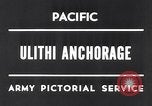
United States 5th fleet ships anchored at Ulithi in West Caroline during World War 2
A film titled 'Ulithi Anchorage' shows United States 5th fleet ships anchored at Ulithi, a group of coral islands, in West Caroline in the Pacific during World War II. An aircraft flies over the ships. An island with an airstrip is seen. All kinds of ships - carriers loaded with bombers, mother ship and its destroyer, dry dock for repairs and a hospital ship are seen.
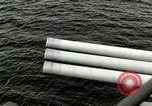
Battleship firing 14-inch guns during U.S. Naval campaign against Saipan in World War II
Bombardment of Saipan in the Mariana Islands during World War 2. Tennessee class battleship fires its triple batteries of 14-inch guns. Cruisers pass in formation. Firing from ships. Soldiers near guns on a ship. Smoke columns rise from the island under bombardment.

USAAF B-29 Superfortress bombers drop bombs over industrial targets in Tokyo, Japan during World War II.
Bombings in Tokyo, Japan during World War II. A bomb truck backs up to a United States Army Air Force ( USAAF ) B-29 Superfortress heavy bomber at an airfield on Saipan, Mariana Islands during the preparations for Tokyo bombing. A soldier writes 'Only the Beginning' on a bomb. The soldier wheeling a bomb cart to the underside of the aircraft. An airman on the top of the aircraft. A Commandant briefing the members of the 21st Bombing Command. Mission leader United States Air Force Brigadier General Emmett O'Donnell and Commanding General of 21st Bombing Command Brigadier General Haywood Hansell, Jr., look at a document and discuss on the airfield. USAAF pilot Robert Morgan, who piloted B-29 Dauntless Dotty, with another crew member. The men beside the B-29 Dauntless Dotty which would lead the team. B-29s lined up on a runway. B-29 Dauntless Dotty takes off. Several men on the airfield watch. A man beside a camera mounted on a tripod takes pictures. The B-29s take off one after the other. They head towards Tokyo. A map shows the flight path from Saipan island to Tokyo, Japan over the Pacific Ocean. Aerial view of Tokyo. The B-29s drop bombs over target areas. Explosions occur in the bombed areas. The B-29s drop more bombs over industrial targets. Explosions occur. The B-29s head back to Saipan after the bombardment. U.S. Army tents in Saipan. Japanese aircraft drop bombs over an airfield in Saipan. Thick clouds of smoke rise from the bombed areas. Wrecked B-29s in view. Flames and smoke rising from the bombed areas. Wreckage of the Japanese aircraft shot down in the raid. Men extinguishing fire. A B-29 taking off from the airfield.
CRITICALPAST.COM: About Us | Contact Us | FAQs - How to Order | License Agreement | My Account | My Lightboxes | Shopping Cart | Advanced Search | Featured Collections | Website Terms & Conditions | Privacy Policy ©2026 CriticalPast LLC.
License Agreement |
Terms & Conditions |
Privacy Policy
©2026 CriticalPast LLC.