


 Francais
 Deutsch
 Italiano
Refine Your Search
Goodenough Island New Guinea 1943 stock footage and images
- Showing 2791 to 2796 of 13658 results more
more Hide
Hide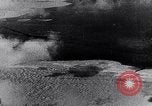
The December 7, 1941 attack on Pearl Harbor, as filmed from Japanese aircraft
Scenes filmed from attacking Japanese aircraft during the attack on Pearl Harbor, December 7, 1941. View from Japanese aircraft strafing and bombing U.S. aircraft and hangars on the ground at Ford Island. Japanese Nakajima B5N (Kate) tail number 229, seen flying past the camera plane. Smoke rising from the ground below. White plumes erupt from torpedoes striking U.S. ships on opposite side of Ford Island. Japanese-captioned still photographs: Of heavy black smoke rising from bombed fuel tanks; Of a torpedo hitting the USS West Virginia; of other ships on battleship row, including the USS Nevada, Arizona, Tennessee, Oklahoma, Maryland, and California. (World War II period).
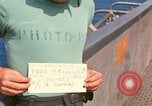
Aircraft launched from flight deck of USS Constellation at Yankee Station, Vietnam.
Operations aboard U.S. Navy's USS Constellation (CVA-64) at Yankee Station, Vietnam. A-4C aircraft moves onto catapult. Men on deck. Plane ready for launch. Aircraft in flight. A-4C aircraft launched from Number two catapult. Island in the far background. F-4B aircraft launched from angled deck. Catapult console operator with raised hands. He lowers his hands and presses a button. A-4C launched. RA-5C aircraft moves on catapult. Catapult crew under aircraft. Men hook up and check bridle. Men leave the area. RA-5C aircraft being launched from number one catapult. Catapult console operator on deck. F-4B aircraft ready for launch. C-2A aircraft comes in for recovery. Men wearing yellow shirt in the foreground. Plane rolls out with area. C-2A taxis toward in front of island. A-6A aircraft towed over deck by tractor. F-4B parked at deck edge between two other F-4B aircraft.
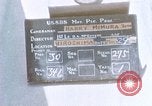
Destruction in Hiroshima, Japan from the atomic bomb explosion. View of flattened and damaged industrial buildings and rubble
Physical damage caused due to atomic bomb explosion in Hiroshima, Japan. Seven months after the blast, camera surveys area covered with rubble. Island between the Motoyasu and Kyobashi rivers with gas plant. Charred and flattened remains of buildings. Some buildings still standing but gutted. Various other buildings on the island. A crumpled steel frame building in the foreground. Various buildings affected by the atom bomb explosion.
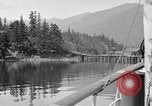
Men and women aboard the trim steamer ship SS Potlatch in Hood Canal region near Puget Sound of Washington state, United States
Various landmarks in Hood Canal region in Washington, United States. Women on deck of the trim steamer ship S.S. Potlatch (active 1912-1917; scrapped 1937). View from ship of wooded shoreline areas in Hood Canal. Men and women aboard the ferry ship. Homes, dock areas are seen. Wooded shoreline in the background. Snow covered mountains of the Olympic Peninsula in the background, including Mount Olympus. A row boat approaches the ship. Views from ship as it heads northward through the Puget Sound to the San Juan Islands. Close views of the San Juan Islands shorelines seen from the moving S.S. Potlatch.

German paratroopers jump to invade Crete in Greece during World War II.
The German invasion of Crete, Greece during World War II. An animated map of Europe shows distances from Crete island to the nearby coasts. A Nazi aircraft in a field. German soldiers look on at a map before invading Crete island. An officer briefs the soldiers. Men in a field as they work on guns and various other equipment. The equipment being loaded into an aircraft. Aircraft lined up in a field. Soldiers prepare to board the planes. A machine gun on a plane. Men board the aircraft. The aircraft are lined up. Smoke rises in the background. The planes in flight. A pilot in a cockpit works on controls. German Stukas in flight over houses and fields. Paratroopers jump from the planes. A Stuka shoots down a British aircraft. Aerial view of the city. A German plane lands in a field. Soldiers wearing life jackets board the flight. The aircraft in flight and a pilot in the cockpit of the plane. German paratroopers drop and land. Soldiers fire from behind the sand bag mounds. Damaged Nazi planes. Bullet hits on aircraft bodies. A plane parked in a field as soldiers walk past it.
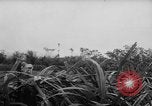
French and Colonial troops advance, take prisoners and guard civilians doing construction work in Indochina
Pacification of a region Southeast of Phy-Ly, Indochina. The operation takes place on an island bordered on one side by the Red River and on the other by the old river bed called 'Faux Canal'. The island is occupied by Viet Minh forces. Soldiers make their way amidst heavy fire. Smoke from explosions all around. French French Colonial forces escort eight Viet Minh prisoners to the rear.Troops in combat advance through under-bush. French DUKW amphibian drives out of the water. Local Vietnamese civilians organize for self defense. They construct a bamboo palisade. Masses of civilians work on the Red River dam under protection of French forces. French soldiers load prisoners into a jeep and drive away. A soldier sits guard near prisoners seated on the ground with their arms tied at their elbows, behind their backs. A Catholic village in the background is where they were captured.
CRITICALPAST.COM: About Us | Contact Us | FAQs - How to Order | License Agreement | My Account | My Lightboxes | Shopping Cart | Advanced Search | Featured Collections | Website Terms & Conditions | Privacy Policy ©2026 CriticalPast LLC.
License Agreement |
Terms & Conditions |
Privacy Policy
©2026 CriticalPast LLC.