


 Francais
 Deutsch
 Italiano
Refine Your Search
Goodenough Island New Guinea 1943 stock footage and images
- Showing 3229 to 3234 of 13659 results more
more Hide
Hide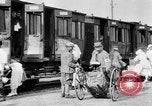
Nurses feed and take care of French soldiers at a hospital in France during World War 1.
French red cross nurses aid in care of French soldiers during World War 1. Nurses greet railroad train carrying French soldiers. Nurses work at food line giving hot food to a line of French soldiers. Injured soldiers being looked after by doctors and nurses and nuns at a hospital in France. A nurse tries to feed a patient lying in a bed. Close up view of another nurse sitting by the bed of a wounded soldier. A nurse opens a veranda door onto a sun porch where injured soldiers are recovering. French soldiers on terrace in the background. Nurses and soldiers on the terrace as they relax and enjoy. Nurse adjusts cast and bandage on a soldier's arm. A soldier on crutches and a nurse look at a chart. Nurses and French soldiers walk down a corridor. A nurse helps two blind soldiers walk down the stairs of the hospital and they walk into a garden. Sign over hospital door includes "XV Region Service de Sant Hospital Complemental Hermitage" Soldiers are helped by the nurse as they sit onto a bench. The sun sets and soldiers along with the nurse walk on a beach. (Beach location and Mediterranean foliage implies this is likely a hospital at Bastia on the island of Corsica, France used by the Allies in World War I).
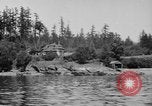
Inlets along the coast of Puget Sound and Hood Canal areas in Washington, United States.
Various inlets, some with fine homes near the water, seen along the coastline in the areas of Puget Sound, Hood Canal, and San Juan Islands. A sailing ship at anchor near a wooden dock. A man on the deck of the steam ferry ship SS Potlatch. Wooded shoreline in the background.
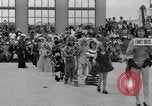
Children participate in a fancy dress where they dress up in flower like dresses in Ocean Park, California.
Children participate in a fancy dress parade in Ocean Park, California. Children parade in a fancy dress event as they wear colorful costumes and dresses. A girl pushes a trolley or stroller decorated with flowers. A boy dressed as a cowboy, and girls dressed as saloon girls. A girl dressed as a milk maid, and another girl dressed like an island native in grass skirt. A young boy or girl rides on a float with an airplane covered in flowers, but he is crying the whole time. A girl dressed up as Statue of Liberty as she blows flying kisses.
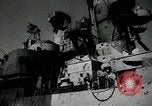
Events in career of Chester W. Nimitz. High level planning during World War II.
Brief view of damage to Light Cruiser, USS Birmingham (CL-62) suffered while trying to aid Light Aircraft Carrier, USS Princeton (CVL-23) which burned and exploded from Japanese bombing, on Oct. 24, 1944, in World War 2. Scene shifts to United States sailors aboard a battle ship wearing Purple Heart medals awarded following Battles of Midway and Coral Sea. Fleet Admiral Chester W Nimitz, commander of U.S. Navy forces and General Douglas MacArthur, commander of U.S. ground forces, look at a map on wall, and consult together. MacArthur holds his traditional corn cob pipe. Admiral Nimitz on battlefield inspection tour with Admiral William Halsey and Navy Secretary Frank Knox in Solomon Islands. American flag flutters at United States Base camp. President Roosevelt, Admiral Nimitz and General MacArthur meeting at CINCPAC headquarters. Nimitz points at a map on wall. Roosevelt and MacArthur having private conversation. Admiral Nimitz hands pointer to General MacArthur, who prepares to brief the President about the final invasion of Japan. Admiral Nimitz climbs over an obstacle and sits next to President Roosevelt. Outdoor scene on Hawaii, President Roosevelt seated and Admiral Nimitz and other officers standing in relaxed gathering.

Engineers repair and check United States aircraft in the Mediterranean.
Animated map shows Italy and Yugoslavia. United States aircraft makes an emergency landing at an airfield. Airmen speak with the pilot. Engineer inspects aircraft wheel. Number of airplanes parked on the ground. Engineers check the aircraft engine. Yugoslavian ships bring food for the Yank Island. Soldiers unload goods from ship. Troops disembark from a B-47 aircraft. Man gives hand signals. (World War II period).
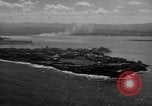
Aerial views of San Juan, Puerto Rico.
Aerial view of San Juan in Puerto Rico. Ships docked at harbor. View of the Capitol Building with seashore in the background. View of El Moro. Large single runway airstrip. Houses and beach area of the Island.
CRITICALPAST.COM: About Us | Contact Us | FAQs - How to Order | License Agreement | My Account | My Lightboxes | Shopping Cart | Advanced Search | Featured Collections | Website Terms & Conditions | Privacy Policy ©2026 CriticalPast LLC.
License Agreement |
Terms & Conditions |
Privacy Policy
©2026 CriticalPast LLC.