


 Francais
 Deutsch
 Italiano
Refine Your Search
Goodenough Island New Guinea 1943 stock footage and images
- Showing 481 to 486 of 13636 results more
more Hide
Hide
Various "firsts" in U.S. aviation history from 1918 through 1924; early history of flight and vintage flight scenes
Shows several aviation "firsts" accomplished by U.S. Army Air Service aviators in the period from 1918 through 1924. A close formation of biplanes in flight. President and Mrs. Woodrow Wilson chat with Major Fleet, Officer in charge, on the occasion of the first air mail flight, inaugurated on May 15,1918 between Washington DC and New York.The mail is loaded into the Curtis JN-4 aircraft. Pilot in the cockpit. The aircraft takes off and in flight. Air Service. Mention of aviators helping spot forest fires. Smoke rising from forest fires and mountain ranges. In 1920, U.S. Army Captain St. Clair Streett is seen with some of his Squadron who flew four De Havilland DH-4 aircraft 9,000 miles, from New York City to Nome, Alaska. Two of the men play with pet dogs. Their itinerary is painted on the side of one of the aircraft, along with the names of pilot and mechanic (C.E. Crumline and J.E. Long). In 1923 the first non stop coast-to-coast flight was made in the Fokker T-2 aircraft. . A sign on the aircraft reads 'Army Air Service non stop coast to coast'.First Lieutenants Oakley O.Kelly and John A. Macready board the aircraft, at Roosevelt Field, Long Island, New York, on May 2, 1923. Their Fokker T-2 in flight. Their arrival at Rockwell Field, on Coronado Island (San Diego) California. In 1924, Lt. Russell Maughan is seen boarding his P-1 Hawk airplane at Mitchel Field, on Long Island, New York, and taking off , bound for Crissy Field at the Presidio, San Francisco, California. His goal is the first dawn-to-dusk, coast-to-coast flight. Views of his P-1 Hawk airplane flying over Manhattan, New York City.
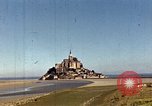
American troops and war correspondents at Mont Saint Michel and Saint Malo in France during World War II
American troops and war correspondents in France, during World War 2. They visit Mont Saint Michel, a small rocky island at the mouth of Couesnon River in Normandy, separating Normandy and Brittany. View of the island with a monastery at the top. War correspondent Robert Capa (of Life and of Time Magazines) looks on and takes pictures. Military jeeps leave the island. Madam Poulard stands under a sign at her Hotel Poulard. Sign for the Hotel and its reputed omelette. Soldiers on the street. Shops and French flags. GIs at the Benedictine Abbey and steepled church. An old French man points. U.S. Soldiers take a tour of the monastery with a woman guide. Steeples, towers, arches and other architectural features of the abbey and monastery. War correspondents including Charles Collingwood, Chicago Daily News' Helen Kirkpatrick, New Yorker Magazine's Joe Liebling (Abbot Joseph Liebling) and Warden Becker. Helen and Charles pose for the camera. Ernest Hemingway, covering for Colliers Magazine, drinks and talks to Bill Walton. War correspondents including Bill Stringer seated and walking on the street. They visit the monastery and take pictures. Civilians on the streets. Tall sticks in sand placed by German forces around the island to prevent Allied planes from landing at low tide. Three war orphan brothers whose parents were killed at the battle of St Lo, play on the beach as their grandmother looks on. Views of the island and patterns on the sand around the island from the receding waters of low tide. St. Malo, Brittany: Field near Saint Malo. American soldiers bathe and swim in a lake. They fool around in the water, taking a break from battle.
Violent explosions and fire fighting as Japanese bombs hit USS Franklin (CV-13) in Pacific Ocean during World War II.
Opening Slate reads: 19 March 1945, Enemy bombs hit (pictures made shortly afterwards shooting aft from forward deck). It refers to Japanese bombs striking the American Aircraft Carrier USS Franklin (CV-13). Heavy billowing smoke obscures the view for a moment. Then sailors are seen on the flight deck of the Franklin fighting a fire with hoses. More fire breaks out and smoke billows from the deck. Fire fighters continue efforts with hoses. New fire breaks out near the edge of the deck opposite the ship's island superstructure. View from other direction shows sailors all over the deck near the island trying to contain the fire. A slate appears reading: A series of violent explosions begin (made from USS Hickok - DD-673). This refers to filming from the USS Hickok. The USS Franklin is seen consumed by fire and covered by dense black smoke rising high into the sky. The smoke turns more white. A new view from the Hickok shows fire and smoke coming from the area of the carrier's island and blowing aft. A different view shows both white and dense black smoke enveloping the Franklin. Next, firefighters are seen again, on the Franklin's flight deck, forward of the island, continuing to battle the fires that see concentrated amidship. Slate reads: USS Miller alongside (refers to the destroyer, USS Miller, DD-535).View of the USS Miller close-by. Another view of sailors fighting the fire on the Franklin's flight deck. Brief view, from a parapet on the island, shows smoke. Also seen are water intakes stretched out from the ship, presumably providing water for firefighting. Back on the Franklin's flight deck, firefighters work against a backdrop of white smoke. a closeup shows portions of the flight deck broken and tilted into the hangar deck. More views of sailors on deck, forward of the island, fighting the fires. Glimpse of hangar deck below, where large section of flight deck has fallen. Firefighters with hoses working there.
The first dawn-to-dusk flight by U.S. Army Air Service Lt. Russell L. Maughan from New York to California.
The first dawn-to-dusk flight by U.S. Army Air Service pilot Lieutenant Russell L. Maughan from New York to California. He stands beside his aircraft, at Mitchel Field, Hempstead, Long Island, New York. An army officer wishes him good luck on his trip. Lt. Maughan in the cockpit.and taking off in his P-1 Hawk airplane.. The plane in flight over Manhattan, New York City.
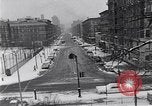
Churches in Harlem, New York City and other area landmarks
A snow-covered street in Harlem, New York City. A large bell. Children climb railing. Snow covered city. Buildings. People pass by. A marquee reads "Reo Hotel". New Hope Community Church. Fountain Spring Baptist Church at 158 West 126th Street New York, NY. A sign reads"Home cooked food every Sunday". Children swing at playground in a park. View of the Park Avenue Bridge crossing the Harlem River from Manhattan Island to the Bronx.
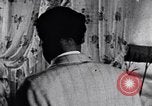
Malvin Gray Johnson paints in the United States. Also New York City subway scene.
An African American artist opens his coat in United States. R W Lindsey prepares a fish sculpture with a child. A woman studies a book. Richard William Lindsey at a class observes students' paintings. Malvin Gray Johnson comes with a board, sits and paints. Paintings at a wall. W Ellisworth Artis prepares a sculpture. People at an exhibition of Spanish African American art. Next scene appears unrelated, and shows pedestrian traffic on a busy New York City street, with many men and women walking on the sidewalk beside stores and shops. Next scene shows a stopped subway train at a station in New York City. Men and women and a few police officers exit the train onto a crowded platform, as other riders wait to board the railroad train. Next scene returns to an art studio view, with African American painters at work. Final scenes show a Harmon Communities map depicting Long Island in New York, and view of a train passing slowly through a switch yard area or marshaling yard.
CRITICALPAST.COM: About Us | Contact Us | FAQs - How to Order | License Agreement | My Account | My Lightboxes | Shopping Cart | Advanced Search | Featured Collections | Website Terms & Conditions | Privacy Policy ©2026 CriticalPast LLC.
License Agreement |
Terms & Conditions |
Privacy Policy
©2026 CriticalPast LLC.