


 Francais
 Deutsch
 Italiano
Refine Your Search
Greek-Civil-War stock footage and images
- Showing 8539 to 8544 of 27484 results more
more Hide
Hide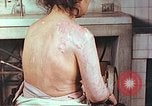
A female patient shows radiation affects on her body after facing atomic attacks in Hiroshima during World War II.
Medical care and review for victims of atomic bomb attack carried out by the United States over Hiroshima, Japan during World War 2. Radiation affects on the back and the right shoulder of a female patient. The right side of the right breast shows protection afforded by the right arm. The right shoulder and the breast position at the time of the blast.
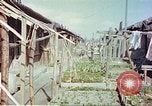
A housing plan employed for workers by Japanese mining companies in Japan after World War II.
Homes constructed for Japanese workers in Japanese cities after World War II. Homes of barracks variety which are given to those workers who are employed at the Higashi Misome Coal Mine. A Japanese woman washes small pieces of clothes in a wooden bucket in front of her home. A housing plan that is employed by the Higahu-Misome Mining Company. It further illustrates the conditions in which those homes are kept. A view from a train as it passes through various towns and cities while en route to Kyoto. The type of buildings found in most cities of Japan which were untouched in the strategic air attack against Japan
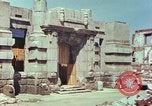
Japanese people clean rubble from their properties and prepare to make new homes in Hiroshima after World War II.
Ruins in Hiroshima, Japan after World War II. The entrance to a Savings Bank which is set up and doing business in a light wooden structure built inside the shell of the original bank building. A Japanese man pulls a cart along a road which has been partially cleared. A man walks through debris of a collapsed building. A Japanese man cleans away rubble from his property, preparatory to planting his garden and erecting his new home. A Japanese telephone maintenance man repairs lines on a telephone pole. A group of Japanese children collects sea shells near a bridge along the fringe of Motoyasu River.
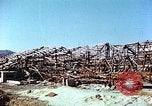
Structural collapse of the Mitsubishi-Urakami Ordnance Plant after the atomic bombings of World War 2
The Mitsubishi-Urakami Ordnance Plant shows the effects of atomic blasts of World War II on its light steel frame structure in Nagasaki. While the structurally stronger east wall and the center section of the building withstood the blast comparatively well, the entire section has been displaced. The wall of the building was afforded some protection by the boiler house. Structural collapse of the light steel frame building.
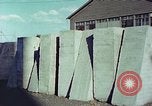
Protective measures taken to protect machinery at Japan Iron and Steel Works, Yawata from incendiary attacks of World War II.
Protective measures taken at the Japan Iron and Steel Works, Yawata (also called Yawata Steel Works) to face the incendiary attacks during World War II. Heavy reinforced concrete portable blocks used at the Japan Iron and Steel Works to protect machinery. The building opposite the river from Tokyo Electric building where gel incendiary bomb landed at an angle onto the front face of tile work. A black smudge left by the bomb. Concrete revetments used to protect transformers from blast and fragmentation at the Japan Iron and Steel at Yawata. Sand filled heavy plank walls used to protect transformers.
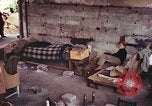
Japanese medics conduct check ups on a Japanese man inside a bombed out building in Nagasaki after World War II.
Japanese medics conduct check ups on patients in a bombed out building of Nagasaki, Japan, three months after atomic bombing and end of World War 2. Interior of the bombed out building. Injured Japanese on beds. A Japanese man prepares to cook food over wood fire. Japanese medics conduct check ups on a Japanese man inside the bombed out building.
CRITICALPAST.COM: About Us | Contact Us | FAQs - How to Order | License Agreement | My Account | My Lightboxes | Shopping Cart | Advanced Search | Featured Collections | Website Terms & Conditions | Privacy Policy ©2026 CriticalPast LLC.
License Agreement |
Terms & Conditions |
Privacy Policy
©2026 CriticalPast LLC.