


 Francais
 Deutsch
 Italiano
Refine Your Search
Greek-Civil-War stock footage and images
- Showing 9337 to 9342 of 27484 results more
more Hide
Hide
United States President Dwight D Eisenhower visits Ohrdruf Concentration Camp in Germany at end of World War II, in Europe.
Nazi concentration camps seen after being liberated at end of World War II in Europe. Supreme Allied Commander, General Dwight D. Eisenhower, visits the Ohrdruf concentration camp. Surrounded by crowds of U.S. soldiers, he views the remains of dead victims. A man demonstrates how a device is used to punish inmates. Scene shifts to the Buchenwald camp, where political prisoners were kept,. and then to the Bergen-Belsen concentration camp. Survivors are seen in pitiful condition from starvation, torture, deprivation and sickness. Burned skeletons of human bodies in the ovens. German female concentration camp guards (SS guards known as Aufseherinnen) walking in a line and then seen in formation. SS (Schutzstaffel) concentration camp guards, both men and women, and their leader, Josef Kramer, Commandant of the Belsen camp, seen forming up, and then marching off and being taken into custody.
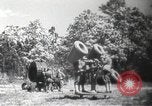
American civilian volunteers serve as aircraft spotters in World War II and practice during a drill in Arkansas, United States.
Opening scene shows soldiers standing near a searchlight and others by an array of sound direction finders for use in detecting movements of aircraft over the United States during World War 2. A large formation of single engine fighter aircraft is seen in flight. A formation of Navy PT boats speeds through the water. A trained volunteer airplane spotter looks through binoculars. A tall observation tower in a wooded area. Other volunteer airplane spotters, including two women, are shown in various cities. One spotter is in an agricultural area. Scene changes to students at a United Services Organization (USO) benefit dance in their high school. Camera pans upward to an airplane spotter on duty, above the school. He hears the sound of an airplane and looks through his binoculars. He annotates a Flash Message report with his observations, and picks up a telephone announcing "Army Flash" to the operator. A woman at a telephone switchboard takes his call and relays it to a woman at an Information Center. Film shows volunteer airplane spotters being trained by the U.S. Army to identify enemy aircraft using charts of their Silhouettes. Closeups of civilians ostensibly reporting their observations using "Army Flash" calls. Closeups of telephone operators giving priority to such calls. View of volunteers inside an information center, where aircraft movement are plotted on a large table map and their flight number, number of aircraft, number of engines they have and whether they are at high, medium, or low altitudes. Officers from Army Air Forces interceptor units observe from a balcony. In a drill, alerted pilots are seen scrambling and taking off in interceptor aircraft. A P-38 fighter plane takes off directly toward a camera. A formation of Curtis P-36 Hawk fighter aircraft are seen in flight. A large "V" formation of U.S. Army single engine airplanes is shown.
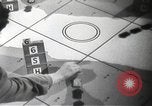
Operation of an Air Raid Control Center by American civilians in Arkansas, United States in World War II.
American civilians prepare for an air raid drill in Arkansas, United States during World War 2. The radio stations ordered to go off line. A woman sings at a radio station. Message through the radios given to the civilians not to use the telephones. Closeup views of different kinds of portable and console radios. The Commander at the Information Center orders all aircraft to be grounded. Artillery fired at simulated enemy aircraft. Women marking on a large map at the Information Center. Civilian Airways officer takes information on the phone. A woman places symbols on the map. Animated map of United States with the Information Centers. Vehicles drive past a police station. Men pass the message from the District Control Center. Mills and, hospitals are requested for a blackout. Doctors and nurses in a surgery operating theater perform an operation in the hospital. The entire organization on alert after information reaches all the departments. Blackout in the city on the sound of an alarm and building lights go dim.
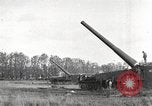
U.S. Naval Railroad guns in France during world War I
Two U.S. 14"/50 caliber Mk 4 naval guns mounted on railroad carriers, are seen in a field in France during World War 1. A glimpse of U.S. Army artillery officer inside the control room of one gun. Armed sentry outside the gun. Navy gunners standing on platform abutting the control room. View from further back along the train, as Navy gunner on the platform cranks a handle raising the gun's elevation. Different view of the gunner on the platform cranking the elevation handle, lowering the barrel to near zero elevation and then back up again. (WWI. WW1)
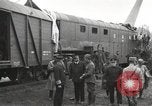
U.S. 4-star Admiral and French officers inspect a U.S. Navy railway gun in France, during World War I
Views of a gun battery comprising one camouflaged U.S. 14-inch fifty-caliber Naval gun, mounted on a railway carriage, accompanied by a train of rail cars containing everything needed for its operation and supply, in France, during World War 1. An American Army officer discusses the train and gun with an American 4-star Admiral, and Allied officers, including one British and several French officers. A U.S. Navy Captain accompanies the Admiral. A French officer climbs aboard one rail car to examine it. Next sequence shows the gun battery crewmen in a mess line being served in front of the train's mess car. Brief view of gunners going down into dugout beside the train. More views of gunners in mess line.

British Chief Justice Fredrick G Lawrence and German attorney Dr Otto Stahmer during the Nuremberg War Crime Trials in Germany.
Nuremberg War Crime Trials in session in Germany. British Chief Justice Fredrick Geoffrey Lawrence interrupts twice to complain about the translations not coming through. Officials seated at a desk wearing headphones. The American flag behind members in the panel. German attorney Dr Otto Stahmer asks question in German which is answered in English after being translated by Berger Dahlerus of Stockholm.
CRITICALPAST.COM: About Us | Contact Us | FAQs - How to Order | License Agreement | My Account | My Lightboxes | Shopping Cart | Advanced Search | Featured Collections | Website Terms & Conditions | Privacy Policy ©2026 CriticalPast LLC.
License Agreement |
Terms & Conditions |
Privacy Policy
©2026 CriticalPast LLC.