


 Francais
 Deutsch
 Italiano
Refine Your Search
Greek-Civil-War stock footage and images
- Showing 1039 to 1044 of 27579 results more
more Hide
Hide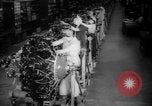
War production manufacturing workers busy at the Douglas Aircraft Factory in Long Beach, California during World War 2
Factory workers at A-20 (Fighter-Bomber Army plane) engine line in Douglas Aircraft Factory, Long Beach, California during World War 2, supplying aircraft for the war effort. Women factory workers make adjustments to engines in a Pratt-Whitney engine line. Close up of a woman worker at work on an aircraft engine. African American workmen stack plexiglass parts for bomber aircraft gun or bombing sights. Ex-sailor works on wing of aircraft. Shirtless worker removes an aircraft tire from a rack of tires and rolls it by hand. Propaganda cartoon poster above the rack shows a frightened Hideki Tojo up a tree and reads 'Tokio Kid Say' and shows an attack dog below, keeping him in the tree, and wearing a collar that says, "Conservation," encouraging workers to conserve and use factory resources wisely for the war effort in order to beat the Japanese.
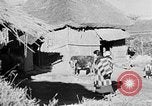
Rural population's contribution to Japanese war efforts in farm and home industries during World War II
Rural population of Japan engaged in war production and support of Japan during World War 2. Japanese rural area shows farm families outside native huts. Women cook food, pump water and wash vegetables in creek. Mud and wood huts with straw roofs. Farmers in field. Harvesting in farm. Lumbers piled up outside a building. Civilian men work with lumber. Women prepare handicrafts outside house. Home industries. Interiors show workers at work including men, women, and children working in war effort. Japanese family eats food and elderly Japanese woman smokes a pipe. Japanese people walk through rubble and debris after Great Kanto earthquake of 1923. Shows areas of rubble and workers digging through earthquake rubble, along with United States citizens involved in effort on the ground and through material relief support from America.
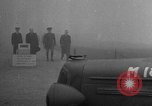
Government officials visit the British Expeditionary Forces in France during the "Phoney War" at outset of World War II.
British Army officer leads British Cabinet officials on tour of the wartime front in France, during December, 1939, in the so-called "Phoney War" at outset of world War 2. A British Naval officer accompanies them. The weather is foggy. Next, a closeup reveals that among the officials is British foreign minister, Lord Halifax (Viscount Halifax). The group converses as they are escorted about the British Expeditionary Force areas of operation. Momentary glimpse of General Alan Francis Brooke, 1st Viscount Alanbrooke, Commander of II Corps in the British Expeditionary Force (BEF). Views of extensive fortified trenches, and a sign reading: "Canadian Front Line, 1917." Change of scene shows contingent of Canadian troops marching in a town. Their commanding officer salutes as they pass. Standing with him, is a French officer in battle helmet. Local French civlians watch the troops on parade. More soldiers march past in background, behind the French spectators. Scene shifts again, to the civilian officials being escorted on tour of the area. Camera focuses on the Canadian War Memorial, at Vimy Ridge, and then pans to the touring group arriving there.
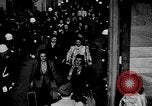
French War Brides at Camp Philip Morris in Le Havre, France at end of World War 2
Camp Philip Morris in Le Havre, France. War brides of American soldiers at railway station preparing to travel to Camp Philip Morris. Several American soldiers are seen with their wives and babies. The war brides fill the train and it leaves the station, as American Military Police in white helmets stand and salute. Passengers look out of the windows of the railroad cars. A sign reads 'Camp Philip Morris'. War brides arrive by bus and carry belongings to their quarters. Camp buildings in view.
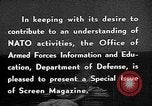
U-boat activity on shipping in World War 2; NATO Naval operations protecting oceans during the Cold War
Responsibilities and assets of NATO's SACLANT. View from cockpit of aircraft landing on deck of U.S. aircraft carrier USS Bennington (CVA-20). Scenes of Atlantic ocean during World War 2. Periscope of German submarine breaks surface. Point of view inside a submarine as seen through periscope looking at a target ship. American convoy underway during World War 2 in the Atlantic Ocean. Underwater shot as a submarine launches torpedo at Allied ship. Allied freighter ships being struck by torpedoes. Underwater view of submarine. A torpedoed ship sinking, with only its bow sticking up in the air and then sinking under the ocean. Views of empty German submarine pens in Brest or Lorient after end of World War 2. Next scene shows a Douglas DC-4 passenger airplane as it passes by the Empire State building, while in flight over Manhattan Island, New York City. Steamships in terminals on the Hudson River. Tug boats and barges in New York harbor. Ocean-going cargo ships pass by the Statue of Liberty. Vehicular traffic in the streets of Norfolk, Virginia. A sign reads 'US Naval Base, Norfolk, Virginia'. View of ships and harbor at Norfolk Naval Station. Headquarters of the Supreme Allied Commander, Atlantic (SACLANT). NATO officers in the "great map room of SACLANT" at the Headquarters. World map placed on a wall. Scene from 1952: U.S. Navy Captain briefs Admiral Lynde D. McCormick, Commander-in-Chief of the U.S. Atlantic Fleet and also SACLANT. Map shows areas of SACLANT responsibility extending around the Atlantic from Southern Europe around past Iceland to the maritime provinces of Canada and down to the U.S. coast.. Surfaced submarine launches Regulus missile. Scene from 1960: U.S. Navy aircraft carrier USS Independence (CV-62) underway. Aircraft parked aboard the aircraft carrier. View of Naval Air Base at Oceana, Virginia. Douglas F4D flies above runway as another lands. Navy F8 aircraft parked on ramp. Canadian Naval Base at Halifax, Nova Scotia, with views of derricks, cranes, piers, and warships.

Hanging of a Nazi war criminal in Landsberg, Germany after end of World War II
Hanging of a Nazi war criminal in Landsberg, Germany after end of World War 2. . American Military officers stand and converse near the gallows. The condemned man, attended by guards and a priest, comes out of a building. They climb the stairs of the scaffold for hanging. An American Field Grade Officer speaks of charges against the condemned man. Soldiers stand near the gallows and watch the hanging. The hooded, condemned man is dropped through a trap by the executioner, Johann Reichhardt, who wears the traditional German executioners’ attire of black coat, white shirt and, black bow tie and black hat. (Reichardt who is clearly seen standing on the platform, was a principal executioner for the Third Reich. But he was subsequently employed by the Occupation Authorities from November 1945, through May, 1946. to help execute Nazi war criminals at Landsberg am Lech by hanging. He was subsequently arrested in 1947, interned, and tried in a tribunal at Munich, where he was sentenced to strict punishment measures.) A military doctor uses a stethoscope to confirm death of the hanging man.
CRITICALPAST.COM: About Us | Contact Us | FAQs - How to Order | License Agreement | My Account | My Lightboxes | Shopping Cart | Advanced Search | Featured Collections | Website Terms & Conditions | Privacy Policy ©2026 CriticalPast LLC.
License Agreement |
Terms & Conditions |
Privacy Policy
©2026 CriticalPast LLC.