


 Francais
 Deutsch
 Italiano
Refine Your Search
Greek-Civil-War stock footage and images
- Showing 11911 to 11916 of 27563 results more
more Hide
Hide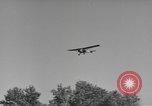
U.S Army soldiers repairing a field wire and loading ammunition in trucks during World War 2
A film on the workings of Air Force Service Group. Their role in keeping remote air force landing strips supplied and in repairing and salvaging damaged airplanes and equipment during World War II is demonstrated. A small airplane in flight low overhead and it drops a parachute with important aerial reconnaissance photographs to an Air Service Center. Soldiers process the photographs. Other soldiers look at the photographs. Soldiers repairing a break in a field wire. A soldier keeps a watch for the enemy. Messages are send in the field with the help of the field wire and an encoding machine. Other soldiers after receiving messages typing them and decoding them. An officer looking at a document. Resources of the center are mobilized. A soldier talking over a phone. U.S. Army Ordnance Company soldiers loading and packing 50 caliber ammunition belts and loading them into boxes. The boxes are loaded in trucks.
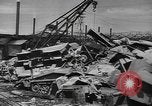
Tanks and other military vehicles are reclaimed from battlefields in Japan and Europe during World War II.
Salvage and reclamation activities in various Theaters of Operation during World War II. European Theater: Wrecked tanks, cranes, locomotives, cars, trucks and other wreckage on the ground. Men standing nearby and working. Writing visible on some tanks including names some names: Clipper (of "C" Company 1st Corps Medium Tank Battalion, U.S. Marines), Booze Hound, and Creeping Headache. Men working on the reclamation. Marine evacuating a hit and disabled tank on the battlefield in Okinawa, Japan. Smoke rises after the tank is hit . A smoke screen is laid to obscure it during repairs. A tank retriever aids the tank. The tank is repaired by crew. As smoke screen dissipates, the the tank and tank retriever have completed repairs and drive on. Men working on reclamation activities, refitting and redeploying tanks in a tank reclamation factory.
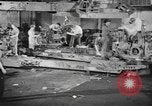
Post World War II reclamation of U.S. Army artillery at factory in the U.S.
U.S. factory workers repair and recondition used artillery left over from World War 2. Several heavy and small guns being repaired. A 90 mm anti aircraft gun, a 155 mm gun (Long Tom) and other guns being repaired.
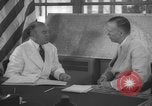
U.S. Secretary of War Harry Woodring and Chief of Staff General George Marshall discuss a map in an office in the United States.
Officers seated in an office in the United States. U.S. Secretary of War Harry Woodring and Chief of Staff of the U.S. Army General George Marshall seated at a desk in the office. They discuss a map.
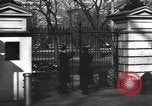
White House entrance during World War 2 and President Roosevelt addresses U.S. Army guards of Washington DC
US Army guard standing at the entrance of the White House building. They open a gate as a car arrives. (Narrator indicates it is an army pilot arriving in the car to receive a medal from the President after he hit a Japanese battleship during World War II.) The US Army guards for the Military District of Washington march in formation on the grounds of the White House. President Roosevelt addresses them. He speaks about their duties and service, and acknowledges that they, and he, might rather be closer to the front, but that their job protecting Washington is important. The guards marching after the address.
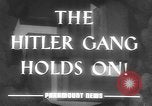
Funeral of German General Günther Korten in World War II. Hitler visits other victims of bomb plot, in hospital
Camera pans across the Tannenberg Memorial courtyard where Nazi military hierarchy is gathered for the funeral of General Günther Korten, Chief of the General Staff of the Luftwaffe, who died from injuries suffered in the assassination attempt on Adolf Hitler in July 1944. German military Honor Guard and band are seen in background as Marshal Hermann Goering expresses his condolences to the General's widow and relatives. Closeup of a German soldier and of the bereaved. Scene shifts to view from above and behind the flag-draped casket of General Korten, as Goering, standing in front of it, salutes with his Marshal's baton. Field Marshal Wilhelm Keitel, Grand Admiral Karl Dönitz, and other senior military officers all salute. Soldiers bring a large wreath forward and Goering places it before the casket and salutes. View of the flag-draped casket with helmet and dagger atop it. Pall bearers lift the casket shoulder height and proceed to carry it into a tomb in the memorial building. In a complete change of scene, Adolf Hitler is seen walking with a medical officer into a military hospital in Rastenburg, where he visits German Army officers, who were injured, in the July 20th bomb plot against him during World War 2. He visits Major General Walter Scherff; Navy Captain Heinz Assmann; Rear Admiral Karl-Jesco von Puttkamer; and General Walther Buhle. He takes time and speaks with each of the wounded officers. Women nurses, assembled outside, render Nazi salutes, and cheer Hitler as he departs.
CRITICALPAST.COM: About Us | Contact Us | FAQs - How to Order | License Agreement | My Account | My Lightboxes | Shopping Cart | Advanced Search | Featured Collections | Website Terms & Conditions | Privacy Policy ©2026 CriticalPast LLC.
License Agreement |
Terms & Conditions |
Privacy Policy
©2026 CriticalPast LLC.