


 Francais
 Deutsch
 Italiano

Refine Your Search
Greek-Civil-War stock footage and images
- Showing 1297 to 1302 of 27579 results more
 Hide

Pork, beef, and sugar crops processed at farms and factories in United States to meet war demand in World War 2
Agricultural progress in the America during World War II, with increased production to meet wartime needs. Pigs, hogs, and piglets on a farm. Trees in the background. Vehicles pass in front of a pork butcher and processing factory. Truck in front says "HH Green" on side. Sign in background of shot says "Morrell" (this is possibly the John Morrell & Co. Packing Plant in Ottumwa Iowa). Butcher workers with cleavers cut and process pork on moving assembly line. Beef cattle graze on a field. Tractor operated on a farm field. View of beef cattle stockyards at butcher and processing factories for meat. Butcher operations for beef cattle seen on moving assembly line. Farmers harvest feed crops for meat production. A feed shed filled to the top. Farmer harvests sugarcane and drives wagon filled with sugarcane, pulled by horses. Farmer on tractor on a sugarcane field. A tall harvesting machine cuts sugarcane in the field at harvest. Farmer on a sugar beet field. A mechanical seed splitting machine is shown. Farmer holding shafts with sugar beet seeds attached. Sorghum plants are shown and described as a new source of sugar. A man feeds harvested sorghum plants into a pressing machine to extract sorghum liquid for sugar.

Evacuation to hospitals of American prisoners of war (POWs) liberated from Japanese prison camp near Cabanatuan City, in the Philippines, during World War II
Film opens with slate reading: "Evacuation to Hospitals." Next, on January 30, 1945, the day of the "Cabanatuan Raid" (Mission to rescue prisoners of war from the Japanese prison camp at Cabanatuan) rescuers are seen carrying a former POW from a building, on a litter. Local Filipinos and others are standing on the porch of the prison building. An ambulatory former prisoner comes down the steps unaided. Several rescued prisoners are seated on chairs, conversing. Closeups of some of them. Two weakened and bandaged former prisoners help each other up some steps. Slate states: "Man with Cane afflicted with Beri-Beri." A severely disabled former prisoner, with a cane, makes his way unaided across the grass. Rescuers and Filipinos are in the background, along with some carts used to evacuate disabled former prisoners back behind American lines.

Villagers return to their homes after the war and embrace the liberating Russian troops in Russia during World War II.
Refugees return to their homes in Russia during World War II. Soldiers discuss amongst themselves. Troops on military vehicles return to their places. Villagers embrace liberating Russian troops. Houses in snow covered area. Refugees and guerrilla units return to the villages. They talk amongst themselves. The mayor along with other men get inside a house. Civilians gather outside. The mayor stands in the balcony of the house and addresses people.

Men and women work at a war production factory in Muncie, Indiana during World War 2
Women war production workers at a factory in Muncie, Indiana. A woman works at a lathe. An old man oils a machine. He checks a part of the machine. Women work at the lathe. Factory interiors, a young woman works on a milling machine in the foreground. Women work on a sharpener in the factory. A man works on a machine. Sparks blow out.
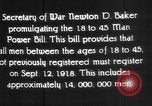
Secretary of War Newton D Baker works on a Man Power Bill for World War I in Washington DC
WWI draft and mobilization activities in 1917-1918. United States Secretary of War, Newton D Baker at his office in Washington DC, United States. He works on a Man Power Bill to make military registration compulsory for previously registered men between the ages of 18 and 45.

People march on streets to celebrate the end of war in Europe during World War II in Paris, France.
Victory in Europe Day celebrations, World War II in Paris, France. Cars move on a street with people in the background. Traffic on the street as people march down a street near Arc de Triomphe. A sculpture on the monument.
CRITICALPAST.COM: About Us | Contact Us | FAQs - How to Order | License Agreement | My Account | My Lightboxes | Shopping Cart | Advanced Search | Featured Collections | Website Terms & Conditions | Privacy Policy ©2026 CriticalPast LLC.
License Agreement |
Terms & Conditions |
Privacy Policy
©2026 CriticalPast LLC.