


 Francais
 Deutsch
 Italiano

Refine Your Search
Greek-Civil-War stock footage and images
- Showing 14137 to 14142 of 27563 results more
 Hide

American , French, and Australian forces operating in France during WWI.
American cavalry and horse-drawn wagons carrying artillery shells. French troops crossing a partially destroyed bridge. French cavalry and infantry moving through a war-torn village. Australian troops digging trenches and field "dug-outs." (World War I; World War 1; WWI; WW1)
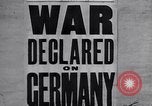
Europe mobilizes for WWI. British, French, and German troops.British Commander Sir John French. French Commander Joseph Joffre
World War I poster reads: "War Declared on Germany." British Commander in Chief, Sir John French,on horseback, reviews mobilized British troops on the march. French soldiers pass through castle gates. "Les Gratia" engraved in stone above gate. French infantry move through town. French cavalry ride past houses on way to front. French troops in trenches. French 320mm rail gun firing during World War 1 battle. German artillerymen firing 77mm field gun. Buildings being struck by artillery fire. Caravan of French Charron taxicabs drives down street carrying recruits for army. French troops manning positions in trench network. German troops manning positions in trench network. French Commander-in-Chief Marshal Joseph Joffre reviews French troops.

The Badgett Quadruplets celebrate their 5th birthday party with soldiers in Texas (WW2)
The Badgett quadruplets celebrate their 5th birthday. View of the Badgett family house in Galveston, Texas. The Badgett quadruplets prepare a birthday cake. Girls mixing cake batter. A girl places the bowl of batter in the oven. The Badgett quadruplets clean up the kitchen. Their mother takes out the cake from oven and candles are lit. The girls dress up for their birthday party. A girl combing in front of a mirror. One of the Badgett quadruplets apply powder on her sister. They cut the birthday cake in the party and receive birthday gifts. At a USO Army/Navy recreation center they meet and dance with enlisted men. Girls holding up war bonds. The girls are Joan (incorrectly called "Jean" by the narrator), Joyce, Jeanette, and Geraldine Badgett. Navy men and soldiers dance with the little quadruplets. The Badgett quadruplets receive World War II war bonds for their birthday.
The Rise of Japanese militarism in the 20th Century
Film opens showing reenactment of Japanese attack ostensibly against Formosa, in 1894. Japanese troops and artillery are shown. The event is depicted in a critical political cartoon. Next, Japanese Admiral Heihachiro Togo is seen in 1904, standing with other naval officers. Then, Japanese warships are shown, firing barrages of naval gunfire at the Russian fleet in Port Arthur, Manchuria. Huge black clouds arise from burning ships. Scenes of Japanese people celebrating their naval victory. Date shifts to 1910. Cartoon depicts Japanese annexation of Korea. Cartoon illustrates Japanese actions in World War I when, siding with the Allies, Japan acquired the German-held Shandong (Shantung) Peninsula of China, as well as German-held Marianas, Carolines, and Marshalls islands in the Pacific. Japanese representatives are seen participating in Post World War 1 international activities. They signed the so-called Five-Power,Four-Power, and Nine-Power treaties, and participated in the League of Nations. Glimpse of two Japanese officers, followed by cartoon depiction of the Mariana, Caroline, and Marshall Islands, that Japan insisted on keeping. Cartoon shows them being fortified. A Japanese military marching band parades down a city street while being cheered by spectators on the sidewalks. Next, Japanese military General, Baron Tanaka Giichi, is seen in uniform with other officers. Cartoon illustrates the so-called Tanaka Memorial document that Baron Tanaka allegedly presented to the Emperor, in 1927, outlining a strategy to conquer the world. Cartoon then illustrates plan of conquest by acquiring Chinese manpower; Manchurian iron and coal; Siberian timber, coal, wheat, and metals; Tin,oil and rubber from Malaysia and the East Indies. The United States is shown as the last conquest. Views of ordinary farm and factory activities in the U.S. Cars parked in the Ford Motor Company factory lot. Japanese officials and legislators meeting in the Diet (Parliament). Japanese theater patrons and a Japanese woman singing with an American-style band, are shown as examples of activities the Japanese Government sought to discourage. A Japanese female ensemble in traditional dress, playing traditional instruments, is shown as more desirable. Western dancing and western hollywood movies are shown and narrator states they were forbidden by the Japanese government. Japanese movie scene depicts ancient martial arts. A musical production on stage displays German Nazi swastika flag , Japanese rising sun, and symbol of Kingdom of Italy, celebrating the axis alliance. Japanese men are shown playing the ancient game of Chu Shogi, instead of playing Western card games. People are shown in a library, where Western books are replaced by more militaristic tomes, such as: "If we fight" by Admiral Shinsaku Hirata, March 15, 1930 (shown on film slate). Slate goes on to quote about attack on Hawaii as the first battle in war of the Pacific. Film cites another approved Japanese publication: "Arguments Against American Policies" by Kawashima Seichiro, Christmas Day, 1924. It discusses distruction of the American fleet and subsequent landing on the U.S. West Coast.
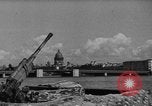
Russian people struggling and rationing during the Siege of Leningrad by German forces (WW2)
Snow covered grounds in Leningrad, Russia (present day Saint Petersburg, Russia). Soviet artillery in front of the Neva River and a road with moving streetcar. Ships stuck on frozen river. A man stands beside a Howitzer in front of St. Isaac's Cathedral. Soviet soldiers bring a tank and a barrage balloon. People on the frozen streets of Leningrad, Russia. A destroyed bus covered in deep snow on the street. A Soviet soldier’s moustache is covered with snow. Soviet soldiers in prone position to defend Leningrad from the German forces. German tanks and soldiers on the streets of Leningrad during World War II. No electricity and water supply. Russian civilians walk as streetcars remained out of service and covered in deep snow. People dig holes in frozen streets to gather water. A woman washing clothes on the street. Food is rationed during Leningrad blockade. A baker cuts bread into slices for rationing. A woman receives rationed bread. Women clean the rubble on streets. Aerial bombing of Leningrad by the Luftwaffe. A German Karl-Gerät “Thor” supermortar. German soldiers load and fire supermortar. A mortar fire hits a house, destroying it entirely. A building falls to the ground. German bombardment of Leningrad. Machines and Soviet war production workers build supplies weapons and ordnance in Leningrad. Women workers assemble mortars. Animated maps show Leningrad mostly surrounded by German territory. Shell manufacture. Supplies are brought in by truck, tracked vehicles, tractors, and railroad on ice across Lake Ladoga. German planes bomb trucks. Russians laying railroad tracks across frozen Lake Ladoga. Infirm and sick civilians, women, children board train out of Leningrad for medical treatment. A traffic enforcer waves flag on Lake Ladoga. Red Army soldiers in white suits advance in the battlefield. A tank advances. The arrival of spring. Melting snow in springtime. A wooden cross from a German grave is being washed away in a stream. Soviet trucks moving in convoy across flooded Lake Ladoga in spring. Russian children playing on the streets. People indulge in recreational activities. Civilians riding bicycles and taking streetcars. A woman cleans window. Russians crowd the streetcars of Leningrad. Soviet sailors clapping on deck. Russian dancers dancing traditional folk dances to celebrate. Soviet Navy sailors play music for the dancers. The sailors clap and applaud the performance. German prisoners of war enter Leningrad. A Soviet woman spits on the captured German soldiers. Russians marching in Leningrad.
Battle of Stalingrad during Christmas and New Year, 1942, and continuing until February 2, 1943
The final struggle for Stalingrad during World War Two. Christmastime, 1942 in Moscow. Russian civilians obtaining fir trees for Christmas celebrations. A large beautifully decorated Christmas tree set up in the Hall of Pillars, in Moscow, Russia, Soviet Union. Men and women couples dancing in the hall to music from Tchaikovsky's Nutcracker Suite. Smiling Russian children at play indoors, on slides, on a carousel ride, and playing hand games with one another. New Year's eve is different. World War 2 Soviet war production workers in a munitions factory greet each other but continue working without stopping. On the Stalingrad front lines, the Soviet Army marks the New Year, 1943, by launching artillery barrages, through the night and continuing unabated well into the next day. Russian Sukhoi Su-2 light bombers drop incendiaries on German positions. Brief partial glimpse of a Russian Sherman tank. Soviet Army soldiers using flame throwers. Soviet troops moving across ice and snow on armed Aerosan ice gliders. Batteries of Soviet Katusha rockets fire barrages. Soviet infantry and tanks advance across vast barren snow-covered terrain. Animated map depicts Nazi German military forces being pounded on several fronts. A solitary horse standing in midst of Stalingrad destruction and ruins. Scene from February 2, 1943 as Soviet soldiers, symbolically, fire the last shot in the Battle of Stalingrad. A smiling Soviet soldier then places a cover over the muzzle of the field artillery piece. Scenes of the battle's aftermath. Russian officers hug one another. The Soviet Union flag is hung from a city building. Numerous German soldiers surrender under a white flag of truce. Many surrendering German Generals are seen.
CRITICALPAST.COM: About Us | Contact Us | FAQs - How to Order | License Agreement | My Account | My Lightboxes | Shopping Cart | Advanced Search | Featured Collections | Website Terms & Conditions | Privacy Policy ©2026 CriticalPast LLC.
License Agreement |
Terms & Conditions |
Privacy Policy
©2026 CriticalPast LLC.