


 Francais
 Deutsch
 Italiano

Refine Your Search
Greek-Civil-War stock footage and images
- Showing 14563 to 14568 of 27579 results more
 Hide

Sergeant James Mansfield shows the activities of the U.S. soldiers in Korea. on 'The Big Picture'
U.S.Army TV report entitled "The Big Picture" announces that a battle star has been awarded to U.S. Army soldiers who participated in the Third Winter Campaign during the Korean War. Views show conditions of American Army soldiers in Korea during the war. Mountains and contested "hills" in Korea. A U.S. soldier slowly crawls over top of sand bags to observe. U.S. Army sandbagged fortifications, deep trenches, and bunkers to protect against constant enemy shelling. U.S. soldiers use smokeless charcoal to heat bunkers. Some U.S. Army soldiers (white and African American) adopt chickens and make a pen for them with chicken wire. They award them the combat infantryman's badge, because they endure the regular enemy shelling too. Soldiers display eggs from chickens. U.S.Army soldiers on patrol, and firing mortars..
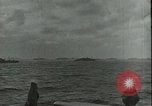
Soldiers of the 1st Infantry Division in England and during the invasion of Normandy and subsequent campaigns toward Germany (WW2)
Soldiers of the 1st Infantry Division training in England under General Clarence R Huebner, in preparation for the D-Day Normandy invasion in World War II. U.S. Navy ships underway at sea. Heavy naval guns bombard the coast of France on D-Day. U.S. Army soldiers seen during assault on Omaha beach with heavy losses on D-Day. U.S. soldiers and tanks encounter heavy German resistance in the "hedge rows." American soldiers digging trenches with shovels and picks and treating wounded comrade. Dead German soldier lying in street as Americans enter the town of Caumont (Caumont l'Eventé). Frenchman civilian pours wine for American soldier after they liberated Caumont l'Eventé from the entrenched German forces. An American helps a French civilian woman to reach a safe place crossing rubble. Damaged French houses along the sides of street. During rest, a soldier gives another a haircut, and another writes a letter. U.S. Air Force B-17s fly overhead and bomb near St. Lo, France on July 25, 1944. Other U.S. Army artillery units, the 4th and 9th Divisions, and General Patton's tanks provided support so the 1st Infantry (First Infantry or Big Red One) could occupy the area. Army combat engineers dig up mines and use construction equipment to clear debris. Wrecked houses and rubble. U.S. soldiers keep advancing through towns and eat and rest as they can. Road sign reads: "Coutances." First Infantry goes through Mortain, Etampes, Meaux, Soissons and across the Belgian border. German prisoners of war walk with their hands raised. German soldier digging out of fox hole. Siegfried Line and dragons teeth. Strong German resistance encountered at Aachen. Tanks fire in the field. House to house fighting in Aachen. Surrender of Aachen. A German flag laying in the street is run over by a U.S. military vehicle. German resistance is heavy during battle scenes in Battle of Hürtgen Forest. German and American artillery are seen in Hurtgen Forest. U.S. wounded treated. The 1st Division is pulled out for rest at the rear, in Belgium.
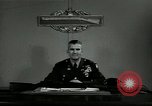
Colonel William Wilson Quinn talks about importance of the blue badge infantry soldiers of the United States Army
Colonel William Wilson Quinn on the show 'The Big Picture' in United States. Blue badge model framed on the wall in the background. He speaks about the importance of the blue badge of the rifleman or infantry man and the soldiers who wear the blue badge. He speaks about the great work of the infantrymen during the Korean War. He also speaks about the war at Sicily, the battle of the Bulge and the great work of various divisions. He says that the program 'The Big Picture' is the result of the great work of the Signal Corps combat cameramen who took the pictures and films of the Infantrymen.
Dramatization: The German view about the American women in United States.
Dramatization of the Nazi concept of American women as decadent playgirls unfit for working. Newspapers headline about end of the World War II. A man comes downstairs. He comes near a man in prison. The man in prison writes a book on the participation of the American women in the war. Men discuss among themselves. Photographs framed on the wall. They discuss a map and about the army of the United States. A man says that the American women army has done a lot for the victory of the United States. The other man states that there was no Women Army of America. He discusses with him the records and statistics of the expenditure of the American women. He says that they were all playgirls and not interested in working.

People gather to watch the Army Day celebration in Washington DC, United States (WW2)
Celebration of Army Day during World War II in Washington DC, United States. People gather in front of the Capitol Building to watch the event. Soldiers march. Trees along the sides of the street. Soldiers on horses. Secretary of War Stimson, General George Marshall and other high army officials review the troops. They salute the soldiers. Soldiers in Jeeps move on the street.
American aircraft production workers examine a German Messerschmidt 110 aircraft in Downey, California.
A Nazi German Messerschmitt Bf 110, (Me 110) in a hangar of the Vultee aircraft manufacturing company in Downey, California, early in World War 2, and before America's entrance into the war. The aircraft (possibly captured by the British?) is seen going through inspection by workers at the Vultee plant. There are some bullet holes and signs of damage in the captured plane. Men in the cockpit of the plane inspect it. Other men watch.
CRITICALPAST.COM: About Us | Contact Us | FAQs - How to Order | License Agreement | My Account | My Lightboxes | Shopping Cart | Advanced Search | Featured Collections | Website Terms & Conditions | Privacy Policy ©2026 CriticalPast LLC.
License Agreement |
Terms & Conditions |
Privacy Policy
©2026 CriticalPast LLC.