


 Francais
 Deutsch
 Italiano

Refine Your Search
Greek-Civil-War stock footage and images
- Showing 14893 to 14898 of 27579 results more
 Hide
Men spread chlorinated lime over a road bed to stop troops from entering the area so as to decontaminate it (WW2)
A documentary titled 'Decontamination Procedure' depicts methods of decontamination in World War II. Men clean a road. A skin blistering chemical being sprayed by firing an artillery. The chemical on the leaves. The men wear a special clothing to protect themselves from mustard gas. A man wear cotton gloves. All equipment being loaded in a trailer. The equipment includes shovels, buckets, sprays, axes and other necessary materials. The unit gas officer inspects the area. He marks all contaminated areas on a map. The officer returns to the leader with the details. They look at the area on the map and advance. The truck stops and men put on gas masks. They get in the truck and move in the contaminated area. Animation depicts a shell and artillery covering the contaminated area. A man places the sign which reads 'Danger War Gas'. He writes the name of the gas and the date on the sign. Men stand in a line and the leader of the men gives them instructions. Shell holes on the ground. They start their work. Chlorinated lime is spread over a road bed and contaminated brush is burned. The road is then covered with the brush.
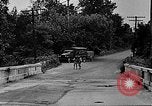
Men wash the contaminated bridge and buildings with chlorinated lime to decontaminate the area (WW2)
A World War II documentary depicts the methods of decontamination after the usage of chemicals during a combat. A bridge with liquid agent . Men place a sign which reads 'Danger war Gas'. The men being given instructions about the procedure to be used. Men fill buckets with water. A concrete bridge is washed with water. The water changes into a white vesicant solid after it reacts with the chemical. Chlorinated lime being put in the water and is spread on the bridge. Men spray oil on the contaminated grass and then burnt. A man uses flame to burn the grass. Men use shovels during the burning. Lime paste being used to wash buildings. The troops march in decontaminated area.
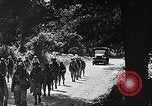
Soldiers exposed to the gas attack apply anti-gas ointment and wash their clothing with hot water (WW2)
A World War II documentary depicts the methods of decontamination after a gas attack during a war. Troops walk on a contaminated area. An aircraft in flight and sprays gas. They put the gas mask and necessary clothing. The troops advance. Troops that have been exposed to gas attack being inspected. A mustard stain on the sleeves of a troop. Clothing being removed and sterilized and anti-gas ointment being applied to the skin areas. A stiff brush being used to remove the chlorinated lime from the shoes. The unit moves on. They clean their clothing and equipment. Hot water in the buckets. They take a bath. The clothes re hanged on a string. The clothing being soaked in a water. A man rinses the clothes and hangs it to dry. The troops then advance.
Allied troops land in Normandy and Allied bombers strafe German industries and tank factories in Germany.
Allied bombers bombard heavy German industries during World War II. Allied planes in the sky and a convoy underway at a sea heading for Normandy. Allied troops land in Normandy. Men wading ashore after disembarking from landing crafts. Allied Supreme Command in meeting. General George C. Marshall confers with British officers. United States Boeing B-17 Flying Fortress bomber (“One Night Stand”) drop bombs over Germany. More bombers dropping bombs over enemy position. Aerial view of bombs hitting factories in Germany. Captured German troops in a forest. Abandoned German tanks left on the road in the Eastern Front. Allied troops advance in the Ardennes Forest. German tank production at a factory in Plauen, Saxony, Germany. Undercarriage of a Panzer IV tank. Tank tracks and wheels during assembly by German war production workers at the factory. Aerial view of United States bomber aircraft in a daylight bombing raid, with bombs-away views as they target tank factories in Saxony, Germany. Ruins and rubble of the destroyed tank factory. Transport and communication centers are bombed.

A U.S. aircraft of VIII Fighter Command attacks a seaplane, ground targets and vessels underway at a sea in the European Theater.
German ground targets in the European Theater are attacked by a U.S. aircraft on 9th April, 1944, during World War 2. Three German FW-190 planes and one seaplane being attacked by a U.S. aircraft of VIII Fighter Command piloted by Lieutenant Colonel D.C. Schilling of 62nd Squadron. Tracers are fired at a seaplane, on ground targets and on ships underway in the ocean. (World War II period).

Secretary of Navy, Josephus Daniel and Mayor Hylan review the Independence Day parade in New York City, United States
Sailors and soldiers march and Navy band plays at the Independence Day parade in New York, United States. Troops pass by the Flatiron Building (Fuller Building) at the corner of 23rd Street, 5th Avenue, and Broadway. Secretary of Navy, Josephus Daniel and Mayor of New York, John Francis Hylan review the parade and shake hands. Aerial views of men marching on the streets in New York. (World War I; World War 1; WWI; WW1)
CRITICALPAST.COM: About Us | Contact Us | FAQs - How to Order | License Agreement | My Account | My Lightboxes | Shopping Cart | Advanced Search | Featured Collections | Website Terms & Conditions | Privacy Policy ©2026 CriticalPast LLC.
License Agreement |
Terms & Conditions |
Privacy Policy
©2026 CriticalPast LLC.