


 Francais
 Deutsch
 Italiano

Refine Your Search
Greek-Civil-War stock footage and images
- Showing 16075 to 16080 of 27580 results more
 Hide
Color Sound

Basic combat operations of AC-130 side-firing aircraft.
Basic combat operations of AC-130 side-firing aircraft. The primary mission of the AC-130 is Night Armed Reconnaissance. An aerial view of the complex Ho Chi Minh road trail in Vietnam. Accurate gunshots on the convoy of enemy trucks at night. AC-130 side firing aircraft taxiing and taking off from the runway. AC-130 takes a target on ground. (Vietnam War period).

USAF Officers in AC-130 aircraft aim accurately and fire at a convoy of enemy trucks.
U.S. Air Force Officers in AC-130 aircraft converse while they aim accurately at a convoy of enemy trucks. Taking accurate aim on enemy trucks, the officer fires on target. (Vietnam War period).
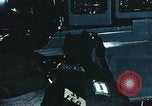
The Sensor Operator coordinates with pilot who triggers off a shot directly at enemy target from AC-130 aircraft over Vietnam.
The interior of AC-130 aircraft shows Sensor Operator tracking the target while the consent light is on. The pilot triggers off a shot directly on the target. Explosion from enemy truck after being hit. United States Air Force personnel talks about the Pave Pronto aircraft configuration system. (Vietnam War period).
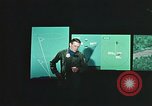
U.S. Air Force Crew members, in AC-130 aircraft, coordinate to fire on target.
United States Air Force Lieutenant Colonel talks about AC-130 aircraft in the Pave Pronto configuration. Views inside an AC-130 during combat operations over Vietnam. The Fire Control Officer and Pilot viewing screens inside AC-130. The computer correction capabilities are discussed by narrator. Fire control officer clicks miss-distance. The computer computes proper elevation correction for the next shot to be accurate. The co-pilot monitors air speed and altitude. He also coordinates with the gunship fighter escorts. The navigator is in contact with the air borne command force. The fire control officer is responsible for pin pointing corrections and advising the pilot. The flight engineer coordinates with the gunner through intercom and arms the gun. The gunner fires on the target. (Vietnam War period).

Czechoslovakian Vojta Benes states in his speech that his country will fight the last man.
Vojta Benes, brother of Czech President Edvard Beneš, arrives in Polish ocean liner SS Batory in New York, United States. Vojta Beneš of Czechoslovakia states in his speech that his country will fight to the last man (early in World War 2 period, just before Munich Agreement was signed yielding Czech Sudetenland regions to Nazi Germany).
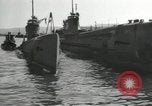
Operation Road's End, preparing to destroy Japan's submarine fleet. Crews decorate their submarines with cherry blossoms
Operation Road's End. Inspection of Japanese submarines,moored in Sasebo Bay, Japan, that are scheduled for destruction, after World War 2. View from a boat passing several of these submarines. One has a group of U.S. Naval officers and others on its deck. View of Japanese submarines I-366 and Number 107. Japanese sailors are decorating the submarines with branches of cherry blossoms. A Japanese officer looking down from boat I-402, as the camera passes below. Closeup of him posing on his boat for the camera.. Captain Atogi Nakamura, Lt. Tashio Tanaka and crew members posing aboard Japanese submarine I-58 (that sank the USS Indianapolis on July 30, 1945 with torpedos fired by Lt. Tanaka).
CRITICALPAST.COM: About Us | Contact Us | FAQs - How to Order | License Agreement | My Account | My Lightboxes | Shopping Cart | Advanced Search | Featured Collections | Website Terms & Conditions | Privacy Policy ©2026 CriticalPast LLC.
License Agreement |
Terms & Conditions |
Privacy Policy
©2026 CriticalPast LLC.