


 Francais
 Deutsch
 Italiano

Refine Your Search
Greek-Civil-War stock footage and images
- Showing 16777 to 16782 of 27581 results more
 Hide
Color Sound

United States officers inspect pillbox in Japan.
United States Army inspection of pillbox at Atsugi Airdrome in Japan, soon after the end of World War 2. United States officers inspect pillbox. Steel structure of hangar behind the pillbox.

Japanese soldiers push Japanese fighter plane into hangar at Atsugi Airdrome in Japan
Japanese soldiers push Japanese fighter plane at Atsugi Airdrome in Japan, soon after the end of World War 2. View of Japanese soldiers pushing Japanese fighter plane. They push it into steel structure of hangar.
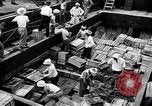
United States Army provides medical, food and material aid to Japan.
United States Army helps and provides aid to Japan in the years soon after end of World War 2. Workers unload the cargo of food from truck. Aerial view of flooded area. Ambulances of 'Army Medical Care' pass through muddy land. To care for the sick, doctors and nurses reach the flooded area of Japan in ambulance. Nurse gets down from ambulance. Army personnel lift the boxes of food and clothing. Sign of 'Toy Factory'. Interior of toy factory. Japanese work at machines in factory, where they process and recycle tin cans received from American military bases, and turn them into toy cars for children. Women work at machines in toy factory. Toys of small cars made and displayed.
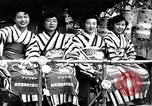
Japanese, United States Army and Americans celebrate anniversary of Yokohama Port which opened in 1859.
Anniversary celebration of Yokohama port, which opened in 1859. Japanese women seated in striped kimonos. A dragon dance in Yokohama’s China Town. Celebration Parade down Isezaki Street, in Yokohama. Dragon floats dance. Musicians march as they play music. U.S. Army participates in celebration. Yokohama locals dressed in costumes ride in parade floats. Japanese women in swimsuits wave from moving float. Military Police personnel ride on top of armored vehicles. A woman wearing a wedding dress dances on top of float. Japanese children wearing paper crowns enjoy the parade. Japanese policemen control the throng. Japanese children watch the various floats. The Big Picture host Sergeant Stuart Queen speaks about friendship of United States with Japan after the end of World War II.
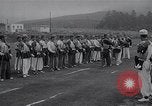
Japanese Self Defense Force training. Combined Arms School at Camp Fuji.
Japanese ground self defense force under training provided by United States and Japanese government jointly in Japan.Combined Arms School at Camp Fuji. Bayonet drill practice using wooden rifles. Firing recoiless rifles. Firing 155mm howitzers. Firing guns on Sherman tanks. Japanese mechanics repairing and maintaining 155mm howitzers. Japanese drills with semaphore flags. Japanese play volleyball at Camp Fuji. American military advisors work with general staff of Japanese self defense force in "paper war," including Command, Control and Communications exercises in the field, where. Japanese operate military communications facilities. Japanese Defense Forces in chow line and dining hall tent, during field exercises.
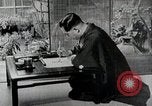
Child naming ceremony or Miyamairi at local Shinto shrine in Japan (WW2)
Parents take a newborn baby for a Miyamairi (literally "shrine visit") to pray for good health at a Shinto shrine in Japan, during World War II. A Japanese man writes his child’s name using a calligraphy pen. Man displays his child’s name in front of an altar. A Japanese couple takes their newborn child to a Shinto shrine. The couple and the child’s grandmother sit in front of a clerk. The grandmother holds the child as mother sits next to her. The Shinto priest recites a prayer and swings a tamagushi right and left. The priest gives holy sake to the mother for the child. She feeds sake (symbolically) to child and then she drinks it. Priest folds the paper of Japanese writing and gives it to the family.
CRITICALPAST.COM: About Us | Contact Us | FAQs - How to Order | License Agreement | My Account | My Lightboxes | Shopping Cart | Advanced Search | Featured Collections | Website Terms & Conditions | Privacy Policy ©2026 CriticalPast LLC.
License Agreement |
Terms & Conditions |
Privacy Policy
©2026 CriticalPast LLC.