


 Francais
 Deutsch
 Italiano

Refine Your Search
Greek-Civil-War stock footage and images
- Showing 17893 to 17898 of 27588 results more
 Hide
Color Sound

Soldiers and Red Cross girls singing around piano at Parkway House, Red Cross Club in Tinian Island, Mariana Islands.
Scene in Clubhouse in Red Cross Club in Tinian Island, Mariana Islands. Men writing letters, having coffee, reading, playing cards, checkers and ping-pong. Soldiers and Red Cross girls singing around piano. (World War II period).

Men having coffee on club patio and walking in the garden at Parkway House, Red Cross Club in Tinian Island, Mariana Islands.
Men having coffee on club patio and walking in the garden at Parkway House, Red Cross Club in Tinian Island, Mariana Islands. Soldiers being served coffee and doughnuts in the snack bar. Tray of doughnuts. Hands reach in taking one at a time. (World War II period).

Writing on nose of the B-29, Enola Gay, parked on Tinian Island, Mariana Islands.
Writing on nose of 313th Bomb Wing B-29 Superfortress aircraft named "Enola Gay" that dropped the first atomic bomb on Hiroshima in World War 2. The aircraft is parked on Tinian Island, Mariana Islands. The writing reads, "First Atomic Bomb, Hiroshima - August 6, 1945."

Aerial view of 58th Bombardment Wing Base and 313th Bombardment Wing base at North Field in Tinian Island, Marianas islands.
Aerial view of runways, hardstands, service aprons and centers at West Field in Tinian Island, Marianas islands. 58th Bombardment Wing Base and 313th Bombardment Wing base at North Field after being captured by American Forces. (World War II period).
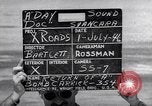
B-29 "Dave's Dream" returns to airfield in Marshall Islands after Test Able atomic bomb drop on Bikini Atoll
The B-29 "Dave's Dream" returns to airfield in Marshall Islands, after dropping atomic bomb on Bikini Atoll, in Test Able of Operation Crossroads, on July 1st, 1946, during U.S. nuclear testing. The B-29 lands and taxis to a parking place on the ramp. The area around the aircraft is cordoned off and the crew is confined therein as they deplane. Navy photographers take photos. An interviewer talks to crew members. The crew walks away from the aircraft along a cordoned pathway between numerous military personnel on hand to greet them on this historic occasion. The aircraft, number 44-27354, was actually participating in its second atomic mission. It also served as a photographic platform for the mission to Nagasaki on August 9, 1945, when it was named "Big Stink.". Pilot for the Bikini mission was Major Woodrow Swancutt of Wisconsin Rapids, WI. The aircraft was renamed "Dave's Dream" in honor of Captain David Semple, a bombardier killed during the crash of another B-29 on March 7, 1946, near Albuquerque, New Mexico. (World War II period).
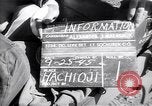
Two United States soldiers taking a walk west on Route 20 in Hachioji, Japan
Two United States soldiers take out their map as they read a street sign in "Myozin-Cho" Town in Hachioji-City, Tokyo, Japan. Road sign on pole reads 'Hachioji'. Street scene as soldiers walk along side of the road ("Route 20"). They pass a big gate, which belongs to Ohtori Shinto Shrine (located just south of current-day Hachioji JR Station). (World War II period).
CRITICALPAST.COM: About Us | Contact Us | FAQs - How to Order | License Agreement | My Account | My Lightboxes | Shopping Cart | Advanced Search | Featured Collections | Website Terms & Conditions | Privacy Policy ©2026 CriticalPast LLC.
License Agreement |
Terms & Conditions |
Privacy Policy
©2026 CriticalPast LLC.