


 Francais
 Deutsch
 Italiano
Refine Your Search
Greek-Civil-War stock footage and images
- Showing 20863 to 20868 of 27563 results more
more Hide
Hide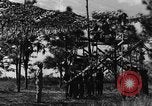
Camouflaged nets, shed and haystacks are used to conceal aircraft and equipment in the United States.
Camouflage tactics being used to conceal equipment in the United States. Army engineers make a camouflaged net at McGill Field in Florida. An aircraft on a field. The engineers cut a tree on the field. An aircraft taxis and moves under the camouflaged net. Soldiers at a camouflage school construct a camouflaged net to conceal an aircraft. Dispersal method being used to conceal an aircraft. A haystack and a shed are used to conceal pack mules and anti aircraft guns at Fort Bragg in Carolina. (World War II period).

Camouflaged artillery and tanks to prevent them from being spotted by the enemy (WW2)
A training film titled 'Camouflage principles' about the means and importance of camouflage in World War II. Aerial view of an area. A soldier at map. Soldiers come out of a haystack and reveal a concealed artillery piece. A camouflaged tank on a field. A jeep amidst bushes to makes its detection impossible.
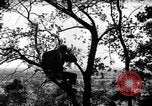
Soldiers study aerial photographs to find out differences in terrain and to spot enemy positions (WW2)
A training film in the United States about the means and importance of camouflage in World War II. A soldier seated on a branch of a tree observes an area. View of an area as seen through binoculars. Soldiers move across a field. Aerial view of an area. A Jeep on a field. A landing strip on the ground. An observer studies the details of an aerial photo. He closely examines the terrain with a magnifying glass.
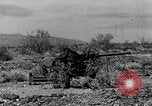
A film in the U.S. shows artificial camouflage being used to conceal equipment so as to prevent detection by the enemy.
A training film in the United States about the means and importance of camouflage in World War II. An artillery piece being covered with leaves and branches. Aerial view of an area. A camouflaged net is used to conceal equipment. A jeep is concealed under crates near a shed. A reconnaissance aircraft in flight. Low, close-up view of hand of a U.S. Army soldier loading a shell into an artillery gun, and then view of a different soldier pulling firing cord to fire the artillery from a camouflaged position.
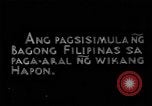
Filipino students study the Japanese language under Japanese Occupation (WW2)
Filipinos study the Japanese language during the Japanese Occupation of the Philippines in World War 2. Title card reads “Ang pagsisimula ng bagong Filipinas sa paga-aral ng wikang Hapon” (“The start of a new Philippines through learning the Japanese language” in English). A Japanese flag is displayed on a tall flagpole. Elementary schoolchildren performing physical exercises in front of a teacher playing a small piano. Schoolchildren form a circle around the teacher while dancing and singing. Schoolchildren enter school. Schoolchildren playing in the yard. Three Filipino boys sitting. A group of Filipino children sitting. Students crowd a school corridor. Children listen attentively to a teacher. A teacher writes in Japanese on a blackboard. Sign reads “Japan Cultural Hall Entrance- 219”. Young Filipino men and women attend a class in Nihongo (Japanese language). A Nihongo teacher teaches Japanese to Filipino adult students in a Japanese cultural center in Manila.
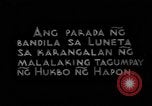
Japanese Army General Masaharu Homma reviews Japanese victory march at Luneta in Manila, Philippines.
Japanese victory march at Luneta in Manila, Philippines during World War II. Civilians stand at the side of a road. Japanese troops parade during colonial rule and occupation of Philippines by Japan. Japanese Army General Masaharu Homma reviews the parade sitting on a dais. Soldiers march holding Japanese flags. Women soldiers march. Civilians holding Japanese flags cheer. Civilians with Japanese flags in their hands march. Military officers sitting on the dais watch. Civilians march holding a huge Japanese flag. An officer addresses the crowd. A band plays. An aircraft in flight. People raise Japanese flags and cheer.
CRITICALPAST.COM: About Us | Contact Us | FAQs - How to Order | License Agreement | My Account | My Lightboxes | Shopping Cart | Advanced Search | Featured Collections | Website Terms & Conditions | Privacy Policy ©2026 CriticalPast LLC.
License Agreement |
Terms & Conditions |
Privacy Policy
©2026 CriticalPast LLC.