


 Francais
 Deutsch
 Italiano
Refine Your Search
Greek-Civil-War stock footage and images
- Showing 21823 to 21828 of 27487 results more
more Hide
Hide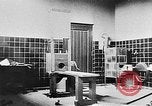
U.S. officials inspect the various torture implements and the possessions of the prisoners at the Ohrdruf camp in Germany.
The different implements and torture devices at the Ohrdruf concentration camp in Germany during World War II. The gas chambers at the concentration camp in Germany. The shower in the bathroom through which the poison gas, Zyklon, used to be inducted when the prisoners shower. The blast furnaces used for cremation of dead bodies of prisoners. The garments of the prisoners being inspected by the officials. Women's clothes, infant shoes, toys and dolls in a room. The storage room in the mills with sacks of prisoners' hair packed. Prisoners' jewelery, watches and wedding rings in the room. The instruments used to pull out the teeth of prisoners. An official holds a prisoner's teeth.
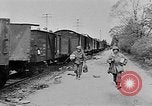
Concentration camp atrocities - bodies in rail cars and burned barns; captured camp officials from Mauthausen and Belsen camps.
Dead bodies at the liberated Ohrdruf concentration camp in Germany during World War II. Two soldiers on the side of a rail car. Piles of dead bodies of prisoners in the rail cars who were suffocated to death. U.S. soldiers hauling a dead body from water. People watch. Dead bodies of Nazi atrocity victims piled up Majdanek and Ohrdruf where German captors had attempted to kill all remaining prisoners before liberation by the Allies. A face of a dead prisoner with one eye pierced. A barn in Gardelegen Germany where prisoners were herded in and then burned alive in what became known as the Gardelegen Massacre. Remains of bodies of prisoners in the barn. A horse carriage enters the gates of prison camp. Officials seen with a captured German guard or official of the Mauthausen camp. U.S. soldiers hold him at gunpoint. View of Josef Kramer, the captured Commandant of the Bergen-Belsen concentration camp. Nazi German women guards and men guards and officials come out of various camp buildings and are marched away by Allied guards.
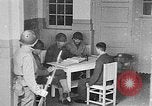
U.S. officials interrogate officals of Hadamar Mental facility in Germany, and views of carnage at Landsberg and Belsen camps
A few U.S. officials during World War II are seen interrogating officials of the Hadamar Mental facility, which also served as a Nazi German human experiment facility and extermination facility. The Camp Commander and a medical officer are brought in by the soldiers. The bodies of the victims of the mass murder. The body of a woman. Soldiers carry bodies and place them on the ground. The bodies of prisoners who were starved to death. The corpses of those tortured to death. Bodies piled up near a building. The bodies of prisoners in Landsberg. The dead bodies of prisoners at various concentration camps who were killed by burning, shooting, starvation or poison gas. The dead body of an infant. The dead bodies of prisoners who were shot or starved to death at the Bergen-Belsen concentration camp. Piles of dead prisoners who were burnt to death by high voltage wires. A few women who survived the sufferings at the camp.
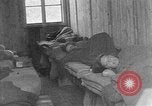
Views of emaciated survivors and victims from a variety of German concentration camps immediately after their liberation
During World War II, scene of a few women with terrible wounds at a German concentration camp near Ramsdorf after being liberated. Physicians attend to the atrocity victims. View of children who managed to survive at Auschwitz camp even after losing their families. The children show their tattoos on their hands that are marks for their identification. Two men who were survivors, one man whose eyes were gouged out by his captors. Men behind barbed wires. Inmate victims who could not walk or crawl being helped by soldiers. Nude men who were starved stand in a group at Ebensee Concentration Camp. Man helps a starved, emaciated man to walk. A man crawls. Bodies of prisoners who died without getting medical aid. Officials beside the bodies. Scenes are from a variety of camps including Ramsdorf, Auschwitz, Aschaffenburg, Bergen-Belsen, and some others that are not clear from the narration.
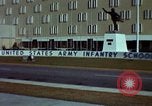
The United States soldiers training at the Army Infantry School, Fort Benning,Georgia, and in Vietnam.
Captain Fincher, U.S. Army, instructing at the Infantry NCO candidate course,US Army Infantry School , Fort Benning, Georgia. The NCO candidates seated in front of the instructor. One of them stands. A Sergeant instructs candidates in handling of barbed wire and fortification of positions. A firing range in operation. Soldiers descending from a parked airplane, at Hang Khong, Vietnam. Sign reading: "Lightning, Mines Booby Traps and tunnel,Training Center". Instructor showing soldiers munitions. Sign reading: "Devil Weapons of the Viet Cong." Troops, suspended from taut line, crossing a river, and rappelling from a height. (Vietnam War period).
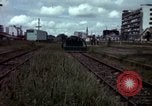
Railroad ambush detector and special helicopters used for various missions in Vietnam
Railroad ambush detector in Vietnam.precedes the train and senses any tampering with the track. Spotlight equipped helicopters, called "fireflies." expose night activities of the enemy to gun ships. Large group of UH-1 helicopters in flight. A CH-47, heavy lift helicopter transporting artillery and supplies. U.S. Army AH-1Huey Cobra, firing rockets and gatling miniguns. Cayuse OH-6 observation helicopter in flight. (Vietnam War period).
CRITICALPAST.COM: About Us | Contact Us | FAQs - How to Order | License Agreement | My Account | My Lightboxes | Shopping Cart | Advanced Search | Featured Collections | Website Terms & Conditions | Privacy Policy ©2026 CriticalPast LLC.
License Agreement |
Terms & Conditions |
Privacy Policy
©2026 CriticalPast LLC.