


 Francais
 Deutsch
 Italiano
Refine Your Search
Greek-Civil-War stock footage and images
- Showing 22315 to 22320 of 27486 results more
more Hide
Hide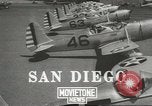
An Air Corps Training detachment student flies a Ryan PT-16 trainer aircraft in San Diego, California.
The United States prepares for World War II. The Ryan School of Aeronautics in San Diego, California. U.S. Army Air Corps Ryan PT-16 trainer aircraft take off. An Air Corps Training detachment student in the cockpit. The aircraft in flight. The pilot makes the aircraft do turn about, rolls, spins and other aerobatics.
P-40s demonstrate aerial gunnery and strafing target while B-17s perform bombing and strafing demonstrations in Virginia.
U.S. Army Air Corps aerial demonstrations at Langley Field in Hampton, Virginia. USAAC Curtiss P-40 fighters parked at the Field. Ground Crew men prepare the aircraft. The pilots gets into the cockpits and the aircraft take off. The aircraft in flight. They demonstrate aerial gunnery and strafing target. The P-40s mass dive on a water target. They aircraft machine guns fired, bullets hit the target in the water. U.S. officers and South American military experts inspect USAAC B-17C Flying Fortresses. An officer examines the aircraft bomb load. The -17s in flight. They perform bombing and strafing demonstration. (World War II period).
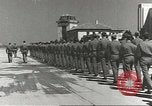
Superior officers award commissions and wings to USAAF cadets at Maxwell Field in Montgomery, Alabama (WW2)
U.S. Army Air Forces cadets at Maxwell Field in Montgomery, Alabama during World War II. Cadets marching. They march past a line of AT-6 Texan trainer aircraft. The cadets halt, do a left turn and open ranks. Several cadet graduates are given their wings and commissions. USAAF superior officers congratulate the cadets and present the wings. The cadets shake hands, then step back into rank. Several EM are cited. Infantry officers. Senior officers pin wings on infantry officers. The wing on the officer's uniform. Newly commissioned officers are congratulated by their families after graduation. Two new officers admire their wings and pose for the camera. Parked AT-6s in the background. The graduates at attention at "open ranks." Cadets in charge of men make hasty inspection and stop to square hat of Cadet. Superior officers award commissions and wings to the cadets. Graduates wave their hats, cheer, then break ranks.
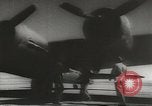
A USAAF officer trains a new B-17 pilot in internal inspection and safety precautions prior to take off in the United States.
A U.S. Army Air Forces (USAAF) training film titled 'How to fly the B-17. Part I. Ground Operations.' about inspections and safety precautions by a pilot prior to take off. A USAAF officer trains a new pilot beginning his career as a USAAF B-17 Flying Fortress pilot. The instructing officer, trainee pilot and aircraft engineer inspect a USAAF B-17 Flying Fortress. They rotate the propeller blades to inspect engine number 3 and 4. Interior inspection: The three airmen climb into the B-17. Inspection: tail oleo, cylinder, any loose or unanchored parts, ball turret, hand break position, control cables throughout the ship, hand cranks in place, hatch secure, locking dogs in place. The officer instructs the pilot about checking the aircraft's computed loaded weight and CG before each flight, and their effect on the flight. Fire extinguisher check, bomb bay check, emergency bomb release lever check. Cockpit check: fire extinguisher beside the door, all access doors and covers from the cockpit window. The officer and pilot strap into their respective seats to proceed with the check. The officer (acting as the co-pilot) reads out each item from the check list as the pilot conducts the check simultaneously. They complete Form 1A and sign the exceptional release required under special circumstances. Check: radio chart, weather code, Form 1A for loading and passenger list. (World War II period).
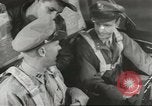
A USAAF officer trains a new B-17 pilot in cockpit check, including seat and controls check in the United States
A U.S. Army Air Forces (USAAF) training film titled 'How to fly the B-17. Part I. Ground Operations.' about inspections and safety precautions by a pilot prior to take off. A USAAF officer trains a new pilot beginning his career as a USAAF B-17 Flying Fortress pilot. The instructing officer, trainee pilot and aircraft engineer inspect a USAAF B-17 Flying Fortress. Cockpit check including seat and controls check: Seat check: seat belts, seat adjustment, rudder pedals. Control check: rudders and elevator controls unlocked, lock down and latched, aileron lock. Trim tab indicators inspection: rudder tab control, elevator tab control, aileron tab control. Check for: fuel transfer valves and switches, inter-coolers, JAIROS, fuel shut off switches, landing gear switch, cowl flaps, turbos, waste gate open, idle cut offs, throttles, RPM, auto pilot, de-ice and anti-ices, wing and propellers, cabin heat controllers, generators. Engine start check: The officer instructs the pilot to check for the fire guard with a fire extinguisher standing by near each engine. The pilot warns the ground crew for propeller clearance. (World War II period).
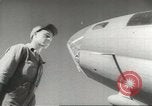
A USAAF officer trains a new B-17 pilot in cockpit inspection and start up procedures in the United States.
A U.S. Army Air Forces (USAAF) training film titled 'How to fly the B-17. Part I. Ground Operations.' about inspections and safety precautions by a pilot prior to take off. A USAAF officer trains a new pilot beginning his career as a USAAF B-17 Flying Fortress pilot. The instructing officer, trainee pilot and aircraft engineer in the cockpit, prepare for take off. The fire guard gives the all clear. The pilot is instructed to check and adjust the: master and ignition switches, batteries and inverter power, volts on the inverter. The pilot reaches out of the cockpit window and gives the hand signal for external power (source of electric power). The ground crew man turns on the portable generator and links the power cable to the aircraft. Further cockpit check includes turning on or inspection of: parking brakes, hydraulics check, booster pumps, pressure carborator filters, fuel quantity in the tanks. the pilot is instructed to give the signal to start engine number 1 and adjust the throttle. Check: the starter switch, hand timer, other start and mesh controls, oil pressure, RPM. The pilot gives the signal to start engine number 2. Adjustment of the vacuum selector switch, flight indicator check. The officer instructs the pilot to repeat all inspection procedures for engine number 2 as conducted for engine number 1. (World War II period).
CRITICALPAST.COM: About Us | Contact Us | FAQs - How to Order | License Agreement | My Account | My Lightboxes | Shopping Cart | Advanced Search | Featured Collections | Website Terms & Conditions | Privacy Policy ©2026 CriticalPast LLC.
License Agreement |
Terms & Conditions |
Privacy Policy
©2026 CriticalPast LLC.