


 Francais
 Deutsch
 Italiano
Refine Your Search
Greek-Civil-War stock footage and images
- Showing 22447 to 22452 of 27486 results more
more Hide
Hide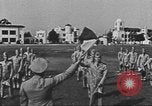
Merchant Marine Officer candidates practice signaling and learn electric engineering at the USMMA at Kings Point in New York.
Merchant Marine Officer candidates learn seamanship at the United States Merchant Marine Academy ( USMMA ) at Kings Point in New York, United States. Merchant Marine Officer candidates practice signaling using signal flags. An officer teaches how to operate an equipment in a class. The candidates learn to find places on a globe. They work in an engine room. They use hand tools. They learn the fundamentals of electric engineering in a class. They learn to load and fire guns. The candidates exercise for physical fitness. (World War II period).
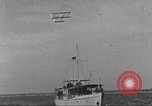
Merchant Marine Officers write in a log book and learn to fire antiaircraft guns at the USMMA at Kings Point in New York.
Merchant Marine Officer candidates learn seamanship at the United States Merchant Marine Academy ( USMMA ) at Kings Point in New York, United States. Training vessels and sailboats at sea. Merchant Marine Officer candidates operate equipment aboard a ship and readings are noted down in the ship's log. An officer turns a wheel on the bridge of the ship. An officer handles ropes. An officer signals another ship with signal flags. An officer works in a radio room. An engineer works in an engine room. An engineer manning an engine control system. Engineers check machinery aboard the ship. Readings are recorded. An engineer checks switchboards. Marine officers learn to load and fire 50 caliber anti aircraft guns. (World War II period).
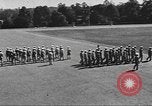
Candidates practice drill and learn naval science and operate anti-aircraft guns at the USMMA in Kings Point, New York.
Merchant Marine Officer candidates learn seamanship at the United States Merchant Marine Academy ( USMMA ) at Kings Point in New York, United States, during World War 2. The candidates practice drills during training. The book of United States Navy Regulations. The cadets learn naval science in their advance training. They learn tactics and maneuvers by operating artillery and antiaircraft guns. They learn to recognize ships and aircraft. The candidates learn to operate anti aircraft guns and machine guns.
Licensing of Merchant Marine seamen and officers by the U.S. Coast Guard
Chart shows number of Merchant Marine seamen increasing as World War 2 progresses. Agents of the Coast Guard, the U.S. Maritime Commission, and the Public Health Service collaborate to assure fitness of Merchant Marine seamen. Some are seen being given physical exams by a physician. A prospective seaman demonstrates his skill with ropes. Coastguardsman observes skills of a candidate seaman at the wheel of a ship. A candidate receiving his Merchant Seaman's Certificate from the Coast Guard. Officers enter the Marine License Examination Room. Inside, men are seen taking exams to qualify for licenses as Masters, Mates, Engineers, and Pilots. Merchant Marine seamen being sworn in. Licensed seamen engineers being finger printed. Coast Guard officers supervise the signing of Shipping Articles (contracts between masters and crewmen). A line of seamen waiting to sign on to a ship. Coast Guard offices on shore where seamen may sign on to a ship. Seamen receiving pay under supervision of the Coast Guard.
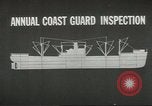
Coast Guard perform complete inspections of Merchant ships
Animated chart illustrates points included in annual Coast Guard inspections of Commercial ships. Coast Guard officers examine safety equipment on the deck of a merchant vessel. Seamen open safety equipment on a lifeboat, under as Coast Guard inspector looks on. Coast Guard inspector measures length of a life boat oar and checks its strength. Life jackets are examined for deterioration and date-stamped. Wartime escape hatch is inspected. Seaman demonstrates using it to exit in emergency. Marker lights are inspected. Inspectors examine the ship's Lyle gun (for firing a line during rescues) and its gun powder. Seamen empty liquid fire extinguishers so they can be re-charged. Fire-fighting nozzles are measured and fire hoses are tested. (One springs a leak at a connection.) Inspectors conduct hydrostatic tests of the ship's boilers and then inspect interior of a boiler. View of inspector climbing out of a boiler. A ship in dry dock for inspection is also inspected by the Coast Guard, at the same time. Inspectors examining ships screws and hull thickness. Inspectors deep in hull compartments of the ship. View of Certificate of Inspection being completed. (World War II period).
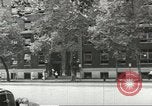
U.S. Coast Guard Commandant Russell Randolph Waesche describes mission of the Coast Guard.
The old Southern Railway Building, 13th Street and Pennsylvania Avenue, N.W., Washington, D.C., housing the U. S. Coast Guard Headquarters during World War 2. Persons are entering the building. Sign identifies the office of the Commandant. The Commandant, Russell Randolph Waesche holds a meeting in the office. Map of the world covers one wall. American and Coast Guard flags are displayed. Commandant Waesche is explaining the mission of the Coast Guard. Closeup of him speaking. Outside, on the street, a contingent of uniformed armed Coastguardsmen stands in formation. Officials reviewing a parade that includes a Coast Guard contingent. Glimpse of ships docked in a port.
CRITICALPAST.COM: About Us | Contact Us | FAQs - How to Order | License Agreement | My Account | My Lightboxes | Shopping Cart | Advanced Search | Featured Collections | Website Terms & Conditions | Privacy Policy ©2026 CriticalPast LLC.
License Agreement |
Terms & Conditions |
Privacy Policy
©2026 CriticalPast LLC.