


 Francais
 Deutsch
 Italiano

Refine Your Search
Greek-Civil-War stock footage and images
- Showing 2311 to 2316 of 27581 results more
 Hide
Color Sound
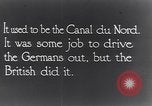
Ruins of the Canal du Nord in France. French and British officials and Generals visit war torn sites
Opens with camera panning over debris filled Canal du Nord and then continuing along and up its concrete sides to the top. British troops walk along the high ground above the opposite side of the damaged canal. Next, Commander of British forces, Marshal Sir Douglas Haig, and French Premier, Georges Clemenceau, step from their respective automobiles, and walk together in a war torn area in France, during World War 1. Other officials and military officers join them. Closeup of British Field Marshal Sir Julian Byng, Commander of the Third Army, conversing with another General officer and then with a French priest Other officers stand behind him and a dog sits on the ground, nearby. Premier Clemenceau with a French General speaking to French women in a city. A civilian official (wearing a black mourning armband) joins them. Next, Haig and Clemenceau are seen walking together toward an honor guard of French soldiers, drawn up in formation along the roadside. The proceed to a contingent of British troops, including a military band, standing in formation. Haig and Clemenceau walk through the ranks inspecting the troops. They are next seen as Marshal Haig introduces British General Sir Herbert Plumer to Premier Clemenceau. French soldiers stand at attention in the background. Views of different officers and officials conversing, including Field Marshal Sir Julian Byng speaking with General Plumer. The statesmen and Generals then visit the damaged former German headquarters. Sign above the building reads:”Kommandantur.” The building is pockmarked by shell and bullet holes. Clemenceau leads the party exiting the building. Debris covers the front steps. Clemenceau and Haig return to the same car, saying farewell to others in the party. An officer places a carriage robe over the French Premier’s legs, and they drive away. Next scene is on the outskirts of Ypres, as the remains of a damaged hospital are demolished by British Forces after it was deemed dangerous and unusable due to German shelling.

Views of No Man's Land, the Western Front, World War I
No Man's Land. The Western Front, during World War I. Wrecked German tanks, equipment and emplacements. A man on horse moves in the background. Rubble and ruins of houses. skeletons of trees. Makeshift battlefield burial ground with wooden markers. German prisoners of war, assembled and beginning to move.
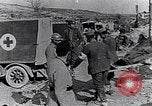
Scenes at Western Front, World War I.
During World War 1, French troops carry casualties to Red Cross Ambulances for evacuation to the rear, as fresh troops pass them moving toward the front. Armored personnel carriers transport some to the front. Scene of utter desolation. No Man's Land. Nothing is left standing except broken fragments of some trees. American and French wounded being carried to the rear on stretchers. German prisoners of war being escorted. Allied tanks moving toward the front. American troops moving forward with mule trains carrying supplies.

Wreckage of trees, buildings, churches, and a view of Battle of the Somme troop trenches in France during First World War.
A French soldier walks through bomb craters and devastation in a Battle of the Somme World War I battlefield in France. Wrecked trees in the field. Shell wrecked trenches. View of trenches from above. Ruins of a building and ruins of the bombed out church at Esnes France. Wide shot of barren landscape scarred and devastated by bombing and battle of World War I.

U.S. Navy fleet military maneuvers in Manila Bay, Philippines; U.S. military activity in Philippines between the World Wars
The Pacific fleet lies in Manila Bay, Philippines. U.S. Navy Battleships and warships in maneuvers in the Philippines, between World War 1 and World War 2. Smoke arises from ship smokestacks. View of boats and harbor area looking up Pasig River towards the business section of Manila from the walls of Fort Santiago. Governor On February 14, 1929, General Stimson and General MacArthur review a military parade in Manila on the Luneta (Rizal Park Ermita, Manila, 1000 Metro Manila) in which troops of the U.S. Army, U.S. Navy, and United States Marine Corps and cadets of local schools and colleges participate. Soldiers and sailors parade with guns and flags. The Rizal Monument seen in the background. Soldiers ride horses on the parade grounds. The 23rd Wagon Company (Philippine scout) load mules into railroad boxcars. Wagons are loaded on the train flat cars. Army officers talk amongst themselves at the Paco station. A child stands near the officers. A railroad train loaded with troops and military equipment passes by on the railway track.
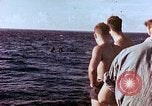
Australian prisoners of war rescued and helped aboard submarine by U.S. Navy rescue team near the Philippines (WW2)
Australian prisoners of war rescued after sinking of the Rakuyo Maru, a Japanese prison ship carrying them at sea near the Philippines, during World War II. Survivors afloat on parts of wreckage. Crew members on USS Sealion (SS-315) and USS Pampanito (SS-383) helped the survivors to deck of their submarines. Survivors adrift with life belt. They are pulled aboard the ship with the help of a rope.
CRITICALPAST.COM: About Us | Contact Us | FAQs - How to Order | License Agreement | My Account | My Lightboxes | Shopping Cart | Advanced Search | Featured Collections | Website Terms & Conditions | Privacy Policy ©2026 CriticalPast LLC.
License Agreement |
Terms & Conditions |
Privacy Policy
©2026 CriticalPast LLC.