


 Francais
 Deutsch
 Italiano
Refine Your Search
Greek-Civil-War stock footage and images
- Showing 23215 to 23220 of 27484 results more
more Hide
Hide
Charles Lindbergh takes off from Roosevelt Field for his famous solo flight from New York to Paris.
People gathered early on a misty morning at Roosevelt Field, Long Island, New York, to watch as Charles Lindbergh attempts to make a solo flight across the Atlantic Ocean in his airplane, The Spirit of St. Louis. The plane starts its takeoff role between groups of spectators, raising dust. The spectators move to get a better view as the plane continues, out of sight in the fog and mist. It is not clear where the plane is, although engine sound has changed. Spectators strain to see it through the mist. Then, some cheers are raised when the crowd realizes that Lindbergh has successfully taken off in his heavily laden airplane. The opening caption refers to Curtiss Field, where the Spirit of St. Louis was test flown and reportedly maintained in Hanger 16. there, from May 12th through the 20th. However, for the Paris flight, the plane was towed a mile to Roosevelt Field where, heavily loaded with fuel, it could take advantage of the longer runway for takeoff. (Note: Both fields were originally part of the old Hempstead Plains Field renamed Hazlehurst Field when taken over by the U.S. Army in 1917. U.S. Geological survey maps of 1918 show three areas named, respectively, Hazelhurst Aviation Field No. 1; Aviation Field No. 2; and Camp Albert L. Mills, abutting it. Field No. 2 was renamed Mitchel Field on July 16, 1918. The eastern part of Field No. 1 was dedicated as Roosevelt Field, on September 24, 1918. After the war, the western part of Field No. 1 became known as Curtiss Field, associated, as it was, with the Curtiss Aeroplane & Motor Company located there.)
U.S. soldiers aboard LCI loading and firing rockets from the launching rack towards Iwo Jima beach in Japan.
Activities of the U.S. soldiers during the Battle of Iwo Jima in Japan during World War II. Soldiers on the bridge of landing craft infantry (LCI). Soldiers fire rockets at night. They load rockets into the rocket launching rack and fire them towards Iwo Jima beach. They load 5 inches rockets into the launching rack.
Secretary of the Navy Forrestal, Admiral Turner and General Smith discussing aboard USS Eldorado at Iwo Jima in Japan.
Activities of the U.S. Navy during the Battle of Iwo Jima in Japan during World War II. U.S. Secretary of the Navy James Forrestal, U.S. Navy Admiral Richmond Turner and U.S. Marine Corps General Holland Smith on flag bridge of USS Eldorado. They watch the target area through binoculars and discuss amongst themselves. Secretary of the Navy smokes a pipe. Mount Suribachi in view in the foreground.
Smoke arising due to bombardment at the Iwo Jima shoreline and base of Mt Suribachi at Iwo Jima beach in Japan.
Activities of the U.S. Navy during the Battle of Iwo Jima in Japan during World War II. U.S. Navy TBF Avenger aircraft in flight over the beach. It drops messages for the Navy. Soldiers stand near a 40 mm gun. Signal flags and 20 mm guns in the foreground. Smoke arises from bombardment at the Iwo Jima shoreline. Explosions at the base of mount Suribachi. Mount Suribachi and Iwo Jima in the foreground. Iwo Jima shoreline smoking under bombardment. Landing craft in the foreground.
Admiral Turner and Secretary of Navy Forrestal read messages on flag bridge of a ship off the coast of Iwo Jima in Japan.
Activities of the U.S. Navy during the Battle of Iwo Jima in Japan during World War II. U.S. Navy Admiral Richmond Turner and U.S. Secretary of the Navy James Forrestal on flag bridge reading messages. They watch the target area through binoculars. Mount Suribachi, flag locker in the foreground. Smoke column rises from the base of Mount Suribachi. Soldiers fire gun from a destroyer. Smoke arising from explosions.
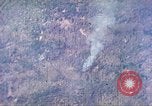
Aerial view of bombardment during the invasion of Iwo Jima by the U.S. troops, Japan.
The invasion of Iwo Jima by the United States troops during Battle of Iwo Jima, World War II. Aerial view of bombardment on Iwo Jima. Japanese installations and terrain in view. Small craft underway in circles. Bombardment on the Iwo Jima coastline. Wave of landing vehicle tracked (LVTs) underway at sea. Ships in transport area at Iwo Jima. LVTs underway at sea. LVTs head towards the beach, Mount Suribachi in the background. Battleships underway at sea.
CRITICALPAST.COM: About Us | Contact Us | FAQs - How to Order | License Agreement | My Account | My Lightboxes | Shopping Cart | Advanced Search | Featured Collections | Website Terms & Conditions | Privacy Policy ©2026 CriticalPast LLC.
License Agreement |
Terms & Conditions |
Privacy Policy
©2026 CriticalPast LLC.