


 Francais
 Deutsch
 Italiano
Refine Your Search
Greek-Civil-War stock footage and images
- Showing 23521 to 23526 of 27483 results more
more Hide
Hide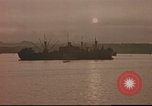
Men unload locomotives from the ship underway at sea in the Philippine Islands.
The sea voyage of the victory ship Hannibal Victory from San Francisco to the Philippine Islands during World War II. The ship underway at sea. Men working aboard the ship. They unload the locomotives from the ship. A man watching the unloading activity. Men working on ship. The locomotive at the railroad stations. Men standing near the locomotive. A girl watching the locomotive.
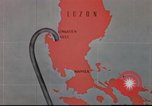
Men standing near the wheels of the freight cars aboard the ship underway at sea in the Philippine Islands.
The sea voyage of the victory ship Hannibal Victory from San Francisco to the Philippine Islands during World War II. A map locates Luzon, Lingayen Gulf. A ship underway at sea. Mountains in the foreground. A ship convoy underway. Wheels of the freight cars placed on the ship. Men standing near the wheels. 'Slow Down Divers at Work' written on a side of the ship.
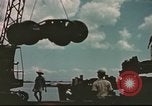
Sailors unloading railroad wheels and touring rubbled Manila in the Philippine Islands.
The sea voyage of the victory ship Hannibal Victory from San Francisco to the Philippine Islands during World War II. The wheels of the freight cars are attached to the hoists. They are unloaded from the ship. Men discussing strategies. The wheels are unloaded from the ship. A man walking on the street. The sailors tour rubbled Manila. Rubbled buildings along the sides of the street. The railroad wheels are attached to their positions under the locomotive. Men walking through debris.
The demonstration of the principles of the steam power in the United States.
A film titled: 'The Magic of Steam' depicts the working of the steam turbines in the United States. A woman seated in her room turns the light on. Men work inside a factory. Electric poles in an area. Wires connected from one electric pole to the other. A pie chart depicts the power used for the production of electricity. 65 percent of steam and 30 percent of water being used for the purpose. Men work inside a factory. They work on steam turbine. A man demonstrates the working of a steam turbine using the steam. A man places a tea kettle to heat. Steam arising out of the kettle as the water boils. A paddle wheel is placed near the kettle from which the steam comes out. The wheels start revolving due to the steam. A lid is placed on the kettle. The high pressure of steam lets the wheels to revolve faster and pushes the kettle in the opposite direction. The lid is then removed from the kettle. Another example to demonstrate the concept of steam is that of the fire hoses. Firemen try to control the fire in a building with the help of fire hoses. Men work near a steam turbine in a factory. (World War II period).

The liaison between the telephone system and civilian defense units for air raid drills in the United States.
The air raid warning systems in the United States during World War 2. An air drill in Newton, Massachusetts. A Daprato Statuary company building on fire (a drill meant to simulate fire from bombardment.) A warden in uniform reports the bomb damage to the information center. A sign reads: 'Report Center (Telephone Room)'. Men and women work inside the room. A woman talks on the telephone and she notes down the information about the location, time, date and other essential things on a paper. Chief warden and other officials seated in the report center. The report about the bombardment is given to them. The location of damage is planted on a map. They take quick actions and assess the impact and needed response. Messages are relayed by uniformed Boy Scouts standing by. Fire equipment and medical aid is dispatched to the scene. A sign reads: 'District Warning Center'. Public utility representatives stand by to take charge of the repair of water mains, electrical and telephone equipment. A map locates various areas in New England, United States.
American and French soldiers stand in formation during the General John J. Pershing centennial in France.
U.S. General John J. Pershing centennial in France. Exterior of the Metropole hotel. It was the headquarters of American General staff during World War II. Vehicular traffic outside the building. French and American soldiers at the monument. Soldiers stand in formation. Army band plays music. An American officer makes an address. American and French officers lay wreath at base of the monument.
CRITICALPAST.COM: About Us | Contact Us | FAQs - How to Order | License Agreement | My Account | My Lightboxes | Shopping Cart | Advanced Search | Featured Collections | Website Terms & Conditions | Privacy Policy ©2026 CriticalPast LLC.
License Agreement |
Terms & Conditions |
Privacy Policy
©2026 CriticalPast LLC.