


 Francais
 Deutsch
 Italiano
Refine Your Search
Greek-Civil-War stock footage and images
- Showing 23605 to 23610 of 27483 results more
more Hide
Hide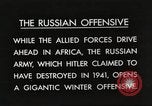
Smoke arises due to the explosion of shells fired by the Russian soldiers on the battlefield on the Eastern Front.
Activities of the Russian soldiers on the Eastern Front during World War II. Russian soldiers fire artillery at the German army. Smoke rises from explosions on the battlefield. Snow covered field.
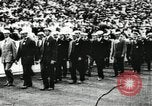
Men participate in various events during the Olympic games held in Paris, France.
The Olympic games held in Paris, France. A large crowd seated in the stadium. Men march at the games. The participants perform at several events. Men participate in the tug of war. Other men demonstrating synchronized cycling on the track. A man holding a flag stands. Hurdle racing. Mass calisthenics as part of an opening or closing ceremony.
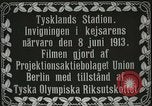
Kaiser Wilhelm II arrives to officially open Germany's new Olympic Stadium near Berlin.
Official opening of Germany's Olympic stadium (Deutsches Stadion Berlin, also at that time known as Grunewald-Stadion) on the 25th Anniversary of the Kaiser's coronation. Kaiser Wilhelm and Empress Augusta Viktoria, in their carriage, drive into the center of the new stadium grounds (Deutsches Stadion) built near Berlin, to host the 1916 Olympics. They are accompanied by several horse guards. The Kaiser is dressed in Hussar uniform including fur Busby adorned with Totenkopf (Death Head) emblem. The Royal couple step from their carriage. In next sequence, they are seen silhouetted with a number of dignitaries, under a canopy. Members of various athletic clubs parade across the grounds, carrying banners and flags, many adorned with award ribbons. The Kaiser watches from under the canopy, with Empress Augusta Viktoria, standing behind him. The Kaiser salutes some marchers. A large contingent of girls marches past, all dressed in dark skirts and white blouses. Bicyclists race around a track, as spectators watch from the stadium stands. Formation of German men and women perform calisthenics in unison on the field. Another glimpse under the canopy, shows the Empress conversing with an officer behind her, dressed in Hussar garb, similar to the Kaiser, who continues to salute as various groups pass in review. (The 1916 Olympic games were canceled due to World War 1, and the stadium was destroyed 20 years later and replaced by the Olympiastadion Berlin, or Berlin Olympic Stadium.)
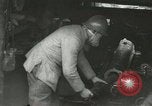
French Army troops, in Artois, France, training to use artillery against aircraft
French soldiers training in Artois, France, shortly before World War I. French artillerymen wearing gas masks, are seen inside a bunker. One loads a powder charge into a Cannon de 75 modèle 1897 field gun (So-called French 75). Slate states (in Swedish): Calculating the distance to an airship or airplane is often a very tricky task. View of French soldier, in a field, looking through a telescope, and another, nearby, looking through binoculars. The latter raises a large horn (or megaphone) and sounds it. Camera pans to two soldiers using a range finder. Closeup of aiming adjustments on a French 75 field gun. Next, gun crewmen remove shells from a protected storage caisson, buried in the side of a deep trench and other gunners load a nearby gun. Slate states that Automobile cannons constitute a very practical and effective weapon in the battle against airships. An artillery piece is shown mounted on a vehicle chassis, being maneuvered by gunners. A brief glimpse of mirror specially designed to signal to aviators.
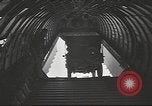
YC-97 aircraft being configured for cargo (vehicles), troops, and passengers (WW2)
View of vehicles being loaded via rear loading ramp, on YC-97. Technicians configure the YC-97 for troops and passengers. (World War II period)
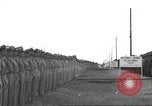
Chinese troops stand with books in hand at Chinese Training Detachment Headquarters in China.
Chinese troops at Chinese Training Detachment Headquarters in China during World War II. Soldiers stand in a line. They run towards the headquarter building. A group of Chinese soldiers with books in hands stand next to a board that reads 'Headquarters Chinese training detachment',. They pose for a photograph.
CRITICALPAST.COM: About Us | Contact Us | FAQs - How to Order | License Agreement | My Account | My Lightboxes | Shopping Cart | Advanced Search | Featured Collections | Website Terms & Conditions | Privacy Policy ©2026 CriticalPast LLC.
License Agreement |
Terms & Conditions |
Privacy Policy
©2026 CriticalPast LLC.