


 Francais
 Deutsch
 Italiano
Refine Your Search
Greek-Civil-War stock footage and images
- Showing 25039 to 25044 of 27482 results more
more Hide
Hide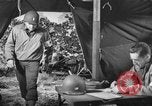
A U.S. Army psychiatric officer tries to detect signs of combat exhaustion and advises ways to prevent them
Reenactment of handling and treatment for U.S. Army World War 2 soldiers suffering combat exhaustion. A soldier gives answers to a psychiatric officer. The psychiatric officer tries to detect signs of combat exhaustion (modern equivalent Post Traumatic Stress Disorder or PTSD) like lack of physical coordination, slowing mental processes, excessive reaction off noise and inability to rest. Soldiers adjust position of artillery. The soldiers are directed to take proper meals and get sound sleep to prevent combat exhaustion and fight stress.
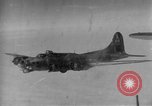
U.S. Army Air Force Boeing B-17 Flying Fortresses in formation flight for bombing Hamburg in Germany.
U.S. Army Air Force Boeing B-17 Flying Fortresses in flight for bombing Hamburg in Germany during World War II. B-17 Flying Fortresses in formation flight over thick clouds. A B-17 in flight over thick clouds.
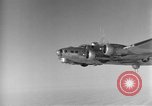
Smoke rises from burning oil storage tanks as B-17s drop bombs on Heligoland island in Germany.
U.S. Army Air Force Boeing B-17 Flying Fortresses bomb Heligoland island in Germany during World War II. B-17s in flight. Several aerial views of the island and another island next to it. Smoke rises from burning oil storage tanks on Heligoland island. A runway on the island in the background. Heavy flak. German coastline: Heligoland and Friesian islands. Bomb craters and smoke from burning oil storage tanks. Bombs are dropped from Allied aircraft. The aircraft are in formation over clouds.
Thick smoke rises from burning oil storage tanks and a refinery on fire as B-17s drop bombs on Hamburg, Germany.
U.S. Army Air Force Boeing B-17 Flying Fortresses bomb Hamburg, Germany during World War II. View of Heligoland island and its coastline. The B-17s in flight. Aerial views of target island. On Hamburg: Thick smoke rises from burning oil storage tanks and a refinery on fire. Coastal installations on islands. Smoke and fire from a coastal oil depot.
Paul Bebert, a former prisoner in a Nazi concentration camp, speaks to a crowd and then destroys a swastika in Hamburg, Germany.
Trade unions in a building in Hamburg, Germany. At an outdoor ceremony Colonel Armetage, British Military Government, restores free trade unions and union buildings for the people of Hamburg. Paul Bebert, formerly a prisoner in a World War 2 Nazi concentration camp, speaks to a crowd and then mounts a scaffold and with a hammer and a chisel destroys a swastika on the facade of a building.
German civilians purchase and read the first American newspaper printed in Aachen, Germany.
The first American newspaper in Aachen, Germany is printed during World War II. Crowds in the streets of Allied-occupied Aachen. A U.S. General speaks as the first American newspaper to be printed in Germany is dedicated. Presses roll and the first copies are produced which are then purchased and read by German civilians.
CRITICALPAST.COM: About Us | Contact Us | FAQs - How to Order | License Agreement | My Account | My Lightboxes | Shopping Cart | Advanced Search | Featured Collections | Website Terms & Conditions | Privacy Policy ©2026 CriticalPast LLC.
License Agreement |
Terms & Conditions |
Privacy Policy
©2026 CriticalPast LLC.