


 Francais
 Deutsch
 Italiano
Refine Your Search
Greek-Civil-War stock footage and images
- Showing 2659 to 2664 of 27482 results more
more Hide
Hide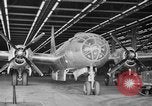
New B-29 plane towed out of a plant and takes off in the United States during World War II.
U.S. Army Air Forces film about B-29 aircraft construction. A completed B-29 bomber towed out of the construction factory during World War 2. Wheels of the bomber. Workers in plant weld, bolt and do other work to complete another B-29 plane. Women and men war production workers seen working in the plant look up and smile on hearing one of the new B-29 aircraft in flight overhead. Aerial views of B-29 in flight. Wing area and tactical gear of the plane. Close-up view of revolutionary flap design that constitutes one fifth of the wing area. Flaps shown moving on the aircraft. Close-up view of landing gear descending. B-29 aircraft lands. View of guns mounted on plane. Pilots shake hands with crew member. B-29 flight crew in briefing to receive information about bombing objective over Japan. Laborers assisting with loading and unloading the aircraft. B-29 taking off and again seen in flight.
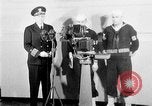
The Norden bomb sight is revealed to the U.S. public for the first time during World War II
The making of a public information film about the Norden bomb sight, during World War 2. Opening scene shows a Norden bomb sight on a pedestal, at the Museum of Science and Industry, in Radio City, Manhattan, New York City. It is flanked by U.S. Navy Captain, Irving Entwhistle and Shore Patrolman, Boatswain's Mate 2nd Class. Orville T. Payne. Another shore patrolman stands behind the bomb sight. The trio waits to begin. Then Captain Entwhistle begins to speak about the significance of the bomb sight to the war effort. The filming is interrupted and takes up again, focusing solely on Captain Entwhistle, as he continues to talk about the bomb sight, but is quickly interrupted, again, by the film director (heard, but not seen). The captain begins, repeating his scripted talk again. Scene shifts to Captain Entwhistle, now standing with hands on the bomb sight. He describes its operation as he maneuvers the sight. He notes the bomb sight's ability to take over control of the bomber's course to the precise drop point. Entwhistle, then looks up and comments: "Is that enough?" He then continues with his talk, but is interrupted, again. Next, Entwhistle picks up again, repeating part of his talk, while the camera pans over the bomb sight. Captain Entwhistle, states that, the instrument "is an automatic pilot, as well as a sight." He rotates the sight various ways for the camera, and asks: "'Want some more?" Scene changes, now showing Harold Barth, President of the Norden company, standing with Captain Entwhistle, who rotates the sight around on its pedestal, while chatting with him. (Microphones do not pick up the conversation.) Mr. Barth leans forward and peers through the sight. Next, in a closeup, the Captain manipulates the sight, while talking to Barth (sound not recorded). Mr. Barth and Captain Entwhistle, take turns looking through the sight. Closeup of the Captain looking through the sight, and manipulating its controls.
Post war use of military cars being demonstrated by Willys automobile company in Toledo, Ohio (WW2)
Willys automobile company makes post war use of military Jeeps as tractor, light truck and passenger car, in Toledo, Ohio. Men drive military Jeeps out of a building. Jeeps used as tractor for attachments of plower and harvest machine. Jeeps used as a sack making machine. conveyor belts attached to the jeeps. Jeep being used as shredder and independent power unit. (World War II period)
Damaged famous buildings of Berlin due to war bombings in Germany (WW2)
War damaged buildings of Berlin, Germany after the end of World War II. Men passes by damaged buildings. The Hotel Kaiserhof in Mohrenstraße, the Reichstag, and Hitler's Chancellory in ruins. People observe the damage inside the Reichstag. Burnt chair in a building. Soldiers check ruins as they find uniform of a soldier in ruin. A German soldier makes faces.
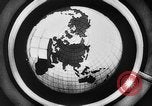
German troops fire artillery on Eastern Front during World War II during invasion of Soviet Union.
German troops at the Eastern front during World War II during Operation Barbarossa invasion of Soviet Union. A map of Europe. A bridge. Fire in a village and smoke arises. German troops stand in a group near artillery. They load a shell and fire.. A board reads 'Eydtkau'. Soldiers pulling artillery. German soldiers capture two Soviet soldier prisoners of war. German soldiers advance, as they walk on the street.
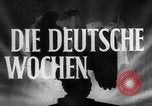
Scenes of destruction from late 1939 in Finland during the Russo-Finish war
Film opens with a map of Europe showing black-shaded region of the Soviet Union, and pointing out Germany and Finland. Next, are shown moving images of rural buildings on fire in Finland, late in 1939, during the Russo-Finish war (or "Winter War"). (The Narrator comments that Finland's population was only 4 million while that of the soviets was 180 million.) Soviet bombers are seen high in the sky. A lone woman hurries along a street in Helsinki, Finland, past rubble of a bombed building. Smoke rises in the background. Finnish fire fighters man a hose to fight numerous huge fires in Helsinki.Various views of fires blazing in the capital.
CRITICALPAST.COM: About Us | Contact Us | FAQs - How to Order | License Agreement | My Account | My Lightboxes | Shopping Cart | Advanced Search | Featured Collections | Website Terms & Conditions | Privacy Policy ©2026 CriticalPast LLC.
License Agreement |
Terms & Conditions |
Privacy Policy
©2026 CriticalPast LLC.