


 Francais
 Deutsch
 Italiano
Refine Your Search
Greek-Civil-War stock footage and images
- Showing 2875 to 2880 of 27482 results more
more Hide
Hide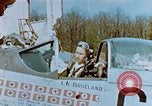
Pilots of U.S. Army Air Force climb into their P-51D airplanes at captured German airbase, near the end of World War 2
Pilots of the United States Army Air Force 353rd Fighter Squadron, 354th Fighter Group, board their P-51D aircraft, for a mission against German targets, during World War II. They are operating from a bombed out captured German airfield, near the end of the War in Europe. Major L.K. Brueland is seen in cockpit of his airplane as he taxis with the canopy open, making his way between obstructions on the ramp. His aircraft displays 14 and one half swastikas. Another pilot climbs aboard his P-51D, as a photographer stands on the nose of the aircraft. His airplane has 16 German crosses (not swastikas ) painted on it. Crew chief cleans his canopy. He taxis out with canopy closed.
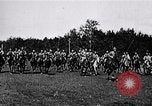
Scenes of combat and destruction in World War I. Russian refugees and soldiers retreating from stricken areas.
Referring to Russian operations against German forces in World War 1, Slate reads: "Disaster rapidly followed disaster. The German armies advanced and whole provinces had to be evacuated after 24 hours notice." The film continues with a montage of World War 1 scenes. Mounted British lancers charging across a field. A German gun crew standing by a camouflaged 7.7cm Feldkanone 16 artillery piece. Artillery shell exploding ahead and close to camera during battle. French soldiers charging out of their trench, into no-man's land. Gas shells exploding and gas drifting across a wooded area occupied by Russian soldiers and artillery, some of whom stand silhouetted without gas masks during attack. A hand grenade being thrown by a Scottish soldier. Russian civilians crossing railroad tracks and watching conflagrations from an artillery barrage on buildings in background. Closeups of buildings burning and destroyed by German shelling. Russian refugees leaving area of destroyed and burning buildings.The group includes several Russian soldiers. One, an ambulatory wounded, using an improvised cane, is assisted by a Russian officer and a woman nurse. The ground is partly snow-covered. View of smoke from fire sweeping over a railway line and station. Russian soldiers along with civilians heading away from the embattled areas.
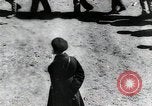
Views of prisoners held in various places and circumstances by Russians during World War I.
Opening scene shows Central Powers prisoners of war walking in a circle around a Russian guard, to get some exercise. A sentry walks his post on a prison barge. Prisoners can be seen looking through cell bars. Armed Russian guards escort German sailor prisoners of war, to a railroad train car with bars on its windows. One guard poses for the camera, holding his Model 1891/30 Mosin–Nagant rifle. Closeup of Central Powers prisoners in leg chains, walking in midst of a crowd of civilians. A woman walks with them.
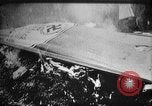
Czechoslovakia and Soviet relations after World War 2; Dubcek liberalization during Prague Spring; Soviet occupation in 1968
History of Czechoslovakia from 1919 to 1968 depicts lives of its people and various crisis. Clip shows combination of still images and moving images, with background of Czech musical soundtrack. A burning Nazi plane shot by Soviet military during World War II. Soviet Red Army marches in Prague, Poland in May 1945 to rescue from German occupation and atrocities. People destroy Nazi emblems and symbols from buildings. People assemble in large numbers on roads and cheer for the incoming Soviet troops and tanks. Civilians of Czechoslovakia during normal life after World War 2. Workers in mines, farmers in field and women work in houses. Spread of communism and communists make a star formation during a rally in Prague (sometimes called the Prague Spring). President Edvard Benes in 1948 signs pact with Soviet government. Photos of Soviet General Joseph Stalin and other Soviet leaders in his office. Various Presidents and leaders of Czechoslovakia during the 1950s. Military and civilian communist groups march on streets in 1956. Czech Skoda automobile production factory scenes in mid 1960s. Workers work in factories and shops till night hours. A Czech textile factory scene. Czech men and women in 1960s fashions enjoying mugs of beer. Several scenes with Alexander Dubček, (Alexander Dubcek), then Soviet leaders Nikita Khrushchev and Nikolai Brezhnev arrive for meeting with Dubček. Smiling Czech people walk in cities and at a cafe during liberalization measures. Soviet and Warsaw Pact tanks, armored vehicles, infantry and aircraft start their occupation ending the Prague Spring in Prague, Bratislave and other cities in August 1968. Civilians protest, demonstrate, and argue with Soviet troops and demonstrate in streets. Some approach tanks and attempt to damage the tanks. Large crowd of civilians watch the retreating Soviet forces from Czechoslovakia in 1968. Red Army met with agitation and resistance on streets by civilians. Soviet troops fire at some demonstrating civilians.
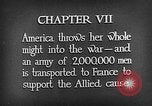
United States soldiers cross the Atlantic Ocean in Navy transport ships and reach France and England, during World War I.
American soldiers reach France and other European nations crossing the Atlantic Ocean during World War I. Soldiers of American Army march on Fifth Avenue in New York City and then seen boarding troop transport ships bound for France. Thousands of American soldiers crowded onto ships and transported to Europe. U.S. President Woodrow Wilson seen drawing the first draft number for World War 1 draftees in the U.S. military. Vice President Thomas Marshall seen drawing the second draft number. U.S. Navy ships and soldiers aboard during their voyage to Europe. View of a group of women Red Cross nurses on deck of troop carrier ship wearing full body coverall wetsuits or flotation devices. A Navy sailor examines the fit of the wet suit on one woman in the group. YMCA workers posed in a group for the camera aboard ship. Soldiers in chow line receive a meal and eat it below and up on decks. A soldier holds a puppy dog from home and feeds it some of his food. The sailors aboard fire a deck guns and drop depth charges after sighting a torpedo from a German U-boat. A Y-Gun is seen firing TNT depth charges from the centerline deck of a ship to each side. Waves seen crashing over bow of ship in the transport fleet during heavy rough seas. First troops of American soldiers disembark from a transport ship at a harbor in France in June 1917. U.S. soldiers march on streets of Paris. In London, England, American soldiers are seen marching through the streets and the British monarchs and officials including the Queen Mother, King Edward, and Prime Minister Lloyd George review the marching American troops at Buckingham Palace.
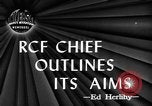
Federal Loan Administrator John W Snyder proposes his reconstruction finance plans after World War II in Washington DC.
Federal Loan Administrator John W Snyder proposes his reconstruction finance plans in Washington DC. He speaks about the disposal of huge war surpluses after end of World War II. Snyder proposes RFC absorption of various subsidiaries.
CRITICALPAST.COM: About Us | Contact Us | FAQs - How to Order | License Agreement | My Account | My Lightboxes | Shopping Cart | Advanced Search | Featured Collections | Website Terms & Conditions | Privacy Policy ©2026 CriticalPast LLC.
License Agreement |
Terms & Conditions |
Privacy Policy
©2026 CriticalPast LLC.