


 Francais
 Deutsch
 Italiano

Refine Your Search
Greek-Civil-War stock footage and images
- Showing 3097 to 3102 of 27588 results more
 Hide
Color Sound

British convoy en route to North Africa during World War II
British convoy of supply ships en route to North Africa during World War 2. View from a British escorting war ship. sailor in helmet at antiaircraft gun position. A fast small escort ship moves through the convoy.

Operation Torch, the Allied invasion of North Africa, during World War II. Ships boats, and supplies near beachhead.
Beachhead and surf in North Africa, during the Allied invasion (Operation Torch) in World War 2. Large amounts of war materiel on the beach. An explosion behind the beachhead. Invasion convoy ships underway. Sailor signals with semaphore flags. Many ships and boats near the shore, including the U.S. submarine, USS Barb, displaying the number "220." Numerous assault boats seen in distance, headed toward the beach.
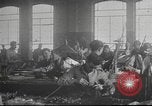
Arms manufacturing in the United States, during World War I
An arms manufacturing plant in the United States during World War 1. War production workers in arms factory woodworking department, manufacture wooden stocks for rifles. Others assemble metal parts of rifles. Still others are seen inserting barrels into wooden rifle stocks. An area staffed almost entirely by women assembling weapon parts. A yard filled with Browning M1917 machine guns.
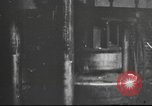
An armaments factory in the United States during World War I
Men work at fabricating siege mortar shells. A shell blank is heated over a furnace and then transported to a machine where it is formed, while still glowing, into the desired shell shape. A number of finished shells is shown in a yard. Next, men are seen welding the shells. Finally, men are shown filling them with gunpowder. They pound the gunpowder into the shells using wooden rams and wooden mallets (to avoid creating sparks). A worker is seen topping off a shell with gunpowder, from a ladle, pounding it tight, and fastening a cap on the top. (World War I; World War 1; WWI; WW1)
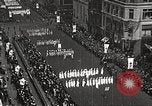
U.S. women nurses parade; Navy Yeomen (female) and women Marines are reviewed, on Red Cross Day, in World War I, May 1918
U.S. Nurses from wartime service units parade on Red Cross Day, in May, 1918, Washington, DC. Views of nurses in white uniforms and others in black, parading on the streets, accompanied by military bands. Red cross flags fly from various places along the streets. A mass of red cross flags near a reviewing stand. Secretary of the Navy, Josephus Daniels, walking with Naval officer and Assistant Secretary of the Navy, Franklin D. Roosevelt, inspecting rows of uniformed U.S. Navy women Yeomen (F) on a field in Washington DC. Behind Roosevelt, is Admiral William Shepherd Benson, the first Chief of Naval Operations (CNO), accompanied by Major General George Barnett, Commandant of the U.S. Marine Corps. The tower of the Post Office Building is visible in background. The women yeomen parade on the field, watched from the sidelines by Secretary Daniels and Assistant Secretary Roosevelt, who is conversing with Admiral Benson. The sequence closes with women U.S. Marines, in uniform, on parade. (World War I; World War 1; WWI; WW1)

Allied French and American soldiers dance and celebrate armistice as Germany surrenders at the end of World War I.
American and French soldiers return to camp after armistice brings end to fighting in World War I. Soldiers return to camps from the battle field. Soldiers gather and cheer. American and French forces hug and shake hands at the end of the war. U.S. Army troops exchange caps with the French soldiers. Soldiers hold each other in celebration. Soldiers smile and dance together. Soldiers play music and dance at the celebration.
CRITICALPAST.COM: About Us | Contact Us | FAQs - How to Order | License Agreement | My Account | My Lightboxes | Shopping Cart | Advanced Search | Featured Collections | Website Terms & Conditions | Privacy Policy ©2026 CriticalPast LLC.
License Agreement |
Terms & Conditions |
Privacy Policy
©2026 CriticalPast LLC.