


 Francais
 Deutsch
 Italiano
Refine Your Search
Greek-Civil-War stock footage and images
- Showing 529 to 534 of 27579 results more
more Hide
Hide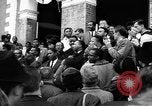
Martin Luther King Jr. speaks at Brown Chapel, in Selma, Alabama, after second attempted Selma-to-Montgomery civil rights march
After discontinuing the second attempted civil rights march from Selma to Montgomery, African American civil rights leader Dr. Martin Luther King speaks to the marchers and reporters on steps of Brown Chapel, African Methodist Episcopal Church (410 Martin Luther King St, Selma, AL 36703, United States) in Selma, Alabama. Ralph Abernathy is directly behind King. The marchers were still under a judicial restraining order that they hoped would soon be lifted. King wanted marchers to stay in Selma until the march was approved by the Court.

Dixie Democrats held convention to revolt against the civil rights plank of the Truman-Barkley ticket in Birmingham, Alabama.
Dixiecrat democrats of the States' Rights Democratic Party at convention in Birmingham Alabama (after rejecting civil rights for African Americans in platform of the 1948 Democratic National Convention in Philadelphia Pennsylvania). People in favor of continued racial segregation enter the building of 'State Rights Democrat' along with flag of United States to revolt against the civil rights plank of the Truman-Barkley ticket. William Henry Davis "Alfalfa Bill" Murray, a vocal proponent of racial segregation, is seen and flags behind him include a confederate flag. Dixie Democrats (The States' Rights Democratic Party) hold their own convention. Banners of states of Alabama and Mississippi in convention hall, with representatives who abandoned the democratic convention at Philadelphia. Fielding Lewis Wright, Democratic politician, and Lieutenant Governor of Mississippi, stands among Democrats. Governor James Strom Thurmond of South Carolina speaks and denounces racial integration efforts by the federal government and says that the country is on the path of being a totalitarian state. Strom Thurmond gets the State's Rights Party nomination for President of the United States.
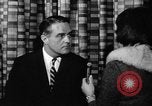
R. Sargent Shriver speaks about the poverty and Civil Rights Bill during an interview in Pittsburgh, Pennsylvania.
Robert Sargent Shriver, Director of Peace Corps during an interview considers poverty as the biggest problem in United States. While answering a question he states Congress and the people as the biggest challenge in fighting poverty. He says that reaching the poor people in society is the biggest challenge. He expresses hope that with the passing of the Civil Rights Bill (Civil Rights Act) there will be a reduction in poverty as people will be free to participate in economic activities without discrimination on the basis of race.
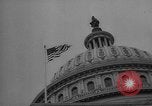
U.S. President Lyndon Johnson signs Civil Rights Act and shakes hands with Martin Luther King at U.S. Capitol in Washington DC.
Civil Rights Bill passed in the U.S. Congress signed by President Lyndon B. Johnson at the U.S. Capitol, Washington DC, United States. The U.S. Capitol and national flag on it. A woman with two children visits the Lincoln Memorial (2 Lincoln Memorial Cir NW, Washington, DC 20002). The U.S. President Lindon B Johnson along with other U.S. Congressmen during the signing of the Civil Rights Act of 1964. President Johnson signs the bill and shakes hands with Martin Luther King.
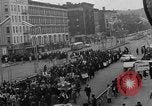
Demonstrators march, carrying banners and demanding equal civil rights during Selma to Montgomery march
Civil Rights demonstrations in the cities of United States as African American citizens rally for equal rights. A large group of citizens carrying banners demands equal civil rights. A banner that says, "We shall overcome." A signboard shows distances to Montgomery Alabama and to Camden. Beside marching flag bearers, leaders like Martin Luther King Jr., march arm-in-arm with others, including John Lewis, as they lead the demonstrators in the march from Selma to Montgomery. Demonstration moving in front of the Alabama State Capitol building in Montgomery, Alabama.
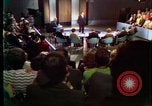
Panel participant questions Richard Nixon about civil rights issue, during a television program in Michigan.
Presidential candidate Richard Nixon's answers to a panel during a special television program in Michigan. A panelist questions about civil rights issue. Nixon says that he will try to bring together all parties on the issue of civil rights. He says that no division should be made on black or white; north or south and such other issues. The moderator talks to Nixon about his campaign.
CRITICALPAST.COM: About Us | Contact Us | FAQs - How to Order | License Agreement | My Account | My Lightboxes | Shopping Cart | Advanced Search | Featured Collections | Website Terms & Conditions | Privacy Policy ©2026 CriticalPast LLC.
License Agreement |
Terms & Conditions |
Privacy Policy
©2026 CriticalPast LLC.