


 Francais
 Deutsch
 Italiano
Refine Your Search
Guam 1975 stock footage and images
- Showing 181 to 186 of 409 results more
more Hide
Hide
Japanese attack Hawaii islands in United States during World War 2, and U.S. response to attack.
A film titled 'Jap-US at war' shows Japanese diplomats leave the venue of the diplomatic talks in Washington DC in United States, soon after Japanese attack on Pearl Harbor, Hawaii islands. Secretary of State, Cordell Hull also leaves the building. President Roosevelt is seen. Japanese troops prepare for war. Japanese troops in mainland Japan board trains as crowds of Japanese citizens wave Japanese flags and cheer for their troops leaving for war. Scenes of Diamond Head in Hawaii in peaceful times are shown, including buildings, people on beaches with sunbathers and fast small boats with outriggers in the surf. City streets in Honolulu Hawaii are shown with cars and shops and view of Aloha Tower lighthouse in background. Japanese planes drop bombs over Pearl Harbor in Hawaii. United States Presidential Secretary Stephen Early tells the press of Japanese attack and the damage suffered by America. People in American cities read newspapers and scrolling lit sign (likely Times Square New York) with news about Japanese attack as the lead story. American citizens buying newspapers describing the attack at newsstands. U.S. troops march in front of War Department - Navy munitions building in Washington DC. Night time view of soldiers on guard in Washington DC. Sailors return to battle stations. U.S. Navy sailors boarding ships of U.S. Navy in the U.S. west, bound for battle. Brief scenes from American ports in Guam and Wake Island. U.S. Navy fleet ships underway in Pacific heading west toward battle with Japanese forces. Biplanes launched via catapult from U.S. Navy ships and then seen flying over Navy ships in formation as narrator encourages Americans to work together and put aside differences to win the war. Overhead view of a U.S. Navy ship passing under a bridge with deck busy with sailors and operations.
Worldwide operations of United States Coast Guard in World War 2
Overseas activities of United States Coast Guard in World War II. U.S. Landing Craft Infantry, LCI(L) 617, part of LCI Flotilla 22 in World War 2. She is seen underway in rough waters of the Pacific ocean during 1945. Coast Guardsman ordered to Battle stations. A Coast Guardsman observes approaching enemy aircraft through binoculars. Coast guard gunner fires Antiaircraft guns using foot trigger. Enemy aircraft crashes in ocean. A Coast Guardsman signals using semaphore flags. Beachhead supply operations. Coast Guard Picket Boat, CG-42022, seen patrolling around U.S. transport ships in a Persian port, while they carry lend lease supplies to the Soviet Union. Coast Guard combat patrol in jungle using canines (dogs). The Cactus (A) Class 180 foot buoy tender, USCGC Tupelo placing a buoy at sea. Releasing a weather balloon. A Coast Guard wooden 83 foot cutter ("83 footer"). Loading a Coast Guard B-24 aircraft on Guam. The plane takes off. Invasion task force of U.S. warships underway. Coast Guard crews at various duty stations aboard their ships during the war. The former luxury ocean liner, SS Manhattan underway, her decks crowded with troops, following her conversion into the U.S.Coast Guard-manned USS Wakefield (AP-21). U.S. Navy attack transport USS Arthur Middleton (APA-25) at sea in the Pacific. Coast Guard operating transport ships unloading cargo for Allied invasion forces and running inter-island shipping service in the Pacific, during World War II.Landing Ship Tank (LST-788) arriving at the beach next to Landing Ship Medium, LSM-242, on Iwo Jima. A Landing Vehicle Tracked (LVT) being driven off LST-760. USS LCI(L)-87, Flagship of LCI Flotilla 10. Her Captain, M. E. Imlay, USCG, is seen on her bridge, before departing from England for the Normandy invasion. U.S. Landing Craft Infantry, LCI(L)-668 at beach and troops wading ashore.
A team of aircraft carrier task force prepares for the take off of aircraft to attack Japanese invaders in the Pacific Ocean.
A typical day in an aircraft carrier task force of the U.S. Navy during a mission of finding Japanese invaders in the Pacific Ocean during World War II. Japanese aircraft carriers and cargo ships at sea, carrying war equipment. Aircraft in flight over water. An animated map shows bombarding at Sapan, Guam, Yap and Palau. Bombardment and explosions. A team of the aircraft carrier task force at the deck of the ship and prepares for the take off of U.S. aircraft from the carrier. A pilot in a cockpit. The aircraft take off from the carrier and bomb Manila. Smoke at a distance. An aerial view of Manila city. Another group of U.S. aircraft in flight and strafe Japanese ships.

U.S. 10th Army troops on their way to Okinawa for capturing the Japanese positions on the island (WW2)
Invasion of Okinawa, Japan during World War II. Coming aboard the flagship of Task Force 58 is Admiral Marc Mitscher. Conferences in Guam come to an end. Officers walk. U.S. Pacific Fleet Commander in Chief, Admiral Chester W. Nimitz sends an armada of 1400 vessels to Okinawa in the Ryukyu Islands. Fleet underway to Okinawa. Troops of the U.S. 10th Army division play cards, play music and dance on the deck to entertain themselves. Officer distributes money to the soldiers aboard the ship. Troops stand with money. Guns of the fleet fire at land. Rockets being fired at shore. Landing crafts reach the shore. Troops walk on the shore in Okinawa. Japanese dugouts and pillboxes being destroyed with grenades. Soldiers talk and share food with civilians on the island.
First three B-52 aircraft of the U.S. Strategic Air Command 4433rd Bomb Wing land at U-Tapao Air Base in Thailand
View of the first three U.S. B-52 bombers (of a force of 15) landing at U-Tapao Airbase, Thailand on April 10, 1967. These bombers hit targets in Vietnam on their way to U-Tapao. (The entire force arrived during the period from April through July, 1967, on temporary assignment from the Strategic Air Command 4433rd Bomb Wing at Anderson Air Force Base, Guam.) The B-52s are under the command of the SAC 3rd Air Division. The aircraft land with wing flaps down and deploy drag chutes to slow their ground rolls.Officers of the 4258th Strategic Wing,and Royal Thai Air Force greet the arriving aircrews. The event is recorded by photographers, along with newsmen from Japan, Thailand, United States and Philippines. (Vietnam War period).
U.S. Air Force B-52 crews begin Operation Arc Light missions to Vietnam from U-Tapao Airbase, Thailand, during the Vietnam War.
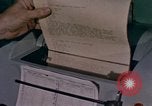
Opening scene shows a message being received on a teletype machine from the U.S. 3rd Air Division. Two Air Force officers are seen seated at desks. One is labeled "Ops-Plans." The on duty operations officer passes on the message to his staff where it goes through operation, operation planning, maintenance, ordinance and armament. Technicians preparing the guns and loading ordnance for the mission, on a B-52 aircraft. Air crew members ate seen assembled in their briefing room, Glimpse of the mission briefing officer at a podium. View of wristwatch as narrator speaks of navigators synchronizing their watches. A B-52 crew stepping from their crew bus as they arrive at their aircraft. As other crew member climb aboard the plane, their aircraft commander reviews the aircraft status, as reflected on its Form 781, with the aircraft crew chief. Crew members then begins a pre-flight walk-around inspection, starting with the landing gear and wheel wells. The last of the crew enter the aircraft via a bottom hatch, which a ground crewman then fastens from the outside. Inside, crew members are seen going through pre-flight check lists at their respective duty stations. Back at the Command Post, the duty controller receives the order via secure telephone, from 3rd Air Division headquarters, to execute the mission. He informs the Aircraft Commander and the B-52 starts its engines. View of throttles being pushed forward in the cockpit, as the aircraft begins takeoff. View from ground as the B-52 takes off and flies overhead. Glimpse of the aircraft commander in the cockpit wearing helmet and oxygen mask. Hand of radar observer is seen as he checks out his equipment. Aerial closeup of a B-52 in flight. View of radar observer placing the aircraft controls in so-called "Second Station," with the autopilot controlled by the bombing navigation computer. Inflight closeup of B-52 opening its bomb bay doors and starting to drop bombs. Glimpse of the aircraft commander in cockpit and of B-52 aircraft in flight, as narrator states they are returning to U-Tapao Airbase,or to Guam. The aircraft in the mission are seen landing back at U-Tapao Airbase, Thailand, where other B-52s are parked on the ramp. They taxi to their parking places and crew members board buses back to operations for a mission debriefing.