


 Francais
 Deutsch
 Italiano
Refine Your Search
Hoboken New Jersey 1918 stock footage and images
- Showing 6253 to 6258 of 9472 results more
more Hide
Hide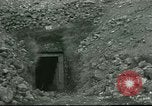
U.S. troops in trenches in France during World War I
A U.S. Army officer is accompanied by a soldier as he leaves a dugout in a trench. They walk along a boardwalk path in the trench to another dugout. Soldiers,in the trench, are adjusting their leggings. A manual gas alarm is seen nearby. Views of an Army field mess set up in an abandoned building in France.
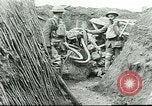
U.S. troops eat at field mess set up in trench in France, during World War I
U.S. field mess set up in a trench in France, during first World War. U.S. troops rest and eat in muddy trench. One is seen smoking a cigar and reading a letter from home. Some unopened packages at his feet.
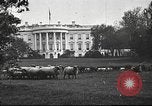
President Woodrow Wilson signing papers in the White House and sheep on the White House lawn in Washington DC, United States.
U.S. President Woodrow Wilson signs papers and sheep on the White House lawn in Washington DC after World War I. President Woodrow Wilson in his office. The President signing papers on his table. Sheep moves on the White House Lawn. The President watches outside his window. He talks over a telephone. The President works in his office. The President with some officials signing papers.
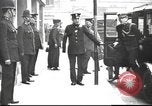
Scenes in London England, following the Armistice ending World War I
U.S. Admiral William Sims, steps from a car and walks toward a building guarded by several British policemen (Bobbies) in London, England. Next, he is seen posing with two of his staff. Scene shifts to London street, where a military officer gives some directions to Winston Churchill who tips his top hat, as he steps into a waiting automobile. In the streets, crowds fill the sidewalks as they watch musicians on the roof of a double-decker bus, celebrate the armistice ending World War 1.
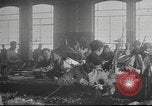
Arms manufacturing in the United States, during World War I
An arms manufacturing plant in the United States during World War 1. War production workers in arms factory woodworking department, manufacture wooden stocks for rifles. Others assemble metal parts of rifles. Still others are seen inserting barrels into wooden rifle stocks. An area staffed almost entirely by women assembling weapon parts. A yard filled with Browning M1917 machine guns.
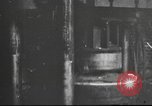
An armaments factory in the United States during World War I
Men work at fabricating siege mortar shells. A shell blank is heated over a furnace and then transported to a machine where it is formed, while still glowing, into the desired shell shape. A number of finished shells is shown in a yard. Next, men are seen welding the shells. Finally, men are shown filling them with gunpowder. They pound the gunpowder into the shells using wooden rams and wooden mallets (to avoid creating sparks). A worker is seen topping off a shell with gunpowder, from a ladle, pounding it tight, and fastening a cap on the top. (World War I; World War 1; WWI; WW1)
CRITICALPAST.COM: About Us | Contact Us | FAQs - How to Order | License Agreement | My Account | My Lightboxes | Shopping Cart | Advanced Search | Featured Collections | Website Terms & Conditions | Privacy Policy ©2026 CriticalPast LLC.
License Agreement |
Terms & Conditions |
Privacy Policy
©2026 CriticalPast LLC.