


 Francais
 Deutsch
 Italiano
Refine Your Search
Hoboken New Jersey 1918 stock footage and images
- Showing 7687 to 7692 of 9472 results more
more Hide
Hide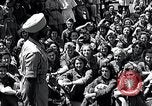
Women's Army Auxiliary Corps (WAAC) training and and contribution to war efforts in different parts of the world (WW2)
The role of Women's Army Auxiliary Corps (WAAC) in the United States Army during World War II. In January 1943, the first posting of WAAC enlisted personnel overseas, was to Algiers. Women disembark a ship. WAAC women walk with orphan children into a convent. A WAAC woman washes utensils; others dry clothes. WAAC women arrive in Scotland and get trained. Women visit India. Women at the Taj Mahal in Agra. Women visit New Delhi. Women on camels in Cairo. Women disembark a ship in Europe. Two women adjust a tent. Woman washes her hair and clothes using her helmet. Women inside a tent. Woman checks injured soldiers. Nurses in hospital as they look after soldiers. Women march. A woman pays homage to the female soldiers who sacrificed their life in war. Soldiers carry another injured soldier on stretcher. Officers check injured women in hospital. Women in uniform march.
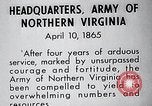
Damaged plantation homes after Civil War, barren land, and African American family migration
Activities around the Mississippi river in the United States in the early 1900s, in areas still affected by the Civil War. Text of General Robert E. Lee's announcement about surrendering the Army of Northern Virginia, April 10, 1865. Image of flames and fire burning a town or city. United States Civil War aftermath in the South. Scenes of several different empty and burned down plantation homes in the southern United States. View of the barren land and effects of erosion. Poor African American family with their belongings in a horse drawn wagon, walking on foot during the "Great Migration," moving to a new area of the United States in the north or west. View of the Mississippi River as seen from a moving boat at water level.

The processing and transportation of iron and coal along the Mississippi river on steamboats in the United States
The activities around the Mississippi river in the United States. Smoke from steel mills and factories of Pittsburgh, Pennsylvania and Wheeling, West Virginia. A crane lifts the iron ore. A crane lifts coal. View of factories spewing smoke and ash. Hot, molten iron being poured, with flames and sparks shooting outward as it is tipped to pour. Cotton bales on a conveyor. Making of cotton thread. Workers work on cotton bales. The cotton bales being loaded onto barges and a steamship. The steamboat in the Mississippi river travels to various places. Brief scenes of various known city views including St Paul and Minneapolis Minnesota; Davenport Iowa; Moline Illinois; Cincinnati; St. Louis; Omaha; Kansas City; New Orleans.

Several African American artists before recognition doing various jobs in the United States.
A study of African American artists in sculpture, photography, painting, sketching, etching, writing and on antique in the United States during the "Harlem Renaissance." A view of buildings in New York City. Painter Palmer Hayden paints at the side of a river. A woman comes and watches. A train arrives. Artist Benjamin Spurgeon Kitchin works at the base of the train, earning money during the Great Depression. He opens a flap and works on a machine. A man drives a car. A man cleans a floor with a broom. A woman stitches a cloth. A person works on a typewriter machine. A woman operates a telephone switchboard. Close view of hands on switchboard equipment. A man picks up papers from a table and arranges them. He staples the papers and keeps them on a shelf. View of stapler. A man cleans some articles. A man in free time draws paintings and makes sculptures.

Animated map-exemplifying the route of disease in U.S.
It exemplifies the spread of disease from New-York to California with the help of an animated map of U.S. 1922.

Drawing for lottery winners in Russia, Soviet Union.
A crowd in Russia gathered for the first lottery of a new internal loan for 3%. Children select winning lottery tickets from a spinning drum on stage in Russia. Winning numbers are displayed on a board. Attendees in the audience view their tickets.
CRITICALPAST.COM: About Us | Contact Us | FAQs - How to Order | License Agreement | My Account | My Lightboxes | Shopping Cart | Advanced Search | Featured Collections | Website Terms & Conditions | Privacy Policy ©2026 CriticalPast LLC.
License Agreement |
Terms & Conditions |
Privacy Policy
©2026 CriticalPast LLC.