


 Francais
 Deutsch
 Italiano
Refine Your Search
Hoboken New Jersey 1918 stock footage and images
- Showing 805 to 810 of 9472 results more
more Hide
Hide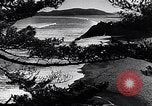
Expansionist policies of Japan, Italy and Germany converge, leading to World War 2
Film begins with peaceful scenes of Japan, including Mount Fuji; women in traditional Kimonos strolling among cherry blossoms; exquisite gardens; Geisha girls in traditional dress holding fans; and picturesque peasant farmers binding sheaves of grain. Evidence of Japan adopting Western styles and ways, shown by modern buildings, motor vehicles, and many Japanese in Western clothes going about their daily business on busy city streets. A Japanese stadium filled with spectators at a baseball game. One difference from an American baseball game is that the players are seen marching onto the field accompanied by a military band and later all sharing in raising the Japanese flag to start the event. View of line of players in jerseys as flag is raised (jersey team name Tomasyo?) Views of the baseball game underway. Baseball player with "Y" logo on front steps up to plate to bat. Scene changes to demonstrations of Japanese Navy as senior Naval Officers review Japanese sailors aboard a warship. A formation of Japanese warships underway. Closeup of a Japanese destroyer. A flotilla of Japanese warships being overflown by several formations of Naval aircraft. A flight of Kawanishi H6K Naval flying boats flying in loose formation. A parade of Japanese light and medium tanks including Type 95 Ha-Go tanks (some with offset turrets). View from rear of the parade. Many tanks crossing a field. Emperor Hirohito, riding a white horse, reviewing Type 97 Chi-Ha medium tanks and their crews standing at attention. Tanks raising dust as they move in formations on a road and in a field. Japanese infantry soldiers high step march in review past the Emperor on his white horse. Massed Japanese infantry on parade. View, again, of the high-stepping Japanese infantry marching past the Emperor as a segue to Italian infantry goosestepping on parade. Several views of such parades. Mussolini giving an impassioned speech to Italians from balcony on the Palazzo Venezia in Rome on November 4, 1938. A huge flat field filled with Italian SPAD XIII army biplanes parked in symmetric rows. Emperor Haile Selassie of Ethiopia speaking from a shelter, rallies his tribesmen to resist invasion by Italian forces. They are seen in tribal dress, armed with spears and ancient rifles, as they answer the Emperor's call. View of Italian L3 light tanks advancing across desert terrain. Italian cavalry charging. Italian infantry moving forward. Italian Caproni Ca.111bis light bomber in flight. Bombs dropping through the air. Barrages by batteries of Italian artillery. Shells striking a hilltop fortress. An open air stadium with one section containing many Japanese attendees waving Japanese flags. A Japanese statesman reading a speech in Japanese. View of the stadium filled with Italians. "Saluti" written on the edge of the section occupied by Japanese attendees. An Italian spokesman in black uniform welcomes the Japanese contingent. A Japanese translator stands beside him. Closeup of cheering Japanese who have heard the greeting translated. Scene shifts to Japanese infantry hi-stepping past Emperor Hirohito and immediately to Italian troops goosestepping and then to German troops goosestepping as they (according to narrator) march into Austria on March 13th 1938. View of German troops marching into Austrian town to cheers from civilians on sidewalks waving Nazi swastika flags and rendering Nazi salutes. Numerous utility vehicles carry German soldiers through the town. More German soldiers arriving in tanks and on motorcycles. Some arrive on horse-drawn caissons towing field artillery pieces.
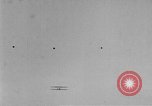
Wilbur Wright in the Wright Model A Flyer, and, later, stunt flyers do tricks post WWI
Wilbur Wright in flight at elevation of 360 feet, in the Wright Model A flyer. Cut to post WWI and scenes of barnstormers performing acrobatic stunts and daredevil antics. Daredevil acrobat Jersey Ringel climbs on the wing of a plane in mid air and stands on it without wearing a safety harness. He waits for another airplane to pass close enough and then leaps from one plane to the next, grabbing a handle on the wing of the second plane. He suspends himself upside-down under the wing of the plane with painted name "Jersey Ringel" on the side and "JR" on the tail.
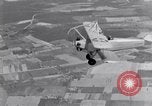
U.S. Navy pilots, in Consolidated N2Y-1aircraft, practice hooking up to the USS Akron in flight
Maneuvers of the USS Akron (ZRS-4), helium filled airship off the Jersey Coast in the United States. A Consolidated N2Y-1, with trapeze hookup equipment, in flight. The plane is released from a trapeze on the USS Akron. The airship in flight. An aircraft hooked to trapeze on the USS Akron. Another plane follows the USS Akron. The USS Akron with a plane hooked onto the trapeze. Another plane follows directly beneath it. Structure of the USS Akron in flight.
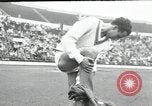
A crowd cheers participants during a middle distance running event in Helsinki Stadium
Men runners in middle distance competition.They remove outer clothing in center of stadium and go to the starting line. Competitor wearing number 1 on his jersey, takes early lead and holds it to the end. Photographers capture him crossing the finish line. He walks cooling down and waves to fans in the stands before the rest of the runners arrive at the finish line. Spectators are well dressed and crowd into the protected grandstand section of the stadium. Most of the remainder of the stadium is empty. Some rain falls. Some people hold umbrellas.

LA Dodgers beat Chicago White Sox in 6th (final) game of baseball 1959 World Series
Newsreel clip entitled "Dodgers Win World Series," shows highlights from game 6 of the 1959 World Series between the Los Angeles Dodgers and Chicago White Sox. Shot of packed stands at Chicago's Comiskey Park. White Sox ace pitcher Early Wynn gives up walk to Wally Moon and home run to Duke Snider. Snider seen rounding third as announcer notes this is his 11th World Series home run, a National League record. In fourth inning, Wynn gives up run-scoring hit to Maury Wills and is replaced by Dick Donovan, who gives up run-scoring double to Charlie Neal and home run to Wally Moon. White Sox first baseman Ted Kluszewski, in his famous sleeveless jersey, slugs a three-run homer into the right field stands to score the Sox' only runs of the day. Dodgers bring on pitcher Larry Sherry to retire Luis Aparicio and end the White Sox threat. Dodgers go on and win 9-3 to clinch the series ( their first world championship since leaving Brooklyn for the West Coast after the 1957 season).

Inauguration of the Indianapolis Five Hundred Race in Indianapolis, Indiana.
The famous Indianapolis Five Hundred Race in Indianapolis, Indiana, United States. A race track. People at the side of the track. Cars on the track. Floats and girls. A float reads "500 Festival'. A car numbered 16 on the track. The driver, Len Sutton sits in the car. 'Bryant Sweet Sixteen' written on the back of the jersey of a man standing near the car. Racing cars on the track.
CRITICALPAST.COM: About Us | Contact Us | FAQs - How to Order | License Agreement | My Account | My Lightboxes | Shopping Cart | Advanced Search | Featured Collections | Website Terms & Conditions | Privacy Policy ©2026 CriticalPast LLC.
License Agreement |
Terms & Conditions |
Privacy Policy
©2026 CriticalPast LLC.