


 Francais
 Deutsch
 Italiano
Refine Your Search
Hoboken New Jersey 1918 stock footage and images
- Showing 1111 to 1116 of 9472 results more
more Hide
Hide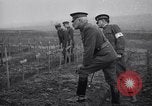
General Pershing visits cemetery; Australian, British and New Zealand troops in a wrecked French town during World War I.
Opening few seconds show American General John J. Pershing viewing a grave marker at a fresh cemetery in France during World War I. Next scene shows Australian troops dig trenches in France during World War 1. Australian troops at a destroyed railroad yard. Group of French men and women and children civilians pose for the camera, while British troops stand in background. Close up of an old French woman. The elderly French woman is talking and appears to be expressing thanks to the Allied troops and potentially grief from the devastation of the war. Soldiers on foot pass by a bomb wrecked French town with buildings reduced to piles of rubble from shelling. British troops and supplies on horse carts pass by the streets of the demolished town. British lancer cavalry regiment passes by on horseback, with lances raised. New Zealand soldiers march on railroad tracks to board a train.

British soldier reads war news from newspaper to assembled group of civilians in Europe during World War 1
Civilian people assembled to hear the war news from a British soldier (British "Tommy") during World War I. The soldier reading newspaper aloud to group of men, women, and children. A group of civilians pose beneath a German propaganda trademark sign, 'Gott Strafe England' (God punish England).

Wounded American soldiers return home from France. Soldiers with new prosthetic limbs practice walking.
American Marines and Army troops return home from France after World War I. Wounded American soldier gets out of acar and is helped by women as he walks with crutches. Wounded soldiers and women walk in queue toward an event. Slate indicates the war resulted in 2500 leg amputations and 1100 arm amputations. View of wounded American soldiers on grounds of Letterman Hospital in San Francisco, California, wearing artificial prosthetic limbs and practicing walking with the new limbs. (World War I; World War 1; WWI; WW1)
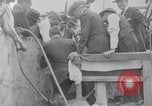
President Wilson drives the first rivet in the first ship to be built at a new shipyard in Alexandria, Virginia.
President Wilson is seen leaning over part of a steel ship being constructed by the the Virginia Shipbuilding Corporation, in Alexandria, Virginia, where he is using a pneumatic gun to drive in the first rivet in the first steel ship to be built at the new shipyard. Afterwards, he steps to a platform decorated with bunting, for the occasion, and descended steps together with his entourage. Next, Speaker of the House, James Beauchamp “Champ” Clark of Missouri and his predecessor, Joseph Gurney Cannon, Republican from Illinois and other officials are seen walking in the newly opened shipyard. Closeup group photograph of them along with others in the visiting party. A closeup of shipyard worker, Charles Knight, the nation's champion riveter, who drove 4875 rivets in 9 hours. Views of Knight using a pneumatic gun to drive rivets in ship framing.
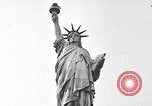
Statue of Liberty in New York. and scenes at Abraham Lincoln Birthplace National Historical Park, LaRue County, Kentucky.
Statue of Liberty on Liberty Island in New York City. The American flag fluttering in a strong breeze. The Lincoln Memorial monument building in Abraham Lincoln Birthplace National Historical Park, LaRue County, Kentucky. The symbolic log cabin enshrined in the monument at the Park. Statue of Lincoln in town square, Hodgenville, Kentucky
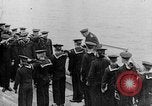
King George V of Britain and Prince of Wales visit battleship New York in North Sea and talk to officers at end of World War I
British monarchs visit naval ships during World War 1. King George V of Britain and Prince of Wales board U.S. Navy battleship USS New York (BB-34) in North Sea prior to the ship sailing to accept the surrender of the High Seas Fleet following the armistice. U.S. Navy sailors present honor guard on the deck of the ship. British monarchs, Navy commanders and admirals stand and talk to each other at the deck of ship. Left to right are British Admiral Sir David Beatty, U.S. Navy Admiral Hugh Rodman, King George V, U.S. Navy Admiral William S. Sims, and the Prince of Wales. The British monarchs greet a line of U.S. Navy officers.
CRITICALPAST.COM: About Us | Contact Us | FAQs - How to Order | License Agreement | My Account | My Lightboxes | Shopping Cart | Advanced Search | Featured Collections | Website Terms & Conditions | Privacy Policy ©2026 CriticalPast LLC.
License Agreement |
Terms & Conditions |
Privacy Policy
©2026 CriticalPast LLC.