


 Francais
 Deutsch
 Italiano
Refine Your Search
Hoboken New Jersey 1918 stock footage and images
- Showing 367 to 372 of 9472 results more
more Hide
Hide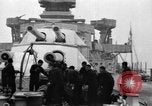
Montage of scenes involving U.S. Battleships in the World War I era
First scene shows foredeck and bridge of USS New York (BB-34) in World War 1. Second scene shows U.S. New Mexico-class Battleship underway. In the next scene, a sailor is signaling with a blinker from the bridge of a battleship ( Pennsylvania or New Mexico). Line of battleships in formation with the USS Texas (BB-35) leading. Quarterdeck view of U.S. Navy Pennsylvania-class battleship. View from deck of the battleship USS Texas or USS New York, looking forward. The final scene is a view from the quarterdeck of the battleship USS Pennsylvania (BB-38) looking out toward the SS George Washington (ID Number 3018) as they travel to France with President Woodrow Wilson on board in December 1918, for the Paris Peace Conference.

U.S. Army bomb test sinks USS New Jersey off Cape Hatteras in North Carolina, USA
Demonstration of the American Air Force against naval vessels of battleship class operate from temporary bases. American airmen prepare 1100 pound bombs. Men assemble tail section of a missile. Airmen check two 1100 pound bombs attached beneath an unidentified plane. Airmen attach a 2000 pound bomb to underside of an aircraft. General Mitchell and an airman crouched beneath the plane look at the 2000 pound bomb. Navy cutter type vessel, the San Mihiel, anchored in sea. Observers on the San Mihiel include General Pershing, Davis, Admiral Shoemaker Assistant Secretary of War and General Patrick Chief of Air Service. Four of them stand on the deck of the cutter vessel. Battleship USS New Jersey anchored. Bombs strike near ship. Bomber flying 175 miles from Langley Field score five direct hits with six 100 pound bombs from an altitude of 11,000 feet. Views of bomb strike on USS New Jersey. A smoke curtain is dropped by a bomber from an altitude of 1000 feet. An aircraft in flight in line with the New Jersey lays a smoke screen across the water. Smoke curtain obscures sight of the battleship. Bomb strikes near and upon the battleship USS Virginia. Direct hits scored by 1100 pound bombs on the deck of USS Virginia.
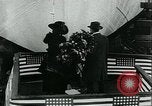
A dignitary launches the Lambs ship and people stand on a bow of the ship as it is lowered into water in New Jersey.
The transport ship called "The Lambs" is launched in New York, recognizing the contributions to the World War I effort by the Lambs Theatre Club of New York City (the first professional theatrical club in America). An official stands with a woman on a platform. The ship descends down the ways into the water. People stand on a bow of the ship with a United States flag.
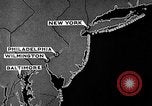
Coast Guard Stations along coasts of Long Island and New Jersey in the United States
Film begins showing map of Coast Guard Stations along the coasts of Long Island, and New Jersey to deal with storms that affect the ports of New York, Philadelphia, Wilmington, and Baltimore. Narrator notes that, accordingly, the number of Stations in this region are increased. View of Long Island South coast from low flying airplane, showing sand bars. Aerial view of Jersey shores showing a ship run aground and listing. Aerial view of the resort towns and recreational beaches on the Jersey coast. Closeup of a beach filled with people enjoying the sand and water. Aerial views of beaches teeming with visitors. Aerial view of harbor filled with small pleasure boats. A sailing regatta.

Movie "The New York Hat".
From " A Short Survey of The Film in America." On screen English text describing advances in film making in the early years of the motion picture. Description of the years 1908-1918 as pivotal years for American film makers DW Griffith, Thomas H. Ince, and Mack Sennett. On screen text describing DW Griffith's work, "The New York Hat." The actual film follows : Small town gossips scandalously link together the names of a minister and a girl when they discover that he has given her an expensive hat from New York. The turmoil abates when the minister produces the will of the girl's mother, in which he has been asked to buy the daughter "bits of finery."
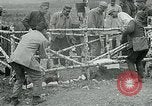
U.S. and French soldiers repair the grave of Lieutenant Quentin Roosevelt in World War I
French and American soldiers remove a makeshift fence from around the grave of Lieutenant Quentin Roosevelt (son of former President Theodore Roosevelt) who was killed during aerial combat in skies over Chamery, France, on June 14, 1918. He was buried with honors, in a battlefield grave, marked with a simple wooden cross, by German fliers. Now American and French soldiers are seen placing a new fence around the grave, along with a new cross and headstone, engraved in French. They also place floral pieces on the grave.
CRITICALPAST.COM: About Us | Contact Us | FAQs - How to Order | License Agreement | My Account | My Lightboxes | Shopping Cart | Advanced Search | Featured Collections | Website Terms & Conditions | Privacy Policy ©2026 CriticalPast LLC.
License Agreement |
Terms & Conditions |
Privacy Policy
©2026 CriticalPast LLC.