


 Francais
 Deutsch
 Italiano
Refine Your Search
Hoboken New Jersey 1918 stock footage and images
- Showing 4783 to 4788 of 9472 results more
more Hide
Hide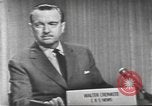
Candidates Nixon and Kennedy debate over prestige of the U.S. overseas prior to the presidential elections in the U.S.
The fourth presidential election debate held between Democratic nominee Senator John F. Kennedy and Republican nominee U.S. Vice President Richard Nixon in New York, United States on 21st October 1960. ABC News correspondent Quincy Howe allows CBS News correspondent Walter Cronkite to ask a question to Vice President Nixon. Mr. Cronkite asks Vice President Nixon if the Eisenhower Administration was suppressing a report by the United States Information Agency that shows a decline in United States prestige overseas as pointed by Senator Kennedy. Vice President Nixon replies and talks about Sputnik space program launched by the Soviet Union (compared to NASA efforts during the Space Race). He further compares the United States and the Soviet Union in terms of education and science. He speaks about UN General Assembly votes called on the Soviet Union to end its Hungarian intervention in 1956 and relates to American prestige. Senator Kennedy says that he did not make most of the statements that Vice President Nixon said he has made and he refers to the first one about Sputnik Program launched by the Soviet Union. Senator Kennedy refers to slums in the United States and talks about support housing legislation which the Eisenhower's Administration has opposed and also speaks about scientists and engineers United States has produced in comparison to the Soviet Union. He further says they were the first in other areas of science but in space, which is the new science, they are not the first
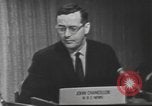
Vice President Nixon and Senator Kennedy debate in the United States over nuclear tests resumed by the Soviet Union.
The fourth presidential election debate held between Democratic nominee Senator John F. Kennedy and Republican nominee U.S. Vice President Richard Nixon in in New York, United States on 21st October 1960. NBC News correspondent John Chancellor asks a question to Senator Kennedy in relation with U.S. relations with the Soviet Union. Correspondent Chancellor asks if Russians have resumed testing of nuclear devices as per news from Atomic Energy Commission of Washington and if the U.S. would resume its own nuclear weapon testing in 1961. Senator Kennedy replies to the question and says that the next President of the United States should make one last effort to secure an agreement on the cessation of nuclear bomb tests. He mentions the Conference for the Reduction and Limitation of Armaments from 1932-1934 held in Geneva, Switzerland. Kennedy says that he believes the effort should be made once more by who so ever is elected the President of the United States. Senator Kennedy says that if they fail in making the effort, the responsibility will be clearly on the Russians and then they'll have to meet their responsibilities for the security of the United States, and they may have to test underground. He says that there may be testing in outer space. Senator Kennedy says that he is most concerned about the whole problem of the spread of atomic weapons. ABC News correspondent Quincy Howe asks the Vice President to comment. Vice President Nixon says that the Soviet Union is filibustering. He says further that the elected president should immediately make a time table to break Soviet filibustering.
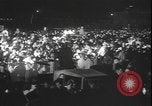
Flight achievements of 1933 - Wiley Post completing solo journey around the world and Roscoe Turner speed record coast-to-coast
American aviator Wiley Post returns to Floyd Bennett Field in New York after completing his solo flight around the world in a just under 8 days. People gather in a large number to welcome him. They gather around his aircraft. Scene shifts to streets of New York City where Wiley Post is honored with a ticker tape parade for his Around The World achievement. The aviator seated aboard a jeep passing by. People celebrate and greet him. He is bestowed with the Medal of Valor by New York City Mayor John P. O'Brien. Next segment shows plane of American aviator Roscoe Turner landing, after his record-setting flight from New York to Los Angeles in 10 hours and 5 minutes flying his Wedell-Williams Model 44 (WW-44) aircraft. This won him the 1933 Bendix Trophy. Close view of Roscoe Turner smiling from the cockpit of his aircraft. From a November 10, 1958 newsreel recounting events 25 years earlier.
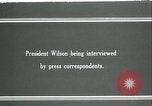
President Woodrow Wilson talking to press correspondents aboard the SS George Washington.
28th President of the United States,Thomas Woodrow Wilson talking to Press correspondents. He is leaving for the Paris Peace Conference and is seen aboard the ship SS George Washington. Ship's officers and and a sailor can be seen in the background.
Paris Peace Conference attendees Dr. R.H. Lord, G.L. Beer, and Mark Jefferson talking together before departure for Paris.
Dr. R.H. Lord, the American representative on the Commission of Polish affairs, George Louis Beer, the American Authority on colonial issues, and Mark Jefferson, Chief Cartographer for the American Peace Commission at the postwar negotiations seen talking amongst themselves. They are leaving for the Paris Peace Conference on the USS George Washington ship. (World War I; World War 1; WWI; WW1)
Count Vincenzo Macchi Di Cellere Italian ambassador to the United States.
Italian ambassador to the United States,Count Vincenzo Macchi Di Cellere is seen with his family. He is showing something to a little boy.
CRITICALPAST.COM: About Us | Contact Us | FAQs - How to Order | License Agreement | My Account | My Lightboxes | Shopping Cart | Advanced Search | Featured Collections | Website Terms & Conditions | Privacy Policy ©2026 CriticalPast LLC.
License Agreement |
Terms & Conditions |
Privacy Policy
©2026 CriticalPast LLC.