


 Francais
 Deutsch
 Italiano

Refine Your Search
Hoboken New Jersey 1918 stock footage and images
- Showing 5065 to 5070 of 9493 results more
 Hide
Color Sound
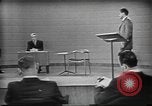
Senator John F Kennedy answers a panel of correspondents during a presidential election debate in Chicago, Illinois.
The first Kennedy-Nixon Presidential Debate in Chicago, Illinois. Moderator Howard K. Smith thanks Republican candidate U.S. Vice President Richard M. Nixon and Democratic candidate Senator John F. Kennedy for their opening statements. The Moderator the panel of correspondents: Sander Vanocur from NBC News, Charles Warren from Mutual News, Stuart Novins from CBS News and Bob Fleming from ABC News. Mr Fleming directs his first question to Senator Kennedy. He asks him why does he think that people should vote for him rather than Vice President Nixon. Kennedy answers and tells about his 14 years of experience in the Labor Committee. He compares the programs being advocated by the Democratic party and the Republican party. He states that the Republican leadership has opposed federal aid for education, medical care for the aged and development of country's natural resources in the past few years.
During a presidential election debate in the US, John F Kennedy and Richard Nixon comment on the necessity to defend Berlin.
The third Kennedy-Nixon Presidential Debate in the United States. Moderator Bill Shadel introduces the candidates and tells that candidates will not share the same platform. Republican candidate U.S. Vice President Richard M Nixon is in a Los Angeles studio and Democratic candidate Senator John F Kennedy is in New York. He also introduces the panel of correspondents who will question the candidates. The panel includes Frank McGee from NBC News, Charles Van Fremd from CBS News, Douglass Cater from Reporter magazine and Roscoe Drummond from New York Herald Tribune. Frank McGee asks Kennedy whether he would take military action to defend Berlin. Kennedy answers and says that the U.S. has contractual right to be in Berlin coming out of the conversations at Potsdam and of World War II. He states that the United States must meet its commitment on Berlin in order protect the security of Western Europe. He concludes by saying that the U.S. will meet its commitments to maintain the freedom and independence of West Berlin. Nixon disagrees with Kennedy's statement that the Republicans are trigger-happy and lead the nation into wars. He talks about the Democratic presidents who led the U.S. into wars. He concludes and states that he thinks there isn't any question about the necessity of defending Berlin.
Electromagnetic Hazards Group staff talk about ball lightning tests to determine structural integrity of composite materials.
Electromagnetic Hazards Group conducts ball lightning tests under Project Tesla, inside a hangar at Wendover Air Force Base in Utah. An interviewer gets information from the scientists. A team member talks about modern aircraft, new material and avionics system susceptible to lightning. He states that the composite materials used in new aircraft are stronger and don't conduct electricity like conventional metals. The team's research work involves protective measures and verification of the same. He discusses the effect of lightning on aircraft electronics, and the use of Wendover as the research facility due to its reproduction of long arcs. The aim is to study the effects of atmospheric electricity on new materials and electronics systems in modern aircraft. Robert Golka talks about a new company to study and create ball lightning, and apply it to nuclear fusion research.
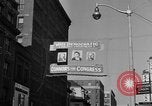
Excerpt from film about national elections in the United States. This segment covers election of November 7, 1944, in World War II
Excerpt from film about national elections in the United States in the autumn of 1944. Opening scene show a banner stretched across a downtown street, reading: "Vote Democratic, vote for full employment. Below that are pictured two local candidates and Franklin D. Roosevelt (running for an unprecedented 4th term as President). Underneath, the banner reads: "Conners for Congress. Glimpses of other political signs are shown, on telephone poles, buildings, and automobile windows. Citizens discuss the elections in various places: A man and woman in their living room; workers in a machine shop; men in a diner restaurant; a man and woman at home; a farmer and a delivery man; a housewife speaks to another homemaker over a back fence; a dentist leaning over his patient and talking while giving a dental treatment; two school boys arguing and one of them with an angry expression; various politicians. Representative Clare Booth Luce speaking. New York Governor, Thomas E. Dewey, at a podium. Vice Presidential candidate Harry Truman about to speak. People gathered in local forums and other political campaign activities. President Roosevelt driving along a city street, on a rainy day, in an open car with Secret Service agents riding on the running boards of his car. Crowds jamming the sidewalks in spite of the weather. Other gatherings of people waving American flags and showing support for their political parties and candidates. Philip Murray, President of the CIO Labor Union and AFL Head, William Green. Radio broadcast antenna shown denoting importance of radio for political communications. Harry S. Truman (Democrat), Thomas E. Dewey (Republican) and incumbent President Roosevelt are seen delivering speeches in front of numerous microphones. Various views of many men, women, children, and families gathered around radios listening to radio campaign speeches, in various places, including American soldiers at the front (This election is during World War 2) and Nurses in a hospital. President Roosevelt speaking at a political dinner. Views of people at political party conventions. Next, people are seen calmly walking in and out of polling places. Three members of an election board begin counting votes. After checking, one member telephones the results from their precinct to headquarters. Views of recorded votes being reported by telephone. People using tabulating machines to compile the results. Views of spectators in vote posting centers awaiting the results. Final results being brought to news media for dissemination to the nation. People gathered in Times square, New York City, where news is posted in moving lights on the Times building marquee (called "the zipper."). Others gathered around their radios. Marquee Lights on the "zipper" sign of the Times Building announce the reelection of President Roosevelt.
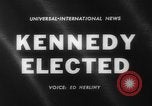
John F. Kennedy wins the Presidential election in the United States.
Presidential election of November 8, 1960. Voting for the 1960 Presidential election underway in United States. President Eisenhower arrives at a firehouse in Cumberland Township, Pennsylvania via helicopter to cast his vote. His wife, Mamie Eisenhower, also casts her vote. Senator John F. Kennedy and wife Jacqueline cast their votes at the Boston Public Library. Republican candidate Richard Nixon and wife Pat Nixon cast their votes in California. Republican Vice Presidential candidate Henry Cabot Lodge, Jr. votes. Senator Lyndon Johnson is also seen voting. Ballots are fed into a ballot box marked 'Town of Barnstable' Kenned Kennedy with his wife and daughter appear before the press at the Kennedy compound in Hyannis Port Massachusetts as he leads the race for the White House. News that Kennedy is pulling ahead in the race is seen on a scrolling text marquee aka 'The Zipper' mounted on New York Times building at One Times Square in New York City. A reported watches wire reports printing from Associated Press machines. Richard Nixon at a public meeting accepts his defeat and assures his support for Kennedy. Votes being counted and Kennedy wins the election. A man at a newsstand views the front page of the New York Mirror newspaper with headline, 'EXTRA KENNEDY!' 'John F. Kennedy after winning the election. He addresses a public meeting at Hyannis, Massachusetts with his wife by his side, and other Kennedy family members present on stage, including Joseph P. Kennedy Sr, Rose Kennedy, Robert Kennedy, Edward Kennedy with Joan Bennett Kennedy, and the President-elect's sisters Patricia Kennedy Lawford, Jean Kennedy Smith, and Eunice Kennedy Shriver. John F. Kennedy accepts Nixon's greetings and talks about making a supreme effort to take America out of difficult times.
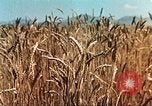
Montage of U.S. scenes covering various parts of the nation
Opening scene shows a wheat field in the United States. White hot molten metal collected in ladles as a furnace is tapped. Sandstone buttes the Navajo Nation's Monument Valley Park. Half Dome in Yosemite National Park. Michigan Avenue in Chicago, Illinois, as seen from a moving vehicle looking North from the Art Institute, with many skyscrapers of glass and steel. A white church in a suburban setting. The Japanese cherry trees in bloom along the Tidal Basin in Washington DC. A major river and an old fashioned stern wheeler River Boat cruising on it. A street scene in New Orleans, Louisiana. A roadway in Florida. A fishing village scene in New England. A formation of oil well pumps operating out West. Cowboys on horseback herding cattle in a wide open prairie view. View of the Statue of Liberty with dramatic sunset behind it. Two U.S. Marines conversing as they look at the Manhattan skyline in New York City. Aerial view of the skyscrapers on Manhattan Island. View of Times Square in Manhattan, with the Astor Hotel visible (It was razed in 1967). Police officer directing traffic at an intersection. Two Marines walking past the United Nations Building in Manhattan, New York City. View of the General Assembly Building and construction site of the The Dag Hammarskjöld Library Building being added in front of it. Camera pans upward showing Independence Hall in Philadelphia, Pennsylvania. Camera pans the U.S. Capitol building, followed by the Lincoln Memorial, the Jefferson Memorial, and the Washington Monument (viewed from steps of the Lincoln Memorial across the reflecting pool, in Washington, DC. A Marine color guard marches across the lawn in front of the United States Marine Corps War Memorial (Iwo Jima Memorial) in Arlington Ridge Park Virginia, as the Marine Band marches and plays. Closeup of the Memorial with American flag flying above it.
CRITICALPAST.COM: About Us | Contact Us | FAQs - How to Order | License Agreement | My Account | My Lightboxes | Shopping Cart | Advanced Search | Featured Collections | Website Terms & Conditions | Privacy Policy ©2026 CriticalPast LLC.
License Agreement |
Terms & Conditions |
Privacy Policy
©2026 CriticalPast LLC.