


 Francais
 Deutsch
 Italiano
Refine Your Search
Hurtgen-Forest stock footage and images
- Showing 295 to 300 of 753 results more
more Hide
Hide
Film shows various landscapes as tourists gather at these landscapes to enjoy the nature in the United States
The Film 'Nature's Classics' shows various landscapes in the United States. Views of trees,sky and clouds. Views of prairie land. Rock formations in the background. Group of tourists play outside a lodge. Tourists pose near a touring car. Tourists stop near the Great Rockies mountain trail. Views of forest and mountains. Views of snow covered mountains,lake and forest. A camp near the edge of a stream. Tourists near a tent. Campers and tent near a stream.

A U.S. Air Force training film showing firing of M-16 rifle, United States.
A training film on M-16 rifles starts. Three men seated inside a room in a conversation, after which they leave. A soldier hidden in a foxhole in a forest area, carrying an M-16 rifle, setting target. Another soldier joins him. Silhouette of a man walking in the forest, man is shot and then is carried away. Six soldiers standing in a line, carry M-16 rifle in hands, set targets and shoot.
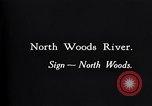
A sign for No Woods River in Indian sign language by General Hugh L. Scott, United States.
General Hugh L. Scott seated on a chair demonstrates Native American Indian sign language. General Scott demonstrates a sign for No Woods River or Creek, Wyoming (A tributary of Bighorn River, which has no forests or woods on its banks, only few trees.) The signs are: WATER FOREST NO, which translates to No-woods-River. WATER is an abbreviation from WATER LINE, which means water-in-line, thus, river.
Various "firsts" in U.S. aviation history from 1918 through 1924; early history of flight and vintage flight scenes
Shows several aviation "firsts" accomplished by U.S. Army Air Service aviators in the period from 1918 through 1924. A close formation of biplanes in flight. President and Mrs. Woodrow Wilson chat with Major Fleet, Officer in charge, on the occasion of the first air mail flight, inaugurated on May 15,1918 between Washington DC and New York.The mail is loaded into the Curtis JN-4 aircraft. Pilot in the cockpit. The aircraft takes off and in flight. Air Service. Mention of aviators helping spot forest fires. Smoke rising from forest fires and mountain ranges. In 1920, U.S. Army Captain St. Clair Streett is seen with some of his Squadron who flew four De Havilland DH-4 aircraft 9,000 miles, from New York City to Nome, Alaska. Two of the men play with pet dogs. Their itinerary is painted on the side of one of the aircraft, along with the names of pilot and mechanic (C.E. Crumline and J.E. Long). In 1923 the first non stop coast-to-coast flight was made in the Fokker T-2 aircraft. . A sign on the aircraft reads 'Army Air Service non stop coast to coast'.First Lieutenants Oakley O.Kelly and John A. Macready board the aircraft, at Roosevelt Field, Long Island, New York, on May 2, 1923. Their Fokker T-2 in flight. Their arrival at Rockwell Field, on Coronado Island (San Diego) California. In 1924, Lt. Russell Maughan is seen boarding his P-1 Hawk airplane at Mitchel Field, on Long Island, New York, and taking off , bound for Crissy Field at the Presidio, San Francisco, California. His goal is the first dawn-to-dusk, coast-to-coast flight. Views of his P-1 Hawk airplane flying over Manhattan, New York City.
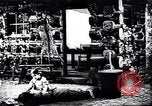
A dramatized presentation depicts efforts of an Indian and a woman to rescue her husband.
Sequences from a melodramatic presentation. A girl sits near her mother and weeps. A Native American Indian man arrives and takes the mother into a forest. In the forest a group of men walk with arrested husband of the woman. The Indian man and woman try to convince them that the husband is not a murderer.
A brief description of Russia (Soviet Union or USSR)
Animated map on globe of world shows extent of the USSR from East to west and North to South (9 million Square miles). Miners extracting her natural resource minerals. 110 million acres of forests and timber being felled. Coal on a conveyer belt. A "forest" of oil derricks in a Soviet field. Oil tank cars moving on a railroad. Iron and steel mills. 370 million acres of farmland. Farms being worked. Tea, tobacco, and cotton crops. Herds of ranch animals. Corn,oats,hops,rye and wheat being harvested by machinery. Huge parades of people parading in Red Square, Moscow, Russia. Dancers on floats in the parade. Cossacks from the Don River Valley demonstrate horsemanship. Map showing Ukraine, Russia,Hungary, Romania,and other adjoining areas. Musicians playing balalaikas accompany dancers. Ukranians,Moldovians and Beserabians in local costume. Map of the Caucasuses between the Caspian and Black Seas. People from that region dancing and playing instruments. Armenians,and people riding on horseback from tribes of the Caucasian mountains. Uzbeks blowing long horns. Turkmen with horses. Mongols playing stringed instruments. Views of people from further East and North approaching Siberia. Some hunting with rifles. Views of Moscow. Moscovites walking on a summer day. Man riding in a horse-drawn carriage. Cars driving on a street. All kinds of vehicular traffic in Moscow city, including trams. Outside views of Soviet factories. Soviet soldiers. Soviet bricklayer, traffic cop, and sailor are shown. A riveter at work. Soviet school children. An old fireman.Nurse in a hospital. Civil engineer with transit. A window washer. A sales girl. Housewives. A Postal clerk. A radio announcer. A stewardess on an airliner. A chemist in a laboratory. A typist at work. A harpist playing and a ballerina dancing as an orchestra plays. Soviet citizens walking across a field. Narrator refers to their love for the soil. Animated map sums up Russia's size and characteristics. (World War II period).