


 Francais
 Deutsch
 Italiano
Refine Your Search
Iserlohn Germany 1945 stock footage and images
- Showing 385 to 390 of 10471 results more
more Hide
Hide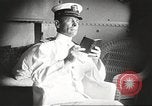
Scenes of Naval Operating Base, Hampton Roads, Virginia in 1925
Naval Operating Base, Hampton Roads, Virginia (renamed U.S. Naval Station Norfolk, in 1945 ). U.S. Navy Commander seated in a chair aboard a ship. A large group of civilian businessmen and officials pose on board a ship with several American Navy officers and one British Naval officer, for a photograph. Some of them stand and some are seated. One civilian stands in front of the group and poses with an American Navy Captain. Change of scene shows Admiral Way on the Navy Base, containing mansions and other structures from the 1907 Jamestown Exposition. It is a very windy day and several civilians are seen on a sidewalk and entering a large building on Admiral Way. Numerous Navy personnel in uniform are seen in the area, including a number of Naval officers entering that building and others heading there along a sidewalk. Residential mansions are seen in the vicinity along Admiral Way.
Farmers work on field,Henry Gurney visit people and British soldiers, check ID cards of people in Malaysia
The film titled 'How to fight a guerrilla war' about guerrilla war for independence fought between Commonwealth armed forces and Malayan Communist Party in Malaysia. Soldiers wade across a stream. Soldiers advance through a jungle. An aircraft in flight drops bombs. A helicopter takes off. 1945: jungle on a mountainous area. Aerial view of a sea coast. Houses on the coastal area. Farmers work on field. Women use mortar and pestle to crush. Chinese men smoke pipe. A woman works on a sewing machine. Children sit on ground. Farmers work on field. European people carry water through poles on their shoulders. A woman takes out rubber from a tree. Rubber sacks pile up. Water being sprayed on field by a pipe. Equipment hooked in a crane. Animation of a map shows Malaysia. Burning houses and jungles. Men inspect area near a derailed train. Dead bodies in water. Burned tin mines and other plants. Workers outside their houses. A girl stands on doorway. A child cries. A family evacuates the place on a truck. A man puts a light on pole. A soldier near a power grid. A soldier on guard atop a hill. Soldiers walk through a jungle. Men carry water containers. People get themselves registered. Identity cards of people on table. A soldier puts mark on nail of a woman. A soldier signs on an ID card. British High Commissioner in Malaya Henry Lovell Goldsworthy Gurney disembarks a vehicle. He meets people. People come out of a truck. People get registered. People take oath. They learn military tactics.
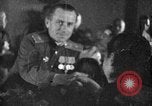
Russian officers speak and Korean people exchange gifts with Soviet soldiers in Korea.
Two years before the Korean War: Russian soldiers are honored before leaving Korea. Officials at a mass meeting. The wall behind the speaker's stand is decorated with pictures of Kim II Sung and Joseph Stalin with dates 1945-1948. Russian officers speak and receive gifts from the people of Korea. Korean boys exchange gifts with Russian girls. Girls present flowers to Soviet fliers. Two Soviet aviators hold Korean children. A line of Soviet Yakovlev Yak-3 interceptor aircraft. A pilot prepares and takes off in one of the Yak-3 aircraft. The girls wave to the fliers. Soviet Yak-3 aircraft in flight.
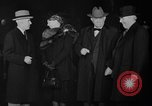
Activities of Eleanor Roosevelt in post-World War II period
December, 1945, former First Lady, Eleanor Roosevelt, now appointed by President Truman, as a delegate to the United Nations, is seen with other members of the U.S. Delegation. She is seen speaking while serving as chairman of the UN Committee Three, dealing with human rights. She recognizes the delegate from the Soviet Union, as the committee addresses issues of refugees. (The USSR insists that displaced persons be returned to their original homelands.) As chairman, Mrs. Roosevelt, rules a USSR proposal out of order, causing the USSR representatives to leave the room. A glimpse of Eleanor Roosevelt at a microphone during debate over the issue with the USSR, before the full General Assembly, where she successfully argues to allow refugees to make their own decisions about repratriation. She is seen sitting next to delegate,Senator Arthur Vandenburg, at the forum. Eleanor Roosevelt being greeted by U.S. Army officers as she steps from an airplane in Europe. She is seen mingling with persons in Europe, displaced by World War II. Back in the UN forum, she extols the International Declaration of Human Rights as an "International Magna Carta of men everywhere," and goes on to compare it with similar charters of history. She is seen at a Pan American World Airways terminal, preparing to board a flying boat (unseen). Several scenes show Eleanor Roosevelt visiting with people in various parts of the world, with particular attention to children. She speaks of her candid nature in a broadcast.
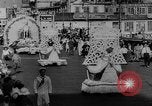
Contestants of Miss America beauty contest wave at people and walk on a ramp in Atlantic City, New Jersey.
Miss America beauty contest in Atlantic City, New Jersey. Contestants of Miss America on floats as they pass along the streets of Atlantic City. The contestants wave at people. Veterans in wheelchairs watch the parade. The contestants standing and posing. They walk on a ramp. The winner of the 1945 Miss America pageant, Bess Myerson, wears the crown and cape. Bess Myerson, the first Jewish Miss America, comes from the Bronx, New York. Bess Myerson smiling.
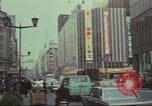
Tokyo street scene; editorial staff members work on Pacific edition of Stars and Stripes newspaper in Tokyo, Japan
Publication of the Pacific edition of Star and Stripes newspaper in Tokyo, Japan. Traffic on streets in Tokyo. Pedestians on busy city streets of Tokyo with large office buildings and retail in background. View of the plant where publication of the Pacific edition of Stars and Stripes newspaper began on 3rd October, 1945. Editorial staff members work in the plant. A man works on a typewriter. Closeup view of hands on typewriter. An officer checks the newspaper. A navy man pastes picture cuttings from a newspaper on a chart. A man places a paper in a photo offset machine. Printing of newspapers. Men check and stack newspapers. Newspaper bundles are covered with plastic sheets and loaded in a truck. Men load the newspaper bundles in a jet liner aircraft.
CRITICALPAST.COM: About Us | Contact Us | FAQs - How to Order | License Agreement | My Account | My Lightboxes | Shopping Cart | Advanced Search | Featured Collections | Website Terms & Conditions | Privacy Policy ©2026 CriticalPast LLC.
License Agreement |
Terms & Conditions |
Privacy Policy
©2026 CriticalPast LLC.