


 Francais
 Deutsch
 Italiano
Refine Your Search
John-F.-Kennedy stock footage and images
- Showing 1441 to 1446 of 3759 results more
more Hide
Hide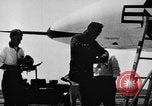
First test flight of the Douglas F5D-1 Skylancer aircraft at Edwards Air Force Base, California
The first Douglas F5D-1 Skylancer aircraft (BuNo 139208) at Edwards AFB for its maiden flight on April 21, 1956, with test Douglas Aircraft test pilot Robert O. Rahn at the controls. Test pilot Rahn climbs aboard the aircraft, which is painted in U.S. Navy colors. After several views of pilot, Bob Rahn, in the cockpit, the scene shifts to the airplane on takeoff roll. It takes off smoothly accompanied by a T-33 chase plane. The F5D climbs out steeply and is next seen in level flight cruise configuration. The sequence concludes with the F5D on final approach and landing, with T-33 flying in parallel. The aircraft touches down smoothly and rolls out in a nose high attitude, seeming to almost drag its tail, but not quite. Photographers record the landing from the side of the runway. Reportedly the test flight was smooth overall and the aircraft easily exceeded the speed of sound on this, its first flight. (Note: The U.S. Navy cancelled the F5D Skylancer order, after only several aircraft were built. Two were eventually acquired by NASA.)
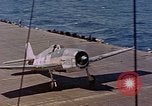
U.S. Navy F6Fs taxi along flight deck of USS Lexington in the Pacific Ocean during World War II.
Flight deck operations aboard USS Lexington (CV-16) in the Pacific during World War 2. A dozen U.S. Navy F6F-3 Hellcats of VF-16 taxi along the flight deck with canopies open. One F6F passes overhead with landing gear down. (Note: This is near the end of VF-16's tour aboard the Lexington. The planes look worn, with paint touched up in spots and their squadron "Fighting Airedales" insignia barely visible.)

Fokker F28 Fellowship taxiing at an airfield in Bremen, Germany
Display of turbojet passenger transport aircraft Fokker F28 Fellowship in Bremen, Germany. Turbo jet Fokker F28 Fellowship (PH-WEV) passenger transport aircraft, built by the Dutch aircraft manufacturer Fokker, parked at the airfield. The Fokker F28 Fellowship has special brakes and low-pressure tires for short takeoffs and landing. View of the Fokker F28 Fellowship nose and cockpit. “Fellowship” is written on the nose of the aircraft. Rolls-Royce aircraft engine starts. Men watches as the aircraft taxis on the airfield.
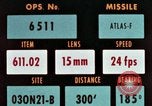
Light cloudy exhaust plume from Atlas-F missile rocket launch in the United States
An Atlas-F missile rocket launch in the United States. Missile launch site is stated as “03ON21-B”. Launch tower crane moves away as the Atlas-F missile begins launch. Light clouds of smoke cover most of the Atlas-F missile body as it begins to launch. The Atlas-F missile rocket emits white, soft cloudy exhaust plume as it launches away from the tower.
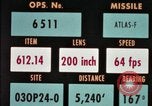
Atlas-F missile rocket launch with thick, hot exhaust plume in sky
An Atlas-F missile rocket launch in the United States. Missile launch site is stated as “03OP24-0” Atlas-F missile rocket in-flight shortly after launch. The Atlas-F’s exhaust plume is visible with thick, hot rocket gases. Camera follows Atlas-F’s trajectory in the sky until the rocket becomes visible as a tiny dot.
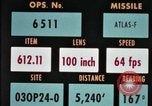
Atlas-F missile rocket launch with cloudy trail from exhaust plume
An Atlas-F missile rocket launch in the United States. Missile launch site is stated as “03OP24-0” Atlas-F missile rocket ignites hot exhaust rocket gases and smoke from nozzle as it begins launch. Atlas-F missile rocket ascends launch. Exhaust plume is seen as thick, wide and bright. Clouds of exhaust gases form from exhaust plume trail. Camera follows the trail of Atlas-F until exhaust plume turns into a faint dark-orange dot in the night sky.
CRITICALPAST.COM: About Us | Contact Us | FAQs - How to Order | License Agreement | My Account | My Lightboxes | Shopping Cart | Advanced Search | Featured Collections | Website Terms & Conditions | Privacy Policy ©2026 CriticalPast LLC.
License Agreement |
Terms & Conditions |
Privacy Policy
©2026 CriticalPast LLC.