


 Francais
 Deutsch
 Italiano
Refine Your Search
John-F.-Kennedy stock footage and images
- Showing 3157 to 3162 of 3759 results more
more Hide
Hide
Sesquicentennial celebration of Captain Cook's discovery of Hawaii
Sesquicentennial celebration of Captain Cook's discovery of Hawaii: (1778-1928) held in the Hawaiian Islands, August 15 to 21, 1928. Monmouth-class British armored cruiser underway en route to Hawaii. Royal Hawaiian flag draped on tripod of submerged tablet, marking the site of Cook's demise. (The inscription reads: "Near this spot Captain James Cook, R.N., was killed, Feb. 14, 1779.") Smoke seen rising from naval guns on the British cruiser ship, in Kealakekua Bay, off coast of Hawaii, firing 21-gun salute. Camera pans over to the battleship, USS Pennsylvania (BB-38) also firing her guns in salute. A group of British buglers plays "The Last Post," during the ceremony. U.S. Secretary of War, Dwight F. Davis and Territorial Governor of Hawaii, Wallace R. Farrington, step into a Hawaiian outrigger canoe for a short trip across the bay. Next they are seen stepping from the canoe, to a Navy launch tied at the dock in Napoopoo, and thence to the dock, itself. Change of scene shows Secretary Davis and Governor Farrington, with many other dinner guests at a traditional Hawaiian Luau meal with many foods. There Secretary Davis is also seen delivering remarks to the gathering.
Secretary of War Hugh Davis visits military family camp and Kilauea National Park in Hawaii.
U.S. Secretary of War, Dwight F. Davis visiting sites of interest in Hawaii. Rustic military Headquarters building displays sign, "Kilauea Military Camp." A car drives up and passengers step out to be greeted happily by women and children who have been waiting on the building porch. (Slate explains that this is a military rest camp a half mile from the Kilauea crater.) Camera pans across cabins occupied by military families. Some soldiers are seen having fun on the grounds. Camp visitors are seen looking across a crater at smoke rising from the active Mauna Loa volcano. View from behind of Secretary Davis conversing with the Superintendent, Richard T. Evans, of Kilauea National Park, as they both watch the steaming crater. A huge chunk of lava rock bearing a sign that reads: "8 tons, hurled over one mile high during eruption May, 1924." A slug of lava clinging to skeleton of a tree. Sign at base of tree reads: "Don't touch spatter on trees, Very Fragile."
Governor Farrington and Secretary Davis play golf at Kilauea Golf Course in Hawaii.
U.S. Secretary of War, Dwight F. Davis and Hawaii Territorial Governor Wallace Rider Farrington, play golf at Kilauea National Park, Hawaii. Farrington places a ball on what is marked as "19th hole 510 yards." Davis and other onlookers stand nearby. Several sailors stand by a sign reading:"Kilauea Golf Course, 19th hole- Halemaumau." Using an iron, Farrington drives the ball, raising sand from the ground. Davis then tries his hand, striking his ball, with a clean drive, and follows up with a smooth ground stroke that puts his ball into the volcanic crater. The men and spectators look out over the crater for possible sight of the ball.
U.S. Secretary of War, Dwight Davis, and Territorial Governor Wallace R. Farrington, visit extinct volcano crater in Hawaii.
Railing and sign at Kilauea National Park, Hawaii, reads: "Kilauea Iki, 770 feet deep, Active in 1868." Camera pans down into the crater and across the rim. Scene shifts to U.S. Secretary of War, Dwight F. Davis, and Hawaii Territorial Governor, Wallace R. Farrington, standing with two military officers, at the edge of the crater.
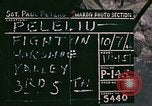
U.S. Marine Aircraft Group 11 bombs Japanese positions and wounded Marines seek cover under fire, on Peleliu, in World War II
Aircraft of the 11th Marine Aircraft Group drop bombs in Horseshoe Valley, on Peleliu Island, Palau, during World War 2. A U.S. Marine Vought F4U Corsair aircraft flies low, with landing gear extended as it attacks a Japanese position on Peleliu. Wounded marines lying on ground, are photographed from above. Other Marines lift and place one wounded on litter and run to remove him. They stumble and fall as they do. Other marines help wounded and rush to seek shelter, while under fire.
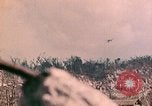
11th Marine Aircraft group drop bombs on Peleliu Island, Palau.
F4U Corsairs or U.S. Marine Aircraft Group 11, bombard Japanese positions on Prostitute Ridge, Peleliu, Palau, during World War 2. They fly a number of sorties, dropping general purpose bombs on fortified Japanese positions, very close to U.S. Marine positions. Marine pilots fly low and slow, with landing gear extended to assure accuracy in their bombing.
CRITICALPAST.COM: About Us | Contact Us | FAQs - How to Order | License Agreement | My Account | My Lightboxes | Shopping Cart | Advanced Search | Featured Collections | Website Terms & Conditions | Privacy Policy ©2026 CriticalPast LLC.
License Agreement |
Terms & Conditions |
Privacy Policy
©2026 CriticalPast LLC.