


 Francais
 Deutsch
 Italiano
Refine Your Search
John-F.-Kennedy stock footage and images
- Showing 385 to 390 of 3762 results more
more Hide
HideColor Sound
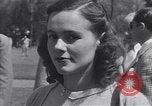
Famous persons gather at The Greenbrier Resort for its reopening celebrations in 1948
Scenes from reopening festivities in 1948 for the Greenbrier Resort in White Sulphur Springs, West Virginia, following its closure (usage as a government medical facility) in World War 2. Famous men and women pose for photographs. Closeup of Mrs. Fulton Cutting Junior. View of Winston Guest with his wife C.Z. Guest (formerly Lucy Douglas Cochrane) standing with John Simms Kelly ("Shipwreck" Kelly) and his wife Brenda (formerly Brenda Frazier). Dolly Dorelis wearing sun glasses. Mrs. Byron C. Floyd. Then Congressman John F. Kennedy poses with his sister, Kathleen ‘Kick’ Kennedy.
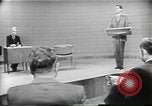
During a presidential election debate in Chicago, Illinois Nixon states that he hopes to control the House and get a majority.
The first Kennedy-Nixon Presidential Debate in Chicago, Illinois. Bob Fleming from ABC News asks Republican candidate U.S. Vice President Richard M. Nixon whether he could work better with Democratic majorities in the House and Senate than Senator Kennedy. Nixon answers and says that he hopes to control the House and to get a majority in the House in the elections. He states that the President cannot control the Senate and the President needs the support of the country and people to get his programs accomplished. He says that whenever a majority of the people are in favor of a program, the House and the Senate respond to it and it does not matter if the House and the Senate in the next session is Democratic or Republican. He disagrees with the reason of a presidential veto by Kennedy. Democratic candidate Senator John F Kennedy presents his views. Kennedy talks about the bill for minimum hourly wage system against which the Republicans voted. He then talks about the federal aid to education bill which failed because the Republicans did not vote for it. He talks about the third bill of medical care for the aged which is tied to Social Security, which is financed out of Social Security funds and it does not put a deficit on the Treasury. Kennedy concludes that these are three programs which are quite moderate and not extreme.
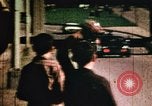
Eight second film of President Kennedy and Mrs. Kennedy, in open car, taken by amateur, right after the President was shot.
Brief glimpse of open limousine carrying President and Mrs. John F. Kennedy, immediately after the President was shot in Dallas, Texas. Spectators at curbside wave, not realizing what has occurred. A white sedan is driving to the left of the President's car..Both are driving at high speed toward the hospital. It was filmed by amateur Jack Daniel,using an 8mm motion picture camera and was among things reviewed by the U.S.House of Representatives, Select Committee on Assassinations, in its investigations.
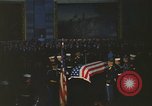
President Lyndon Baines Johnson laying wreath at the head of the coffin.
Interiors of the United States Capitol Rotunda where flag-draped casket bearing John F. Kennedy's body is surrounded by combined Honor Guard. Mrs. Jacqueline “Jackie” Kennedy and her children, Robert Kennedy, members of the Kennedy family and large crowd of dignitaries standing in background. President Lyndon B. Johnson lays wreath at the head of the coffin.
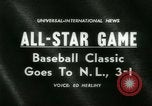
Maury Wills and Willie Mays star as National League wins Baseball's 1962 All-Star Game in Washington
Newsreel clip on baseball's 1962 All-Star Game in Washington -- the first of two played that year. View of new D.C. Stadium packed to capacity for the game. A woman wearing a hat with '1962 All Star Game' written on it. U.S. President John F. Kennedy, a known baseball fan, throws out the ceremonial first pitch. Game begins, scoreless for five innings. In the sixth, Hall of Famer Stan Musial hits a single to right field. Maury Wills comes in to run for him, steals second, then scores on a hit by the Pittsburgh Pirates' Dick Groat. President Kennedy and officials seated near him cheer. Groat scores on an infield hit. Racially mixed crowd watches the action. Billy Moran and Rich Rollins of the American League get hits, then Roger Maris of the Yankees hits a long blast to deep center field -- but Willie Mays catches it against the center field wall. Kennedy, wearing sunglasses and smiling, munches on some peanuts. In the seventh, Wills gets on base, advances from first to third on a single, and scores sliding into home on a fly ball in foul territory. Announcer notes Kennedy stayed until the end of the game. Mays catches the final out in center field. The National League wins the game 3-1.
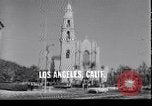
A regular Protestant funeral service held at All Saints Episcopal Church in LA, after the assassination of President Kennedy
Services at the All Saints Episcopal Church (All Saints' Episcopal Church 5619 Monte Vista St Los Angeles, CA 90042) in Los Angeles, California following the assassination of United States President John F. Kennedy. People enter the church. Policemen stand guard outside. Mourners seated inside the church. The regular Protestant funeral service is read. Twelve ministers take part in the services. The choir sings. People bow their heads in mourning.
CRITICALPAST.COM: About Us | Contact Us | FAQs - How to Order | License Agreement | My Account | My Lightboxes | Shopping Cart | Advanced Search | Featured Collections | Website Terms & Conditions | Privacy Policy ©2026 CriticalPast LLC.
License Agreement |
Terms & Conditions |
Privacy Policy
©2026 CriticalPast LLC.