


 Francais
 Deutsch
 Italiano
Refine Your Search
John-F.-Kennedy stock footage and images
- Showing 433 to 438 of 3759 results more
more Hide
Hide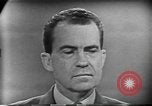
During a debate in Chicago, Illinois Nixon talks about his major recommendations which were adopted by the administration.
The first Kennedy-Nixon Presidential Debate in Chicago, Illinois. Stuart Novins from CBS News asks Republican candidate U.S. Vice President Richard M. Nixon about his major proposals in last eight years that have been adopted by the administration. Nixon answers and states that his major recommendations and proposals that have being adopted by the administration include: increase in the exchange programs like exchange of persons of leaders in the labor and information field. He further talks about his proposals like setting up of separate inter-American lending agency, his recommendations for the Hungarian refugee situation and price stability and economic growth that had been adopted. Democratic candidate Senator John F. Kennedy states his points on that question. He says that he disagrees with progress figures used by Nixon in his speech regarding the Truman Administration. He disagrees with the recommendations made by Nixon like price stability, exchange of students and labor unions being adopted by the administration.
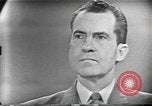
Richard Nixon argues against federal government control over education during a presidential election debate in Chicago.
The first Kennedy-Nixon Presidential Debate in Chicago, Illinois. Charles Warren from Mutual News asks Republican candidate U.S. Vice President Richard M. Nixon about the raising of education standards and the reason for his refusal to vote in favor of increase in salary of teachers in the Senate. Nixon answers and objects the potential cost in controls and states his views against federal government control over education. He talks about the role of the state and local communities towards the education system. Democratic candidate Senator John F Kennedy presents his views on the matter and states that the issue before the Senate was the money given to the state which would then decide whether to spend it for school construction or on teachers' salaries. He objects to the federal government paying teachers' salaries directly. He disagrees with the statement made by Nixon regarding unbalancing of budgets by execution of programs.
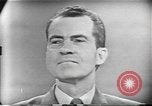
During a presidential election debate in Chicago Richard M. Nixon talks about the reasons for the financing of schools.
The first Kennedy-Nixon Presidential Debate in Chicago, Illinois. Sander Vanocur from NBC News asks Republican candidate U.S. Vice President Richard M. Nixon whether the financing of the schools and hospitals was provided by the Eisenhower Administration or by the local school districts. Nixon answers and states that they only think about the work of the federal government. Instead they should consider the joint effort by the federal, state, local government and individual enterprise. The reason the Eisenhower Administration has supported the funds to build schools, hospitals and highways is because this administration has encouraged individual enterprise. Another reason is the greatest expansion of the private sector of the economy and the overall growth of our country. Democratic candidate Senator John F Kennedy presents his views and states that the reason for the construction of schools is because of the willingness of the local school districts to increase property taxes. And also because the United States is a powerful country. He compares the country's progress with that of their adversaries and hopes an overall progress in the field of education, in health, in buildings, in homes and in economic strength.
African Americans pursue equality in education through landmark case "Brown v. Board of Education of Topeka" in 1953
Artist Impression of the Brown v. Board of Education of Topeka in 1953. Image of Thurgood Marshall, the first African American Associate Justice of the Supreme Court of the United States. Artist Impression of African-American boy reading a book inside a classroom. Image of young African American students studying in class. Image of an African American boy. Image of Chief Justice Earl Warren. Image of William L. Patterson, an African American lawyer who fought for black justice in American courts for years. Image of Martin Luther King Jr behind bars. Very brief images of Jim Crow era lunch counter sit in, and bus burning incident. Footage of whites protesting in favor of racial segregation. Image of Black Americans holding signs saying “Birmingham Merchants Unfair” and “Equal Opportunity and Human Dignity”. Image of white Americans holding placards saying “Close Mixed Schools”. Image of a black American couple running away from fire. Footage of black Americans walking to support civil rights while guarded by officers with shot guns in air. Brief footage of Ku Klux Klan (KKK) members parading and holding the United States and the Confederate flags. Image of Martin Luther King Jr. with young Black Americans. Footage of black and white students clapping together to support civil rights. Image of Thurgood Marshall with wife, Cecilia Suyat, and a friend in Washington DC. Image of Thurgood Marshall. Image of President John F. Kennedy. Footage of Senator James Eastland, Senator of Mississippi, raising a gavel in front of photographers. US senate in session. Image of Thurgood Marshall speaking to Robert Kennedy. Image of Thurgood Marshall as a Solicitor General, walking on the steps of the United States Supreme Court in Washington DC. Image of Thurgood Marshall as the United States Solicitor General.
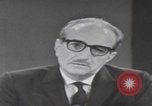
A Spanish-speaking journalist discusses Cuban Missile Crisis
A Spanish-speaking journalist reports on the developments of the 1962 Cuban Missile Crisis in the United States. The journalist makes his report beside an America-centric world map. The map changes into a North and South America map. The projector shows a photo of United States President John F. Kennedy, briefly changing into a silhouette of the Americas and the island of Cuba, before reverting back to Kennedy’s photo. The reporter discusses the missile sites and the dismantling of Soviet weapons in Cuba.
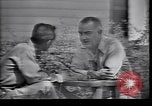
Vice President Lyndon Johnson talks about his political life and work experience in Johnson City.
A national television report on the newly appointed U.S. Vice President Lyndon Johnson, broadcast after the assassination of President John F Kennedy in the United States. A correspondent interviews President Lyndon B Johnson. They discuss Johnson's flair for politics, his father as a Public Representative and his grandfather as a State Representative. Johnson talks about his work experience in Johnson City during World War I and the time he decided to enter politics. The correspondent questions him regarding his giving up the Majority Leadership in the Senate to become the Vice President.
CRITICALPAST.COM: About Us | Contact Us | FAQs - How to Order | License Agreement | My Account | My Lightboxes | Shopping Cart | Advanced Search | Featured Collections | Website Terms & Conditions | Privacy Policy ©2026 CriticalPast LLC.
License Agreement |
Terms & Conditions |
Privacy Policy
©2026 CriticalPast LLC.