


 Francais
 Deutsch
 Italiano
Refine Your Search
Kaiserslautern Germany 1962 stock footage and images
- Showing 5347 to 5352 of 6816 results more
more Hide
Hide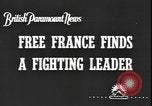
French General Charles de Gaulle broadcasts from London calling on the French to continue fighting the Germans
View of the French Legion Headquarters in London, with flag at half-mast following the capitulation of France to Germany in World War II. Several French officers, including French Admiral Emile Henry Muselier, who support General Charles de Gaulle and his free French forces, walking on the sidewalk. General de Gaulle enters his Headquarters at St. Stephens House (Present day Norman Shaw Building South, 1 Victoria Embankment, London WC2N 5AQ, United Kingdom) in London, and broadcasts, via the BBC, to the French nation, exhorting them to continue fighting, with their Allies, against the Germans.
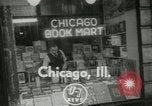
An escaped German prisoner of war, who is the proprietor of a book store in Chicago, United States faces deportation.
A former German prisoner of war in Chicago, Illinois, United States. Former prisoner of war, Reinhold Pabel, is the proprietor of a local book store when the FBI locates him. Views of several shelves of books in the Chicago Book Mart store. Pabel places a book in a rack. His wife and 8 month old child are seen in the book store. Pabel plays with his son. He faces deportation back to Germany, after having established himself in Chicago under a new name.
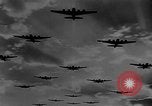
Lt. Gen. Carl Spaatz and Maj. Gen. F. L. Anderson plan 'Operation Frantic' at a USAAF headquarters in the European Theater.
A film on U.S. shuttle bombing operations over Germany from bases in Great Britain, Italy and Russia during World War II. Animated diagram shows the advantages of using Soviet airfields during the operation. United States Army Air Force Lieutenant General Carl Andrew Spaatz seated at a desk in his office. Deputy Commanding General for Operations Major General F. L. Anderson discusses the plans with other officers in his office. They plan 'Operation Frantic' at a USAAF headquarters. Ships at a British port are loaded with supplies including food, gasoline, bombs, ammunitions, trucks, jeeps and other equipment. A man watching through binoculars from the deck of a ship. A convoy passes through the Arctic Ocean. Supplies are unloaded in Russia. These are transported by train to a headquarters in Russia.
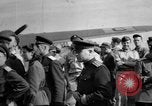
Russian and American pilots and crew talk and shake hands at an airfield in Russia during Operation Titanic.
A film on U.S. shuttle bombing operations 'Operation Titanic' over Germany from bases in Great Britain, Italy and Russia during World War II. U.S. bombers land on an airfield in Russia. Crew disembarks from the airplanes. They shake hands and talk to Russian pilots. Officers interrogate the fliers about the mission. Russian and U.S. crewmen service the airplanes. The crew eat in an outdoor kitchen. They sleep in tents.
American bomber crewmen play games and visit town near Soviet base in Poltava during Operation Frantic.
A film on U.S. shuttle-bombing operations in "Operation Frantic" over Germany, operating from bases in Great Britain, Italy and the Soviet Union during World War II. Aircraft parked at an air base in Poltava, Ukraine, Soviet Union. Nose art and painted insignias on the U.S. Army Air Force aircraft. American crewmen standing near the bomber aircraft. They sleep in tents. They wake up and get ready. A group of Soviet civilian workers walks by with farming tools. A man shaves. Others wash their faces. American Colonel Albert Kepler and Russian officers confer for their next bombing mission. They select target areas for the bombardment. Gasoline, bombs, ammunition and other supplies are provided to the crew. American and Russian crewmen of a bomber aircraft play baseball and cards and interact. Some American soldiers write letters home. Others milk a cow with a Soviet soldier. Crewmen drive in a jeep to visit the nearby town where German bombing campaigns have destroyed many buildings in Poltava. They view a destroyed leather industry factory, and the grave of Ukrainian writer Vladimir Korelenko. They see only rubble remaining of the birth home of Korolenko. Damaged buildings and rubble in the area. People walking on a street. The American soldiers interact with the Ukrainian civilians of the town. Women and children of the town are seen. Closeup view of the hand of a a U.S. Army soldier as he hands out chewing gum candy to eager Ukrainian children. On the way back to the base the soldiers view the Column of Glory in Poltava, honoring the 1709 Battle of Poltava.
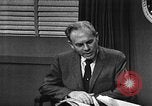
During an interview in the US, Lt. Gen. Ira Eaker talks about problems of expansion of the air corps prior to World War II.
A interview of United States Air Force Lieutenant General Ira Eaker conducted by Dr. Maurer in the United States. General Eaker talks about the development of the air corps. He says that if they had not undertaken bombing in World War II, millions of people would have died. They were also able to raze ammunition factories in Germany. The strategic bombing which they undertaken helped to win the war. He talks about the development of fighter aircraft, the difficulties faced in making funds available for aviation research and development.
CRITICALPAST.COM: About Us | Contact Us | FAQs - How to Order | License Agreement | My Account | My Lightboxes | Shopping Cart | Advanced Search | Featured Collections | Website Terms & Conditions | Privacy Policy ©2026 CriticalPast LLC.
License Agreement |
Terms & Conditions |
Privacy Policy
©2026 CriticalPast LLC.