


 Francais
 Deutsch
 Italiano
Refine Your Search
Kiribati Gilbert Islands 1943 stock footage and images
- Showing 6037 to 6042 of 6726 results more
more Hide
Hide
U.S.warships fire at Japanese targets during the battle for Okinawa, Japan.
Animated graphic shows how U.S. naval gunfire prevented Japanese forces from capitalizing on their extensive network of roads on Okinawa, Japan. U.S. navy rocket and mortar craft firing at Japanese positions. Animated graphic illustrates how U.S. naval forces surrounded the main force of Japanese defenders. Views of U.S. firing of star shells at night to illuminate Japanese targets. Many views of U.S. Battleship and Cruiser main battery firing at night and day. Stacks of expended 14 and 16 inch shells are seen on decks. Scenes of destroyed Japanese fortifications. (World War II period).
Role of U.S. Naval gunfire during battle for Okinawa, Japan, during World War II.
U.S. Battleships cruising in the Pacific. Close views of naval 16 inch gun barrels Navy personnel manning radio and teletype stations in a communications center. (They are shirtless, presumably due to heat.) They receive a message from General Bruckner, Commanding General, 10th Army, to Admiral Turner, Commander, Task Force 51,praising the active naval support for U.S. ground forces. Scenes of naval gunfire of all types. Japanese aircraft hit and burning. A U.S. naval 16 inch gun fires and produces a giant smoke ring.
Damage to superstructure of U.S. Navy ship USS Register (APD-92) as a result of enemy suicide plane attack off Okinawa
Damage to superstructure of the high speed transport ship USS Register near Okinawa. The damage caused as a result of a Japanese kamikaze A6M zero fighter plane attack. Views of the toppled kingpost which the plane struck, and which subsequently crashed over #3 40MM gun (remains of it are shown). Welders cut away wreckage of kingpost and hoists. Section of mast bent over 40 mm gun mount. Fueling operations alongside. (World War II period).
United States troops land and the Filipino guerrillas gather to greet them in Luzon, Philippines (WW2)
United States troops land on Luzon from Lingayen Gulf, Philippines during World War II. Battleships at sea. A map shows the target area of the ships. Troops land on the surface. Happy Filipino guerrillas and civilians gather to greet them. Soldiers in Jeeps. Filipino men hold the United States flags in hand. Filipino guerrillas are given clothes and arms. A United States soldier helps a Filipino guerrilla put on a new shirt. Filipino guerrillas receive new weapons. United Sates soldiers ride a cart pulled by a carabao. Men and children march with flags. Houses along the sides of the street. Trees in the background. Infantry advances rapidly through town. People watch the soldiers. Soldiers in a field during the war. Smoke arises from bombardment in the mountains of Luzon. Ground soldiers and sky soldiers work together. Airplanes drop bombs on the field. Soldiers discuss a map. They discuss plans for the operation.
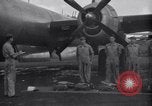
Airmen from 307th bombardment group board on B-29 Superfortress plane during the Korean War in Okinawa Japan.
307th bombardment group during the Korean War in Okinawa, Japan. A man with a clipboard walks in front of the crew standing in line. Airmen in queue are standing in front of a B-29 Superfortress plane. The man with clipboard calls on roll and the crew members respond to him. Men put on parachutes and help each other fasten the straps. Men pick other equipment from ground and walk towards the plane in line. Men get in the plane and the pilot shows signal by hand out from the window. Propellers of plane starts and the pilot is looking out from the side window and gives signals. 'No smoking within 100 meters' sign on the plane.
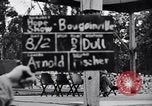
Bob Hope and Frances Langford in USO tour, entertain U.S. troops on Bougainville in World War II
The Bob Hope Troupe on U.S.O. tour in the South West Pacific in World War 2. During tour, they entertain U.S. soldiers on Bougainville. Bob Hope engages in comic banter with Frances Langford. She then sings "I'll be seeing you," accompanied by the troupe's guitarist, Tony Romano. Views of the soldiers in audience seated close together on the ground. They seem to want an encore and engage in banter with Bob Hope.
CRITICALPAST.COM: About Us | Contact Us | FAQs - How to Order | License Agreement | My Account | My Lightboxes | Shopping Cart | Advanced Search | Featured Collections | Website Terms & Conditions | Privacy Policy ©2026 CriticalPast LLC.
License Agreement |
Terms & Conditions |
Privacy Policy
©2026 CriticalPast LLC.